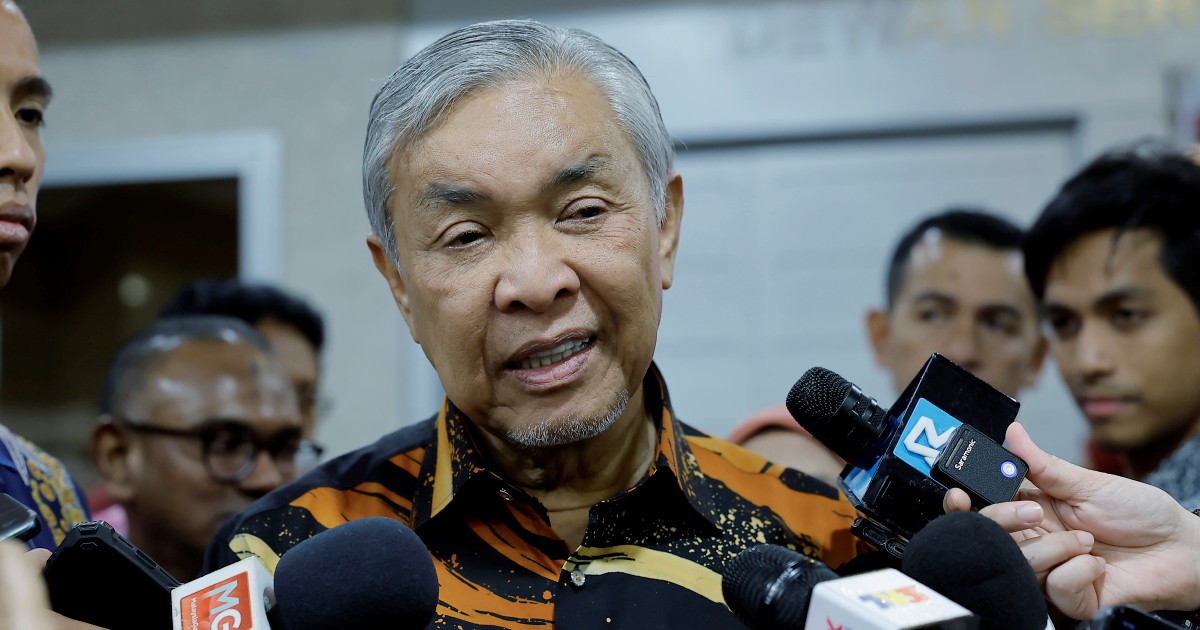
Barisan Nasional chairman Datuk Seri Dr Ahmad Zahid Hamidi has rejected suggestions that outside forces shaped the selection of Negri Sembilan's latest Menteri Besar, characterising such claims as reflections of political naivety. Speaking in Putrajaya, the BN leader emphasised that those questioning the legitimacy of the appointment lack understanding of how coalition government operates within Malaysia's constitutional framework.
The controversy surrounding the Negri Sembilan Menteri Besar position stems from internal party disagreements about the selection process and who wielded influence in the final decision. Some quarters within the political establishment have suggested that figures beyond the state assembly held decisive sway, a claim that Zahid flatly rejected. His remarks indicate a broader pattern within Barisan Nasional of defending centralised decision-making structures that observers say concentrate authority among senior party leadership.
In Malaysian politics, the appointment of a Menteri Besar typically requires negotiation among coalition partners and consideration of various stakeholder interests. The process involves formal procedures outlined in state constitutions, but the informal dimensions—factional alignments, resource distribution, and power dynamics within ruling coalitions—often prove equally consequential. Zahid's response suggests that the BN leadership views criticism of these realities as fundamentally misguided rather than as legitimate concerns about institutional transparency.
The Negri Sembilan situation reflects longer-running tensions within Barisan Nasional about the balance between party hierarchy and state-level autonomy. Larger Malaysian states like Selangor and Penang have experienced similar controversies when federal-level interventions or coordinated pressure campaigns influenced state appointments. These incidents have occasionally sparked public debate about the appropriate scope of influence that party leadership should exercise over state administrations, particularly in matters of personnel selection.
For Malaysian readers, Zahid's dismissal of interference allegations carries implications for how the BN coalition manages governance across multiple states. If appointment decisions are indeed shaped by central party leadership in coordination with other entities, this raises questions about the extent to which state governments can operate independently. The appointment process thus becomes emblematic of broader questions about federalism, party discipline, and accountability within Malaysia's political system.
Zahid's framing of criticism as arising from inadequate understanding of political realities suggests that the BN leadership views the appointment process as essentially legitimate, regardless of external influences that may have been brought to bear. This perspective reflects a long-established approach within Malaysian politics where elite consensus is often prioritised over transparent public procedures. The chairman's comments indicate confidence that internal party consensus—however it was achieved—provides sufficient legitimacy for the outcome.
The controversy also reflects the particular vulnerabilities of states like Negri Sembilan within Malaysia's political architecture. Smaller states with smaller state assemblies have fewer moving parts in their political ecosystems, meaning that individual decisions about leadership carry outsized significance for governance stability. Zahid's comments suggest that from the BN perspective, managing these decisions at the coalition level ensures continuity and prevents local factional disputes from destabilising broader political arrangements.
Regional observers in Southeast Asia often note that Malaysian political contestation frequently unfolds through formal institutions and procedural arguments rather than public conflict. The dispute over the Negri Sembilan appointment follows this pattern, with criticism focused on process and legitimacy rather than on substantive policy disagreements. Zahid's response essentially closes off this avenue of critique by reframing the discussion as one between the politically sophisticated and the uninformed.
The broader context of Zahid's remarks involves ongoing questions about the BN's capacity to adapt its governance model in response to citizen expectations for institutional transparency. Younger voters and increasingly engaged civil society organisations in Malaysia have begun scrutinising appointments and decision-making processes more closely than was common a generation ago. Zahid's somewhat dismissive tone towards those raising such questions may reflect generational differences within the coalition about how much it needs to accommodate demands for greater openness.
For stakeholders in other Malaysian states and for coalition partners eyeing future cooperation with Barisan Nasional, Zahid's comments offer clarity about how the BN leadership views its role in state-level appointments. The chairman has signalled that such decisions will continue to be made through mechanisms that centre party leadership preferences, regardless of procedural critique. This approach carries risks if it creates perceptions that state governments lack genuine autonomy or accountability to local constituencies.
The Negri Sembilan situation ultimately serves as a window into how Malaysian political coalitions manage the tension between unity and autonomy. Zahid's insistence that those questioning the process simply lack understanding sidesteps deeper questions about whether consensus-based decision-making remains compatible with modern democratic expectations. Whether the BN can reconcile its traditional power-sharing mechanisms with contemporary demands for institutional transparency remains an unresolved challenge facing the coalition.

