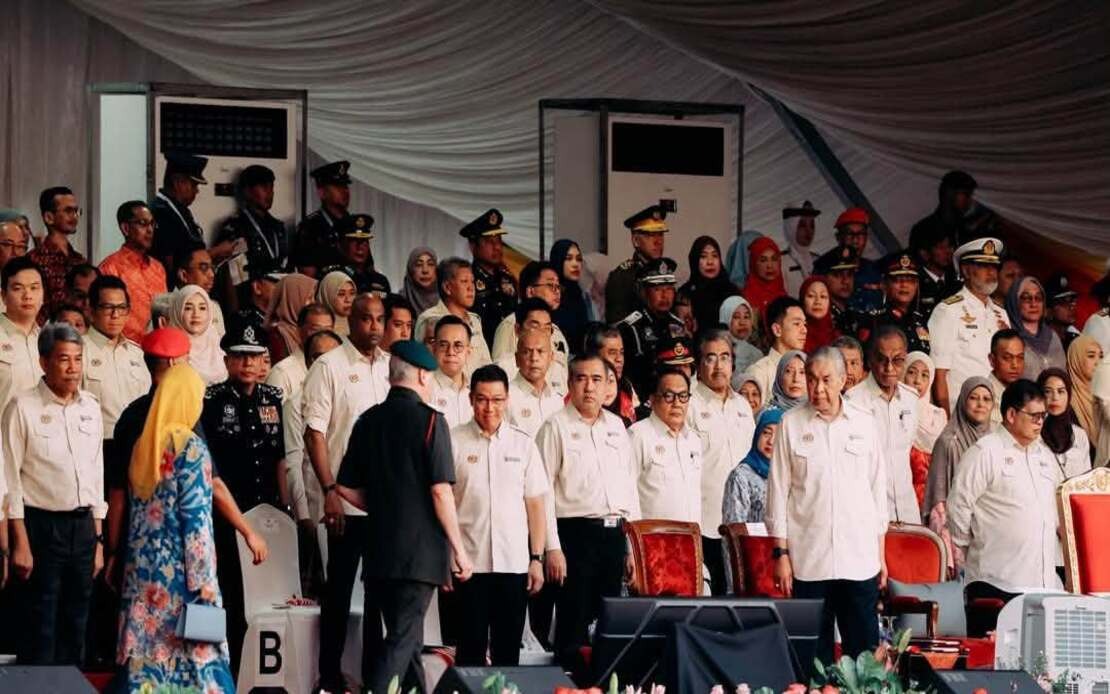
Malaysia's Unity Government can only maintain its stability and effectiveness if the political leadership demonstrates genuine maturity and accepts the country's transformed electoral landscape, according to Domestic Trade and Cost of Living Minister Datuk Armizan Mohd Ali. Speaking on National Day, Armizan underscored that the new political environment emerging after the 15th General Election requires more than mere acceptance—it demands a conscious recognition that governmental continuity directly influences the nation's development trajectory and citizen welfare.
The minister's remarks come at a pivotal moment for Malaysia's coalition government, which brought together multiple political parties and ideologies following the closely contested 2022 election. Armizan highlighted that the shift from the one-party dominant system that characterised Malaysian politics for decades represents a fundamental change requiring psychological and institutional adjustment from both leaders and the broader political class. This transition has already tested the coalition's cohesion through various policy disagreements and competing party interests, making his emphasis on political maturity particularly timely.
Armizan drew a pointed contrast with Malaysia's recent turbulent history between 2018 and 2022, a period that witnessed three prime ministerial transitions and corresponding Cabinet reshuffles within a single term. This instability, he argued, proved fundamentally incompatible with Malaysia's long-term development aspirations and economic competitiveness. The frequent leadership changes during this window disrupted policy continuity, undermined investor confidence, and diverted governmental attention from substantive nation-building efforts toward managing internal political crises. By invoking this cautionary precedent, Armizan implicitly warned against repeating such patterns within the current coalition structure.
The minister attributed the Unity Government's relative stability thus far to a deliberate cultivating of consensus among senior Cabinet members. Despite occasional public disagreements and rhetorical exchanges among party activists—a natural phenomenon in multi-party coalitions—the ministerial leadership has maintained professional and constructive relationships during Cabinet proceedings. Armizan expressed measured optimism about this distinction between grassroots party politics and high-level governmental coordination, suggesting that institutional maturity among decision-makers can insulate policy-making from lower-level party tensions.
Central to Armizan's thesis is the proposition that political maturity requires balancing individual and party rights against collective responsibility for national development. This conceptualisation moves beyond simple power-sharing arrangements toward a more sophisticated understanding of democratic governance within coalition frameworks. Malaysian political actors must simultaneously protect their parties' distinct identities and electoral interests while acknowledging that government instability harms everyone, including those currently in opposition. This equilibrium proves particularly challenging in Malaysia's competitive multiparty environment but remains essential for institutional credibility.
The minister's National Day message reframed national unity beyond symbolic rhetoric into practical governance requirements. He positioned national independence and peaceful coexistence not as historical achievements requiring mere commemoration but as ongoing projects dependent upon contemporary leadership decisions. Citizens across all sectors—from civil servants to business leaders to civil society activists—bear responsibility for contributing to this national project according to their respective roles within governance systems.
Armizan's emphasis on shared national ownership regardless of political affiliation addresses a persistent challenge in Malaysia's plural society: the tendency for citizens to view government legitimacy through partisan lenses. By asserting that the homeland belongs equally to all citizens irrespective of political alignment, he advocated for a civic identity transcending party loyalty. This framing becomes particularly relevant in Malaysian politics, where ethnic, religious, and regional identities intersect with party preferences, potentially fragmenting national cohesion if not carefully managed.
The minister's comments implicitly critique the zero-sum political competition that characterised Malaysian electoral politics under the previous system. Single-party dominance, while providing stability, often suppressed meaningful democratic competition and created governance complacency. The current coalition structure, by contrast, requires continuous negotiation and compromise among partners possessing substantial electoral mandates. While this arrangement introduces coordination challenges, it also embeds built-in checks against authoritarian drift and forces parties to consider broader national interests when pursuing sectional objectives.
For Malaysian observers and regional analysts monitoring the stability of Southeast Asia's longest-functioning democracy, Armizan's message carries significant implications. Coalition governments remain relatively novel in Malaysian politics, and their survival depends substantially on leadership commitment to institutional norms over short-term factional advantage. The minister's articulation of political maturity as a prerequisite for stability signals awareness among governing elites that the old political playbook—relying on organisational dominance and internal party discipline—no longer applies in Malaysia's transformed electoral environment.
Looking forward, the minister's framework suggests that government stability hinges not primarily on constitutional or legal mechanisms but on sustained voluntary adherence to coalition principles by participating parties. This places considerable weight on the political maturity and statesmanship of individual leaders, making personality and institutional culture potentially more important than formal institutional design. As Malaysia's Unity Government navigates inevitable disagreements over policy priorities and resource allocation, whether political actors can consistently prioritise governmental stability remains the central question determining the coalition's longevity and effectiveness in delivering development outcomes that justify public confidence in plural democratic governance.

