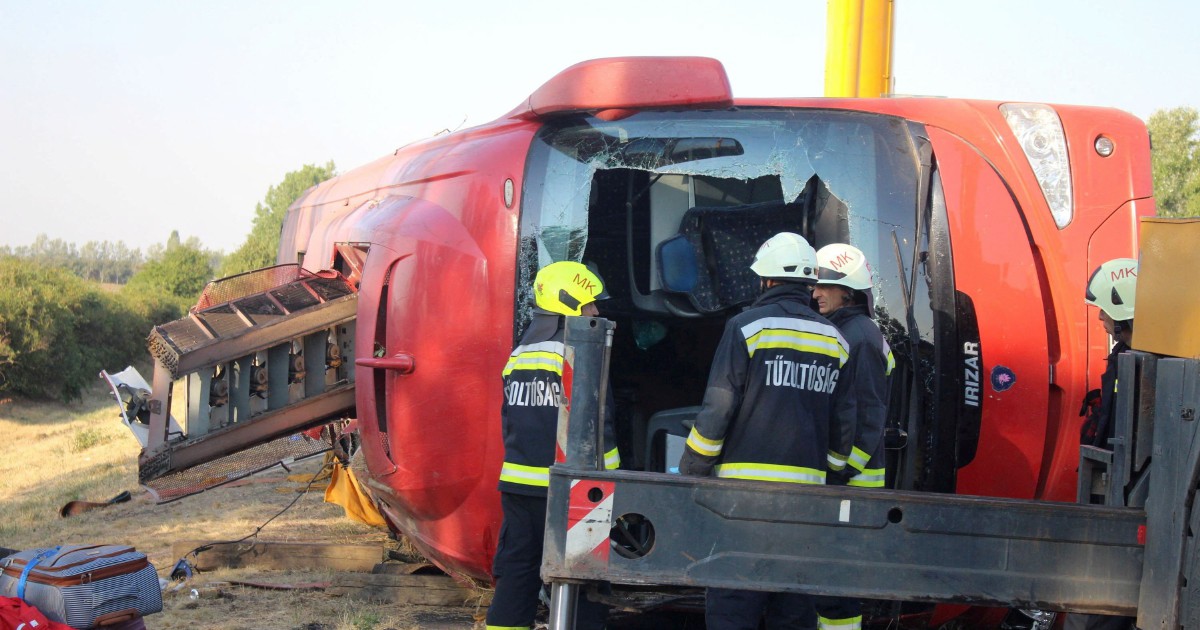
A serious traffic accident in Hungary claimed a dozen lives on Sunday morning when a Polish intercity bus left the roadway and overturned on a major highway near Budapest, drawing immediate responses from both Hungarian and Polish officials and reigniting concerns about coach safety standards across Central Europe.
Hungarian Prime Minister Peter Magyar and other government authorities confirmed the fatality toll, which underscores the dangers associated with long-distance coach travel despite its popularity across Central and Eastern Europe. The overturn left at least 10 additional passengers sustaining serious injuries requiring medical intervention, though early reports suggested the casualty figure could potentially rise as rescue operations continued and medical assessments proceeded.
The incident occurred in the early hours of Sunday morning, a time when fatigue and reduced visibility often contribute to highway accidents. Coach operators throughout the region frequently undertake night journeys to maximise efficiency and meet tight schedules, a practice that places substantial demands on drivers and leaves minimal margin for error when conditions deteriorate or mechanical issues arise. The circumstances surrounding why the vehicle left the roadway remained under investigation, with authorities examining factors ranging from driver fatigue to potential mechanical failure or adverse weather conditions.
Hungary's highways, particularly those surrounding Budapest, carry substantial traffic from Eastern European countries where cross-border coach services connect major cities at minimal cost. These services prove invaluable for ordinary passengers seeking affordable transport across international boundaries, yet the economics of budget long-distance travel sometimes conflict with investment in newer vehicles and comprehensive safety infrastructure. The Hungarian authorities launched immediate rescue and investigation efforts, deploying emergency services to the scene and initiating inquiries that would examine the bus operator's maintenance records and the driver's working hours.
For Malaysian and Southeast Asian readers, the incident illustrates broader patterns observed in developing coach transportation markets where rapid growth outpaces regulatory oversight and infrastructure investment. Similar pressures confront bus operators throughout the region, where long-haul journeys between countries remain critical for connecting people and commerce. The balance between affordability and safety represents an ongoing tension in markets where consumers demand low fares whilst regulators struggle to enforce standards without restricting access to transport.
The Polish bus involved in Sunday's crash carried nationals from Poland, a country with substantial emigration and cross-border labour movement that generates consistent demand for affordable intercity and international coach services. Thousands of Polish workers travel weekly between their home country and employment in Western Europe, creating steady passenger volumes for operators competing fiercely on price. These competitive pressures sometimes incentivise cost-cutting measures that potentially compromise vehicle maintenance or driver welfare standards.
International coach operators face growing scrutiny following several high-profile accidents across Europe in recent years, prompting the European Union to strengthen regulations around vehicle inspections, driver rest periods, and speed governance systems. However, implementation remains inconsistent across member states, and non-EU countries face fewer enforcement mechanisms. The accident in Hungary will likely prompt discussions among regional authorities about harmonising safety standards and strengthening inspection regimes for vehicles crossing multiple borders.
The psychological and social impact of such tragedies extends beyond immediate victims and their families to encompass broader public confidence in coach travel. Each major accident generates soul-searching among operators and regulators, yet fundamental structural factors—demographic demand for cheap transport, insufficient public alternatives in peripheral regions, and competitive market pressures—persist in driving both the volume of coach travel and the temptations toward cost-cutting that sometimes compromise safety margins.
Rescue operations at the Hungarian crash site continued as authorities worked to extract injured passengers and recover remains, with hospitals in Budapest standing ready to receive casualties. The incident would inevitably trigger formal investigations examining every aspect of the vehicle's condition, the driver's credentials and work history, road conditions, and any mechanical or technical factors that might have contributed to the overturn. These findings would be reviewed by transportation officials and potentially influence policy discussions across the region.
The broader European context matters significantly for understanding why such accidents persist despite general advances in vehicle technology and road safety over recent decades. Wealthier nations with robust public transport networks and stricter enforcement see fewer fatal coach accidents, whilst regions where cross-border budget travel dominates and regulatory capacity remains stretched experience higher accident rates. Hungary's position as a transit corridor amplifies these risks, as vehicles from numerous countries regularly traverse its highways carrying passengers and cargo.
For families affected by Sunday's tragedy, the accident represents an incomprehensible loss and raises agonising questions about decisions to trust their loved ones to particular operators. For policymakers across Central and Eastern Europe, the incident provides uncomfortable evidence that existing safety frameworks may require strengthening. The challenge lies in implementing meaningful improvements without eliminating the affordable transport options that enable ordinary people to work, study, and maintain family connections across international borders—an outcome that would itself impose significant social costs.

