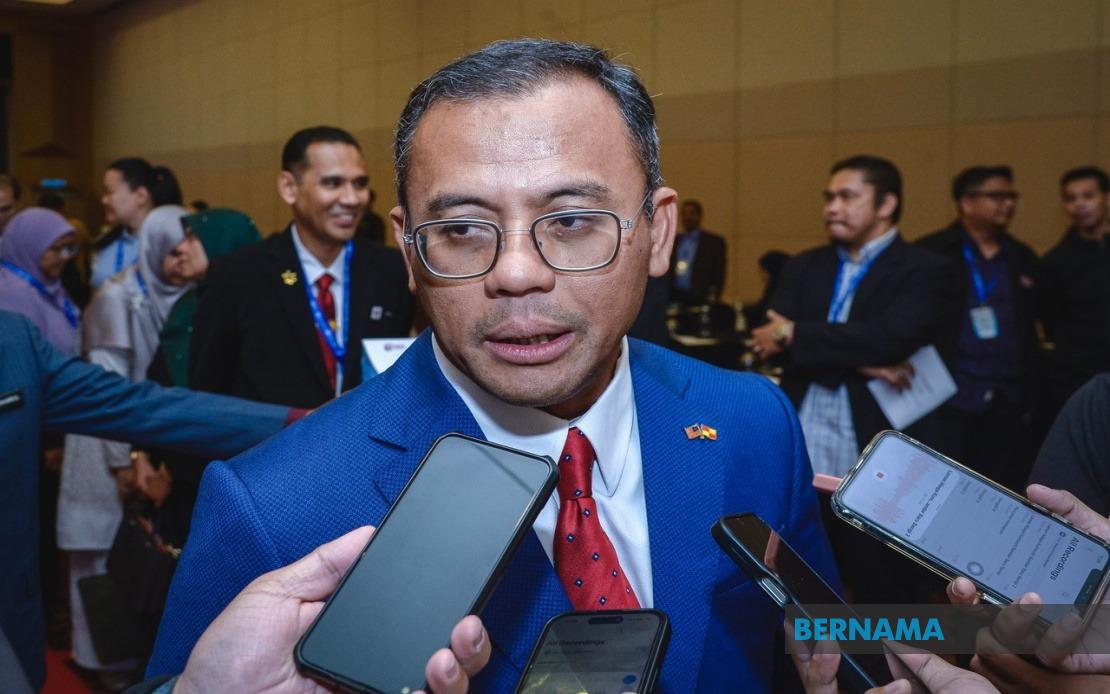
Selangor Menteri Besar Datuk Seri Amirudin Shari has called for a fundamental shift in how governments design and implement policy, arguing that effective governance must recognise the interconnected nature of the challenges facing ordinary Malaysians rather than treating each issue in isolation. Speaking at the Human Ecology International Conference II 2026 in Bangi, Amirudin emphasised that successful policy frameworks should create what he termed "connected environments" that reflect the actual lived experiences of people, families and communities across the state and nation.
The menteri besar's intervention addresses a persistent weakness in contemporary governance: the tendency to compartmentalise issues such as healthcare, childcare, transport, employment and cost of living into separate bureaucratic domains, each with its own set of interventions and targets. This siloed approach, Amirudin argued, fundamentally misrepresents how citizens experience these challenges in their daily lives. When a parent struggles with childcare while managing work commitments and rising household expenses, these are not three distinct policy problems requiring three independent solutions—they constitute an integrated challenge that demands co-ordinated policy responses.
The conceptual framework Amirudin presented reflects growing international thinking about "whole-of-life" or "joined-up" governance, an approach that has gained traction among progressive administrations seeking to move beyond traditional departmental silos. For Malaysian policymakers, this represents a crucial lesson as the country grapples with mounting pressures on household finances, housing affordability, transportation networks and work-life balance. The cost-of-living crisis affecting urban and suburban Malaysians cannot be meaningfully addressed through retail price interventions alone; it demands consideration of transport costs, childcare expenses, healthcare accessibility and employment stability as an integrated ecosystem.
Amirudin highlighted the mounting structural pressures that contemporary families endure, encompassing elevated living costs, protracted commutes, caregiving responsibilities, evolving employment patterns, housing scarcity and the accelerating pace of technological disruption. These pressures do not operate independently but interact and compound one another. A household member commuting long distances faces not merely transport costs but also diminished time for caregiving, reduced flexibility in employment choices and increased stress on family relationships. Yet traditional policy responses typically address transport through one ministry, childcare through another, and employment through a third, without acknowledging these causal interconnections.
Crucially, Amirudin reframed the fundamental question governments should ask about their populations. Rather than simply measuring whether families are "coping"—a passive, survivalist standard—he argued that authorities should focus on whether surrounding policy environments actively enable families to flourish. This represents an elevation of ambition, shifting from mere mitigation of hardship toward creation of conditions for genuine human flourishing. For Malaysia, this distinction carries particular weight as the nation aspires to upper-middle-income status while grappling with widening inequality and stagnating middle-class incomes.
The menteri besar emphasised the critical role universities and research institutions should play throughout the entire policy development cycle. Rather than confined to peripheral advisory roles, academic institutions should be embedded as genuine partners from problem definition through intervention design to rigorous evaluation of actual outcomes. This approach contrasts sharply with conventional practice where universities are occasionally consulted or commissioned for retrospective evaluation. By incorporating academic expertise and evidence throughout, governments can move away from ideologically-driven or politically convenient policies toward interventions grounded in rigorous analysis of what genuinely works for target populations.
The conference setting itself underscored the regional dimensions of these challenges. The Human Ecology International Conference II 2026, held under the theme "Sustaining Human Well-being," convened academics, researchers, policymakers and community representatives from Malaysia, Indonesia, the Philippines and other nations to examine shared challenges affecting human well-being across Southeast Asia. This regional focus acknowledges that rapid urbanisation, demographic transition, technological disruption and globalisation create remarkably similar pressures for families across the ASEAN region, suggesting that policy learning and exchange could yield substantial benefits.
During the conference, Amirudin witnessed the signing of a Memorandum of Understanding between Universiti Putra Malaysia (UPM) and the University of the Philippines Los Baños, formalising academic collaboration in human ecology research. More significantly, the conference announced the establishment of the ASEAN Human Ecology Consortium, a regional platform explicitly designed to facilitate joint research, enable student and faculty mobility, support collaborative publications, promote policy dialogue and foster community engagement among human ecology institutions throughout Southeast Asia. This institutional architecture reflects Amirudin's implicit argument that integrated policy thinking requires integrated academic and research frameworks.
The consortium's establishment carries implications for Malaysian policymaking beyond academic circles. By creating formal mechanisms for policy dialogue alongside research collaboration, the initiative acknowledges that effective solutions to interconnected challenges require continuous conversation between researchers, policymakers and practitioners. Malaysian state and federal governments could leverage this platform to access comparative evidence about what policy approaches have proven effective in addressing similar challenges across the region. The Philippines' experience managing urbanisation pressures, for instance, might illuminate approaches applicable to Selangor's rapid suburban growth.
For Malaysian readers, Amirudin's remarks suggest a potential reorientation in how state and federal governments might approach governance in coming years. The emphasis on integrated, evidence-based policymaking that addresses human realities rather than institutional convenience represents a departure from fragmented sectoral approaches that have characterised much recent Malaysian governance. Implementation remains uncertain and will likely encounter bureaucratic resistance from agencies accustomed to operating within defined jurisdictions. However, the conceptual framework Amirudin articulated—treating families' interconnected challenges as requiring coordinated policy responses—offers a blueprint for more effective, humane and ultimately more economically efficient governance.
The broader significance of Amirudin's intervention lies in its articulation of governance principles increasingly recognised as essential for modern states. As societies become more complex and problems more interconnected, governments that continue operating through traditional departmental silos risk implementing expensive, ineffective policies that fail to address root causes or inadvertently create new problems elsewhere in the system. Conversely, administrations that embrace integrated approaches to policy design and implementation, grounded in robust evidence and genuine partnership with research institutions, position themselves to address contemporary challenges with greater effectiveness and legitimacy.

