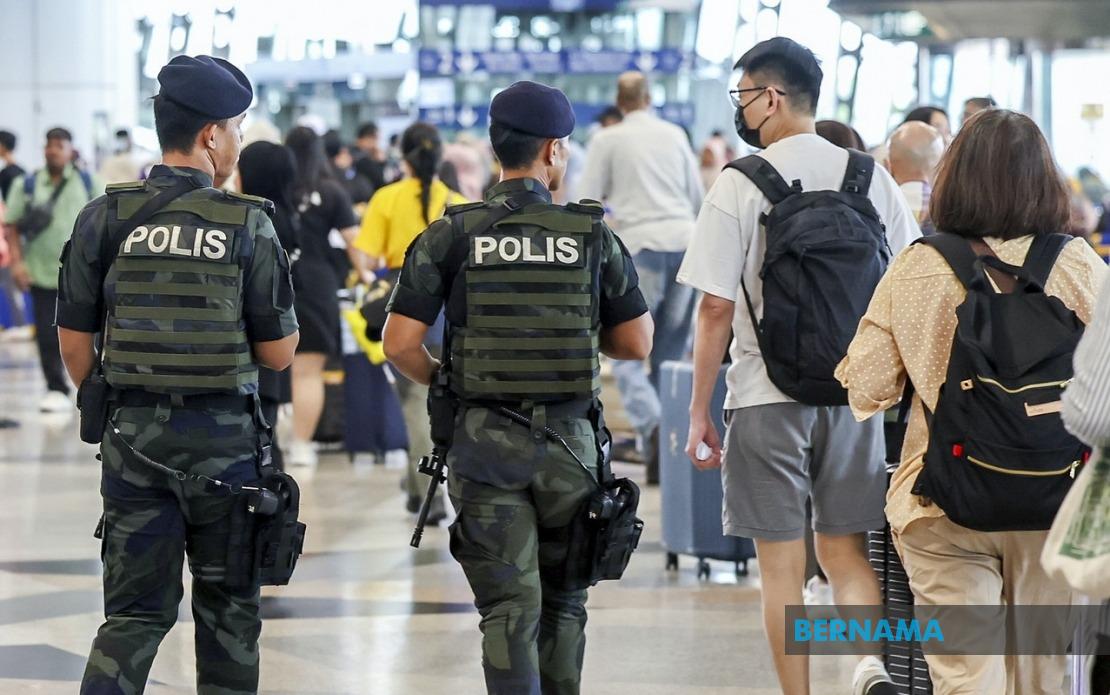
Malaysia's government has announced a comprehensive security overhaul at its airports, deploying personnel from the Royal Malaysia Police to the Aviation Security unit in response to the arrest of a local pilot suspected of attempting to smuggle drugs through Jakarta's airport. Communications Minister Datuk Seri Fahmi Fadzil disclosed the decision at a press briefing in Putrajaya on August 5, following discussions at the Cabinet meeting where the Home Ministry and Transport Ministry presented recommendations to prevent similar incidents. The shift represents a significant recalibration of how Malaysia manages access control and screening at its aviation facilities, marking a move away from reliance on auxiliary police forces toward full uniformed police presence in critical security roles.
The immediate catalyst for these measures was the detention of a 39-year-old Malaysian pilot at Soekarno-Hatta International Airport's Terminal 3, where Indonesian authorities intercepted what they suspected was an attempt to smuggle 25 kilogrammes of narcotics. Indonesian National Police inspections discovered 15 packages containing approximately 70,114 capsules of ecstasy and methamphetamine, with market valuations in Indonesia reaching approximately RM45 million. The scale of the seizure and the involvement of a licensed commercial pilot—someone with regular access to secure airport areas—exposed a vulnerability that authorities had apparently not adequately addressed through existing protocols. For Malaysian aviation authorities, the incident underscores how even individuals with trusted status and legitimate credentials can become vectors for organised crime, particularly when international supply networks are involved.
The government's decision to staff the Aviation Security unit with uniformed police officers rather than auxiliary personnel signals recognition that the role demands a different calibre of training, accountability, and operational authority. Auxiliary police, while trained, typically operate under different oversight structures and may lack the investigative capacity or enforcement powers of regular police personnel. By integrating Royal Malaysia Police officers into AVSEC positions, authorities gain access to enhanced vetting procedures, better linkage with intelligence networks, and clearer chains of command when security breaches occur. This structural change also allows for more seamless coordination between airport security functions and broader law enforcement investigations, particularly where transnational drug smuggling rings are concerned.
Beyond security personnel deployment, Malaysia Aviation Group has been instructed to review and strengthen its vetting procedures for pilots and co-pilots. Current background screening and health assessment protocols will face scrutiny to identify whether gaps exist in how the aviation industry validates the trustworthiness and integrity of flight crew members. These protocols typically examine criminal history, financial stability, substance abuse indicators, and psychological fitness, but the Indonesian arrest suggests that existing Malaysian standards may require enhancement. The government's focus on pilot screening reflects a sobering reality: persons with legitimate access to aircraft and airport infrastructure represent a unique security risk that generic screening mechanisms may inadequately address, especially given the global nature of modern aviation and transnational crime networks.
The Royal Malaysia Police and the Malaysian Border Control and Protection Agency have also been tasked with conducting a comprehensive audit of airport security systems to identify structural weaknesses or procedural loopholes that could be exploited. This examination will likely extend beyond the aviation sector itself to consider how international flights connect to Malaysia's broader border security apparatus. Given that the arrested pilot was detained in Indonesia rather than at a Malaysian airport, authorities must evaluate whether Malaysia's own screening mechanisms would have detected similar attempts, and whether information-sharing protocols with regional counterparts function effectively. The audit represents an acknowledgment that no security system is impenetrable, but systematic vulnerabilities can often be identified and corrected through rigorous analysis.
Fahmi indicated that the government is considering whether to establish a dedicated investigative task force to probe potential links and accomplices in what appears to be an organised smuggling operation. However, he emphasised that any such decision would await completion of Indonesian investigative findings, given that the case remains active under POLRI jurisdiction. This measured approach reflects diplomatic protocol and practical recognition that Malaysia's investigation would be significantly more effective once Indonesian authorities complete their preliminary inquiries and share relevant intelligence. Cooperation between national authorities is crucial in drug trafficking cases, as such operations typically involve networks spanning multiple countries, with distinct roles assigned to individuals in each jurisdiction.
The implications for Malaysian aviation extend beyond security staffing changes. Airlines operating from Malaysian airports will likely face heightened scrutiny of crew conduct and passenger interactions, potentially including increased biometric screening, more rigorous carry-on baggage inspections, and enhanced liaison protocols with intelligence agencies. For crew members, these developments may translate into more frequent background reviews, mandatory participation in anti-narcotics awareness programmes, and stricter protocols governing access to restricted airport areas. While such measures enhance security, they also introduce operational friction that airlines must manage without unduly disrupting schedules or passenger experience.
Regionally, this incident underscores a persistent vulnerability in Southeast Asian aviation infrastructure. Drug trafficking organisations have long exploited airports as transit points, and the involvement of a licensed pilot suggests these criminal networks actively recruit insiders with legitimate access. Thailand, the Philippines, and Indonesia have all confronted similar challenges, with periodic arrests of airport workers, cabin crew, and ground personnel involved in smuggling operations. Malaysia's response—strengthening AVSEC staffing, enhancing screening protocols, and conducting security audits—represents a defensive adaptation that other regional aviation hubs will likely consider or intensify based on similar incidents.
The government's approach balances security hardening with operational feasibility. Rather than imposing draconian restrictions that could damage aviation competitiveness, authorities are targeting the most vulnerable points in the system: personnel access and vetting. This targeted strategy reflects lessons learned from security operations elsewhere, where broad restrictions often prove counterproductive, whereas strengthening specific control points yields better results. The deployment of uniformed police to AVSEC, for instance, changes the security culture at those checkpoints without requiring wholesale restructuring of airport operations.
Fahmi's cautious language regarding investigation teams and follow-up actions also reflects institutional realities. Without access to Indonesian investigative data, Malaysian authorities would operate with incomplete information, potentially duplicating efforts or missing critical connections. The emphasis on studying full reports before deciding on local investigative mechanisms suggests a pragmatic understanding that drug trafficking cases are inherently transnational, and Malaysia's responses must be calibrated to align with partner nations' findings rather than proceed in parallel. This coordination requirement, while potentially delaying domestic accountability measures, ultimately serves the broader objective of dismantling organised networks rather than prosecuting individual operatives.
For Malaysian citizens and residents, these security enhancements represent an invisible but meaningful increase in airport safety and the likelihood of detecting illicit activities. The measures announced do not impose dramatic changes to passenger procedures, but they do strengthen the institutions responsible for preventing contraband and weaponry from being transported through Malaysian aviation facilities. Given that Malaysia hosts several major international hub airports and plays a crucial role in regional air traffic, effective security operations have spillover benefits for neighbouring countries and international aviation corridors.

