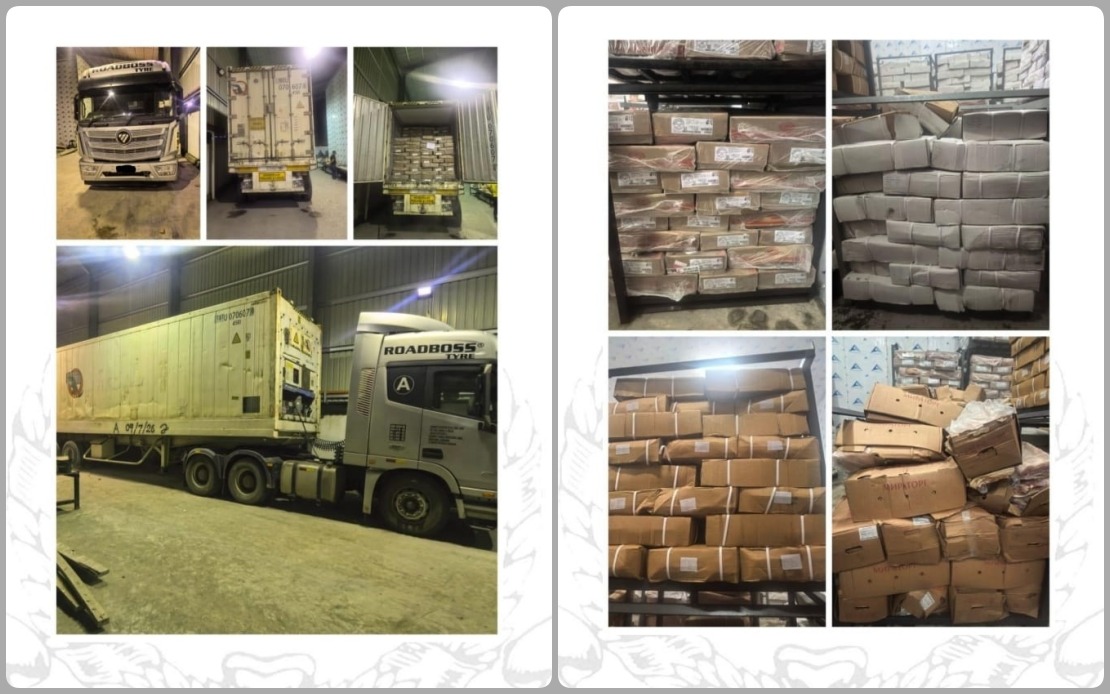
Authorities in Sarawak have dismantled a significant illicit food operation, culminating in the seizure of RM6.19 million worth of frozen pork products during a raid conducted at a warehouse in Miri. The operation, designated Op Taring Chiller and carried out late last night, resulted in the arrest of a 26-year-old local businessman suspected of importing and storing the prohibited items without the requisite documentation. The bust represents part of a broader crackdown on food smuggling networks that continue to pose challenges to Malaysia's regulatory framework and public health safeguards.
According to Datuk Seri Mohd Yusri Hassan Basri, director of the Internal Security and Public Order Department (JKDNKA), the warehouse inspection revealed an extraordinary volume of contraband merchandise. Among the items catalogued were 30,000 kilogrammes of cooked frozen pork large intestines, 18,000 kilogrammes of pork loin arranged across 15 pallets, 750 kilogrammes of pork occupying a single pallet, multiple pallets of bone-in pork bellies with rind intact, and frozen pork shoulder in substantial quantities. The sheer scale of the stockpile suggests a coordinated distribution operation rather than a small-scale illegal venture, pointing to organised networks involved in food smuggling throughout the region.
The enforcement action underscores Malaysia's heightened vigilance regarding the importation and warehousing of frozen food products of undetermined halal status. This concern resonates particularly strongly in Malaysia, where certification and compliance with Islamic dietary requirements remain paramount for both regulatory authorities and consumers. The absence of valid import permits in this case raises questions about how such large quantities of pork—a controlled import category in Malaysia—managed to enter the supply chain and be stored within the jurisdiction. Officials have indicated that the operation reflects their sustained commitment to closing loopholes that allow illegal foodstuffs to proliferate within distribution networks.
The investigation falls under Sections 9(1) and 9(3) of the Veterinary Public Health Ordinance 1999, legislation designed to protect public health by regulating the importation, storage, and distribution of potentially hazardous food materials. In addition to the arrest, authorities have issued a RM25,000 compound notice against the suspect, though the magnitude of the seizure suggests that further charges may be contemplated. The ordinance provides the legal framework for such enforcement actions, though the willingness of importers to violate these provisions indicates persistent profitability within black-market food distribution channels throughout Southeast Asia.
The raid represents one component of an expansive enforcement initiative led by the Wildlife Crime Bureau/Special Investigation Intelligence (WCB/PSK) division, which collaborated closely with the Miri district police headquarters and the Sarawak Division of the Veterinary Services Department. This multi-agency coordination reflects recognition that food smuggling operations often intersect with other illicit activities, necessitating coordinated intelligence and investigative capacity. The involvement of the Wildlife Crime Bureau highlights how food smuggling investigations frequently overlap with environmental crime and contraband trafficking, requiring specialised units equipped with sophisticated investigative methodologies.
Broader statistical data released by authorities illustrates the nationwide scope of such enforcement efforts. Between January 1 and July 10 of this year, the WCB/PSK unit conducted 201 raids across Malaysia, resulting in the apprehension of 375 individuals suspected of various smuggling and organised crime offences. These operations netted total seizures valued at approximately RM264.86 million, encompassing contraband ranging from non-duty-paid goods and subsidised commodity leakage to frozen food products, wildlife merchandise, and electronic waste. The diversity of contraband categories suggests that food smuggling operates within broader ecosystems of illegal commerce, often involving the same trafficking networks, transportation infrastructure, and financial mechanisms as other high-value smuggling enterprises.
For Malaysian readers and policymakers, this seizure carries implications beyond its immediate criminal dimensions. The successful detection and disruption of such a substantial operation demonstrates the growing capability of enforcement agencies to identify and interdict illicit food imports, yet the continued emergence of large-scale smuggling networks suggests that vulnerabilities in border control and warehouse monitoring persist. The case also raises questions about complicity within customs and veterinary inspection systems, as the movement of such quantities typically requires navigation through multiple regulatory checkpoints. Intelligence services will likely use this operation to map supply chain vulnerabilities and identify accomplices within legitimate logistics and distribution frameworks.
The incident assumes heightened significance within Southeast Asia's broader food security and public health context. The region has experienced recurring challenges with substandard and mislabelled food products traversing international borders, affecting consumers across multiple nations. Malaysia's stringent halal and food safety standards have positioned it as a regional exemplar of regulatory rigour, yet cases such as this demonstrate that determined smugglers continue to exploit gaps in enforcement capacity. The operation therefore serves not merely as a discrete law enforcement success but as a potential catalyst for regional cooperation in food supply chain security and cross-border intelligence sharing among Southeast Asian neighbours.
Looking forward, authorities have recommitted themselves to intensifying intelligence collection, real-time monitoring systems, and integrated enforcement operations designed to dismantle smuggling networks systematically. The Royal Malaysia Police indicated that this operation forms part of a sustained campaign against organised crime and illicit trafficking, suggesting that additional enforcement actions targeting the supply chains identified through this investigation may follow. For consumers, the message reinforces the importance of purchasing food products exclusively through licensed retailers and authorised importers, as black-market alternatives present unknown health and regulatory risks regardless of their apparent cost advantages.

