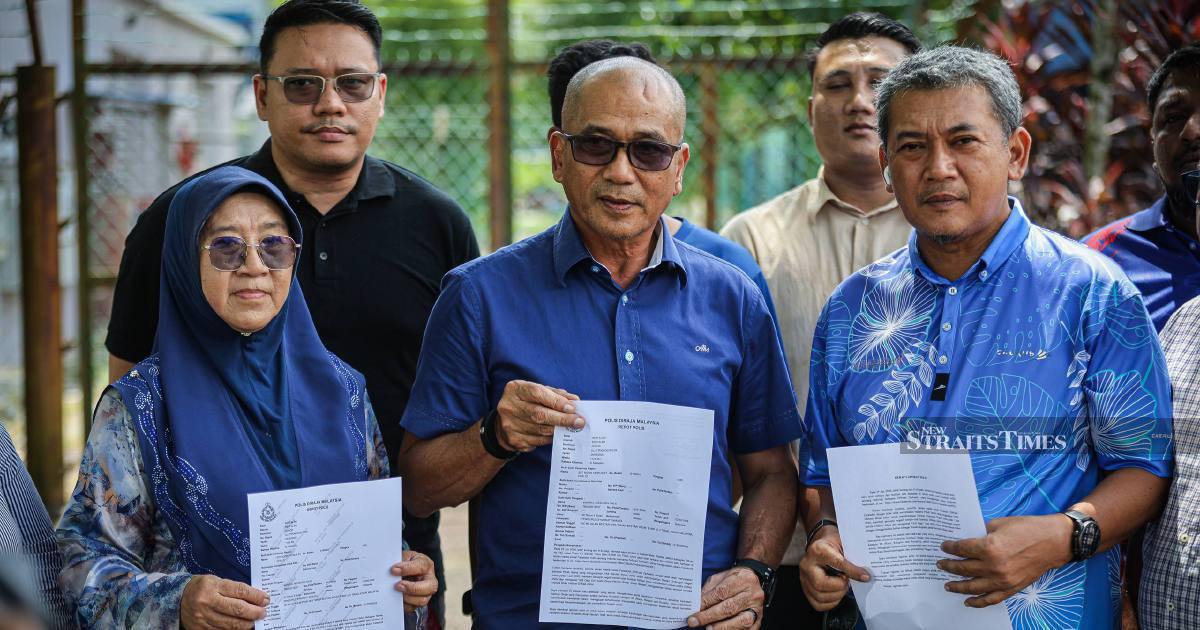
Multiple members of the Johor Barisan Nasional have escalated their dispute with former Umno supreme council member Datuk Dr Mohd Puad Zarkashi by lodging formal police reports, stemming from controversial remarks he made implicating the Johor palace and state Umno leadership in internal political dynamics. The decision to involve law enforcement underscores deepening tensions within Umno's Johor branch and highlights the sensitive intersection between the state's royal institution and party politics.
The police reports represent a significant tactical shift in what began as internal party disagreements. Rather than managing the dispute through party channels or public statements alone, Johor BN figures have chosen to invoke the formal complaints mechanism, suggesting they view Puad's statements as sufficiently serious or damaging to warrant official investigation. This approach carries particular weight given that any allegations touching on the monarchy require careful handling under Malaysian law and social norms.
Puad's background as a former member of Umno's supreme council gives his allegations considerable credibility and potential reach. His position at the upper echelons of the party apparatus suggests he possesses insider knowledge of party decision-making processes, making his claims particularly noteworthy to political observers tracking developments within Malaysia's oldest party. The fact that someone of his stature chose to make public statements on these matters signals serious rifts beneath the surface of Johor Umno's apparent unity.
The specific nature of allegations concerning palace involvement in party matters touches on one of Malaysian politics' most delicate issues. Traditional rulers occupy a constitutionally protected position, and statements questioning their political roles or suggesting improper interference in party affairs can provoke strong reactions. The Johor palace, in particular, commands significant influence and loyalty within the state, making any public insinuations about its political involvement potentially incendiary.
Johor's political landscape has witnessed considerable turbulence in recent years, with power struggles and factional disputes periodically surfacing within Umno's state machinery. The current controversy likely reflects deeper divisions over leadership, resource allocation, and strategic direction within the party structure. These internal contests frequently revolve around access to decision-makers and influence over party machinery, making accusations about external forces like palace interference particularly damaging if left unchallenged.
The filing of police reports rather than pursuing alternative dispute resolution mechanisms suggests that ordinary party mechanisms for addressing such allegations may have broken down or proved insufficient. Party discipline committees and internal arbitration processes typically handle intra-party disputes, but the escalation to police indicates that these conventional channels either failed or were deemed inadequate for the gravity of the situation. This escalation pattern indicates a hardening of positions among the disputing factions.
For Malaysian political observers, the incident illuminates ongoing questions about the boundaries between institutional influence and political decision-making. Whether palace concerns about party direction translate into formal intervention in party affairs remains a contested question in Malaysian politics, with perspectives varying sharply depending on observers' proximity to state power structures. Puad's allegations have effectively forced a public reckoning with these typically private considerations.
The police investigation process itself will prove consequential for both Puad's political standing and the broader Johor political environment. Police inquiries into allegations involving palace matters operate within a distinct legal and political framework, requiring sensitivity to constitutional protections while maintaining investigative integrity. The outcomes and trajectories of such investigations can significantly impact public perception of various political actors and institutions.
Within Umno specifically, this dispute reflects broader challenges the party has faced in maintaining unity and coherent direction following electoral setbacks and leadership transitions. Factionalism has periodically threatened party cohesion, with rivalries between different camps sometimes spilling into public view. Johor, as the state where Umno maintains arguably its strongest organisational presence, carries outsized significance for the party's overall trajectory and positioning in Malaysian politics.
The incident also carries implications for how Malaysian politics continues navigating the relationship between royal institutions and party machinery. Historically, these relationships have involved informal understandings and customary practices rather than explicit documented arrangements. Public disputes that expose or question these relationships can challenge the discretion traditionally governing such interactions, potentially reshaping how these institutional relationships operate in the future.
For observers in Southeast Asia more broadly, Malaysian political disputes involving traditional institutions offer windows into how different Asian democracies manage the intersection between constitutional monarchy and competitive party politics. Malaysia's approach, which emphasises constitutional protections for the monarchy while maintaining competitive political contestation, represents one particular model for balancing these sometimes competing imperatives.
Looking ahead, the resolution of these police reports and the underlying political dispute will likely influence internal Umno dynamics for some time. How party leadership addresses the situation could either restore confidence in party mechanisms for resolving disputes or further polarise the factional landscape. The broader implications extend to Johor politics specifically and to questions about how Malaysian political parties navigate relationships with state institutions during periods of internal contestation.

