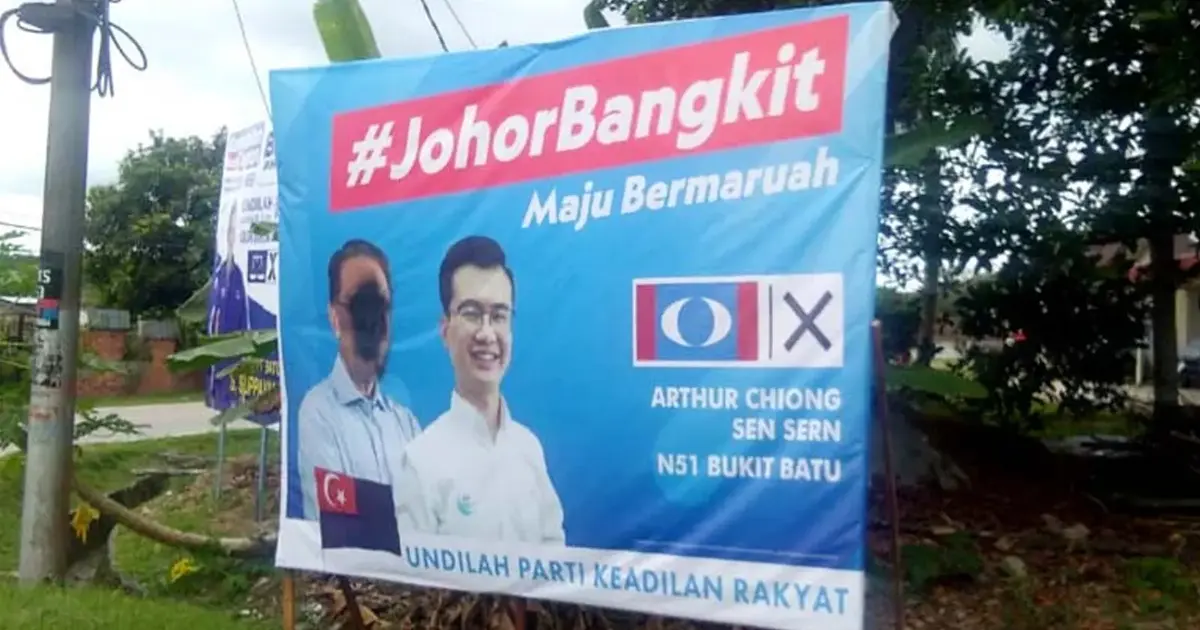
The Royal Malaysia Police received 90 reports throughout the recent campaign period, with authorities opening 25 investigation papers based on the complaints, according to Inspector-General of Police Khalid Ismail. The IGP's statement provides the first official overview of law enforcement activity during the intense election season, offering reassurance that recorded incidents remained largely confined to low-level offences rather than targeting the political participants themselves.
In detailing the nature of the complaints, Khalid Ismail characterized the reported cases as involving minor matters such as vandalism and other surface-level infractions. This characterization is significant as it suggests that the campaign environment, despite the inevitable friction that accompanies competitive political periods, did not descend into serious criminal conduct or organized disturbances. The distinction drawn by the IGP between minor public order issues and direct interference with party or candidate operations reflects an important threshold for assessing campaign security and electoral integrity.
The fact that only 25 investigation papers were formally opened from the 90 reports filed indicates that police conducted preliminary filtering of complaints, determining which cases warranted full investigative resources. This winnowing process is standard practice and underscores that many of the initial reports may have lacked sufficient evidence or fallen outside police jurisdiction. For Malaysian voters and observers monitoring electoral conduct, this two-stage reporting structure demonstrates a measured law enforcement response rather than a reactive or accusatory posture toward campaign activities.
Context matters significantly when evaluating these figures within Malaysia's political landscape. Campaign periods historically generate increased community complaints as rival groups compete for public space, visibility, and voter attention. The threshold between legitimate electoral expression and actionable offence remains contested terrain, particularly in a plural society where different communities may hold varying expectations about acceptable campaign behaviour. The IGP's emphasis that cases did not target parties or candidates directly suggests police maintained a distinction between regulating public conduct and scrutinizing political speech or assembly.
The nature of vandalism complaints—whether involving defaced billboards, damaged property, or unauthorized street markings—occupies a grey zone where minor property infractions intersect with campaign visibility. In Malaysian urban and suburban contexts, such incidents often emerge organically as rival campaign machinery competes for the same physical space. That authorities documented these cases without escalating them into broader allegations against campaign machinery suggests a relatively restrained enforcement posture, though critics may argue this reflects either even-handed policing or, conversely, insufficient vigilance depending on their vantage point.
The 90-report figure itself warrants contextual examination within Malaysian electoral history. The baseline frequency of police complaints during previous campaigns provides necessary comparison, yet such data is rarely made systematically available to the public. Determining whether 90 reports represents typical, elevated, or subdued activity during the campaign season requires access to comparative statistics that remains largely opaque. For regional observers tracking electoral stability across Southeast Asia, such transparency challenges complicate assessment of Malaysian campaign conduct relative to neighbouring democracies.
Investigative outcomes from the 25 opened papers will ultimately shape broader evaluations of campaign-period enforcement. Whether these investigations result in charges, dismissals, or prolonged inquiries affects perceptions of police impartiality and the rule of law's application during politically sensitive periods. The public release of case dispositions and sanctions imposed would further illuminate whether enforcement applied uniformly across political affiliations or concentrated within particular constituencies or demographic areas.
From a governance perspective, the IGP's proactive disclosure of these figures itself constitutes noteworthy practice within Malaysia's policing evolution. Direct communication about campaign-period enforcement statistics enhances transparency compared to previous electoral cycles when such data either remained undisclosed or emerged piecemeal through parliamentary questions. This shift reflects broader institutional recognition that election-related policing decisions benefit from public accounting, particularly in plural societies where trust in law enforcement institutions cannot be assumed.
For Malaysian political stakeholders and international observers, these figures offer modest reassurance that the campaign environment did not deteriorate into widespread disorder or violence. The concentration of complaints around vandalism and comparable low-level matters suggests that structural tensions within the electoral system did not spill into street-level confrontation. However, this surface-level stability masks deeper questions about campaign financing compliance, media coverage equity, and voter access issues that police reports and investigations do not typically address.
Looking forward, the 90-report figure and 25 investigation papers represent empirical markers against which future campaign periods can be measured. Establishing consistent reporting protocols and public disclosure standards allows incremental assessment of whether campaign environments trend toward greater order or increasing friction. For Malaysia's electoral commission and law enforcement agencies, systematizing data collection on campaign-period incidents supports evidence-based policymaking around campaign regulations and enforcement strategies that might reduce both minor infractions and more serious conduct concerns.
The IGP's emphasis that cases involved minor issues rather than targeting parties or candidates carries implications beyond this particular campaign cycle. It establishes rhetorical ground that distinguishes between regulating conduct and constraining political participation, a distinction essential to credible democratic policing. Whether subsequent actions and prosecutions honour this distinction or undermine it through selective enforcement will substantially influence how Malaysian political actors and the broader public evaluate institutional neutrality during future electoral competitions.

