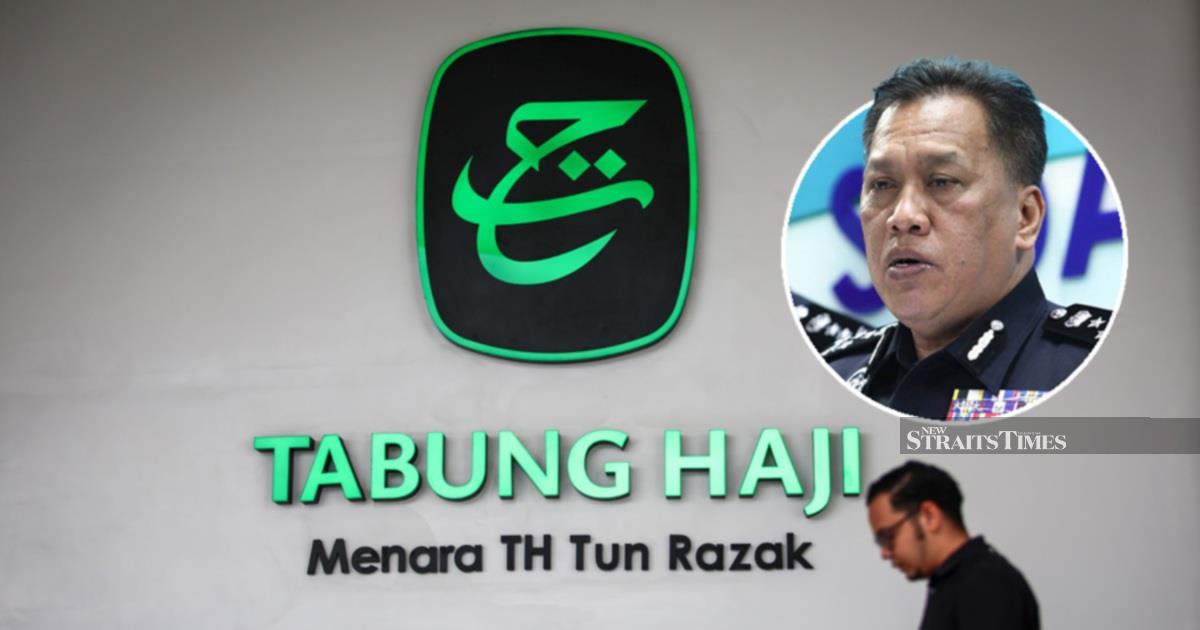
Malaysian police have now accumulated statements from 134 witnesses as their investigation into the damaging Royal Commission of Inquiry report on Lembaga Tabung Haji progresses, with investigators recently calling in an additional 10 individuals for questioning. The sustained effort underscores the scale of the inquiry into findings at the statutory body responsible for managing savings for Malaysian Muslims undertaking the hajj pilgrimage to Mecca.
The RCI report, which concluded in 2023 following a comprehensive review of Tabung Haji's operations, identified substantial governance failures, investment losses, and management irregularities spanning several years. The inquiry's damning conclusions prompted authorities to launch criminal investigations into whether laws were breached during the period covered by the commission's examination. This police operation now represents one of the largest witness-gathering exercises undertaken in relation to the findings.
Tabung Haji operates as Malaysia's primary facilitation agency for the hajj pilgrimage, holding billions of ringgit in funds contributed by Muslim savers across the country. For many depositors, particularly those of modest means, Tabung Haji represents a dedicated savings vehicle for what is considered one of the Five Pillars of Islam. The governance concerns raised by the RCI therefore carry profound implications not merely for corporate accountability but also for public trust in religious financial institutions.
The systematic approach of recording detailed witness statements—rather than simply gathering evidence from documents—suggests investigators are pursuing lines of inquiry that require corroboration and clarification from individuals with firsthand knowledge of decision-making processes. The recent addition of 10 new witnesses indicates that investigation teams are following developing leads as they piece together a chronology of events and decisions that the RCI had previously examined.
Witness interviews in such complex financial investigations typically focus on understanding the motivations, knowledge, and directives behind specific transactions or policy decisions. Given the RCI's findings of investment mismanagement and governance failures, police likely need to establish whether decision-makers deliberately disregarded protocols or whether systemic failures permitted breaches through negligence. The distinction carries significant legal weight when determining which individuals might face criminal charges.
For Malaysian readers and stakeholders with funds held at Tabung Haji, the progression of the police investigation provides some assurance that authorities are pursuing accountability comprehensively. However, the timeline for concluding investigations remains uncertain, which can leave contributors to the scheme in a state of limbo regarding potential recovery or compensation mechanisms. Several other jurisdictions have established processes for returning funds to depositors following corporate governance scandals, though Malaysia has not yet clarified its approach.
The involvement of 134 witnesses also reflects the distributed nature of decision-making within large government-linked organizations. Responsibility for failures typically extends across multiple levels of management, boards, and advisory bodies rather than concentrating in a single individual. Investigators must therefore interview personnel throughout the organizational hierarchy to establish who knew what and when, a process that invariably requires extensive cross-referencing of accounts and documentary evidence.
Public interest in the Tabung Haji investigation remains high given the scale of funds involved and the religious dimension that resonates across Malaysian Muslim communities. Media coverage of the RCI report sparked considerable discussion about how such lapses in governance could occur at an institution entrusted with sacred savings. The police investigation thus operates within an environment of considerable public scrutiny and expectation for tangible outcomes.
The pace of witness interviews—accumulating 134 statements across a period spanning the RCI's investigation and subsequent police follow-up—suggests a methodical but not hurried approach. Complex financial crime investigations commonly require months or years to conclude properly, particularly when establishing culpability requires proving knowledge or intent rather than merely documenting irregular transactions. Investigators appear to be building their case systematically rather than rushing toward premature conclusions.
As the investigation advances, Malaysian authorities face the broader challenge of restoring institutional confidence in Tabung Haji and demonstrating that governance mechanisms are adequate to prevent similar failures. The police investigation constitutes only one component of the response; regulatory reform at the organization and potentially legislative amendments will also be necessary. The witness statement accumulation stage suggests investigators may be approaching a critical phase where findings from interviews will inform preliminary charges or formal recommendations.

