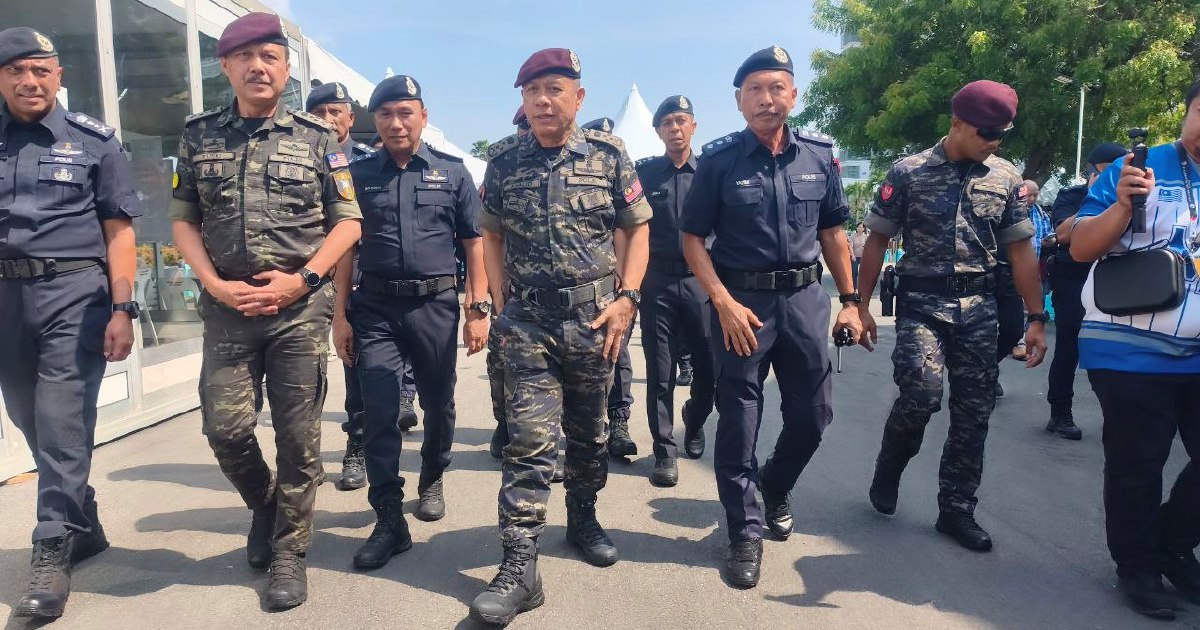
The Negri Sembilan election campaign concluded at the stroke of midnight with law enforcement authorities having documented a substantial volume of reports and formal investigations, according to Inspector-General of Police Tan Sri Mohd Khalid Ismail. Over the course of the extended campaign period, the Royal Malaysia Police received a total of 92 reports from members of the public, while simultaneously opening 24 separate investigation papers based on those reports and related electoral matters.
The disclosure of these figures provides a snapshot of the law enforcement challenges and public concerns that emerged during the political mobilisation across the state. The sheer volume of reports—averaging several per day during what was likely a fortnight-long campaign—suggests that police resources were stretched across multiple types of complaints, ranging from electoral misconduct allegations to public order concerns. The fact that slightly over a quarter of the reported incidents warranted formal investigation indicates that police exercised a degree of selectivity in determining which cases possessed sufficient prima facie evidence or seriousness to justify opening formal dockets.
Election campaigns across Malaysia have increasingly become periods of heightened police activity, as rival political factions mobilise supporters and the potential for public order violations rises considerably. Negri Sembilan, a state with a history of competitive three-cornered contests and politically engaged populations in districts such as Seremban and Port Dickson, typically witnesses robust campaign activities. The presence of federal security forces during such campaigns underscores the government's commitment to maintaining law and order while allowing democratic processes to unfold without disruption.
The nature of investigations opened during campaigns typically spans a spectrum of electoral violations and related offences. These may encompass allegations of illegal campaign financing, misuse of government machinery for partisan purposes, distribution of unregistered campaign materials, intimidation of voters or political opponents, unauthorised public gatherings, and various forms of electoral fraud. The specific composition of the 24 investigation papers was not detailed by Tan Sri Mohd Khalid, leaving some ambiguity about which categories of allegations predominated.
For Malaysian voters and political observers, the presence of an active police apparatus during elections serves a dual purpose. On one hand, it provides assurance that serious breaches of electoral law will be pursued through formal legal channels rather than tolerated as standard campaign practice. On the other hand, there remains perennial concern among civil society groups regarding whether police investigations during campaigns are applied uniformly across all competing factions or whether certain political interests receive preferential treatment. The figures alone cannot answer this question, and independent scrutiny of the investigation papers' outcomes will be necessary to assess their merit.
The conclusion of the campaign midnight deadline marked a transition point in the electoral calendar, after which candidates and parties must cease street-level mobilisation and rely instead on media appearances and digital communication. This shift fundamentally alters the landscape for police work, reducing the volume of public gatherings and campaign-related incidents that occur in physical spaces. The transition typically results in a dramatic decline in reports filed during the official campaign period, though investigations already initiated continue to progress independently.
Negri Sembilan's election carried particular significance within Malaysia's broader political context, given the state's role as a bellwether region and the composition of its state assembly. The campaign period allowed political contestants to directly engage voters across multiple constituencies, translating national political narratives into local campaign messages. Police management of this campaign period therefore represented not merely a routine administrative exercise but rather a test of institutional capacity to maintain order during a politically sensitive period.
The 92 reports figure warrants consideration within the broader pattern of electoral complaints across Malaysian states. Comparable data from previous state elections would provide context for determining whether Negri Sembilan experienced a typical volume of reported incidents or whether this campaign saw either elevated or suppressed complaint levels. Such comparative analysis would help distinguish between systemic patterns and state-specific anomalies, offering insights into how election management practices vary across the federation.
As the state moved beyond the formal campaign period into the voting phase and subsequently the counting phase, the police transition from preventive mobilisation to investigation and prosecution of any substantiated violations. The 24 investigation papers represented active cases requiring follow-up interviews, evidence gathering, and legal assessment before any charges could be filed or cases closed. The outcomes of these investigations would likely only become apparent weeks or months later, when prosecution decisions were finalised.

