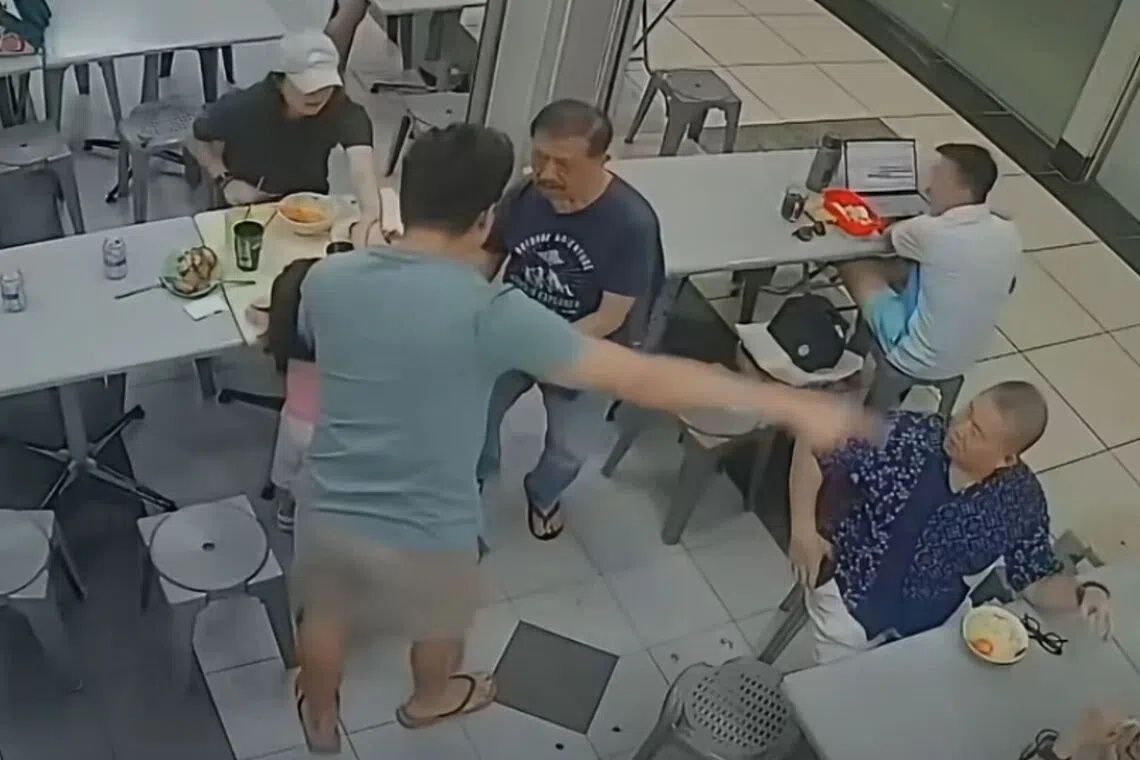
Singapore's police force has launched an investigation into a physical altercation that unfolded at a coffee shop in the East Coast area, where an elderly man was allegedly pushed forcefully to the ground by another patron. The incident, which occurred on August 15, has generated significant online attention after being documented on security camera footage and shared across social media platforms, raising broader questions about community conduct and intervention in public spaces.
The police formally acknowledged receipt of a report on Sunday, August 16, confirming that the matter is under active investigation. An account posted to Facebook by a user identifying themselves as Bei-ing Wanton Noodle provided the first detailed public record of the incident, appealing for information about the man's identity. The post details suggest a concerning moment of escalation from a minor social interaction to a physical confrontation with visible consequences for the elderly individual involved.
According to the account shared online, the elderly man—described as being in his 70s—was present at the coffee shop and contributed to its operations by assisting at a food stall despite his advanced age and mobility challenges. The security footage shows him navigating the crowded coffee shop environment with considerable difficulty, relying on tables on either side of his path to maintain balance and move forward. This detail becomes significant when considering the vulnerability of his physical position at the moment the confrontation began.
The sequence of events captured on video reveals that as the elderly man passed a table occupied by a young girl and a woman, he extended a gesture that would normally be considered benign—a brief pat on the child's head. However, the woman seated with the girl perceived this action as inappropriate and responded by pushing his hand away in a defensive manner. This initial rebuff might have ended the matter, but subsequent developments escalated the situation dramatically beyond what had been a momentary interaction.
A man who had been seated at the same table immediately abandoned his position and walked back toward the elderly man to confront him verbally. Rather than limiting the encounter to words, he proceeded to physically shove the elderly man backward with sufficient force to cause him to fall to the ground. The incident was not isolated to the immediate moment of contact; the aftermath revealed tangible physical harm. The Facebook user reported that his father—the elderly man in question—suffered from severe back pain following the encounter, suggesting potential lasting injury from the fall.
The narrative took an unexpected turn when the man who had pushed the elderly individual allegedly approached him afterward to offer an apology and purchase him a drink. This gesture of reconciliation, however, does not appear to have resolved the broader concerns raised by the family about the appropriateness of the physical response. The son's continued appeal for information about the other man's identity suggests that the family felt the informal apology was insufficient, particularly given the physical consequences his father experienced.
The use of social media to crowdsource information about the incident reflects the modern approach to seeking accountability and justice when formal channels move slowly. Within hours of the initial post at 7:14pm on August 15, the Facebook user received responses from the online community, prompting a follow-up post the next morning at 9:55am thanking netizens for their concern and for providing details related to the incident. Nevertheless, despite this outpouring of public engagement, the family indicated they had not yet successfully identified the man involved in the physical altercation.
This incident raises important considerations about appropriate social boundaries in multi-ethnic, multi-generational public spaces that characterize Singapore's diverse society. The action of patting a child's head, while potentially well-intentioned, crossed a boundary that the girl's guardians felt compelled to defend. The subsequent physical response, however, raises separate questions about proportionality and the appropriateness of using physical force against an elderly person with obvious mobility limitations. The tension between these competing perspectives—cultural norms around child interaction, parental protective instincts, and the vulnerability of elderly citizens—defines the complexity of the situation.
For Malaysian readers and Southeast Asian observers more broadly, the incident highlights how rapid urbanization, density of public spaces, and changing social norms around personal space and child safety create friction in shared environments. The incident also demonstrates the role social media plays in community accountability and the challenges police face in identifying individuals in public incidents when victims or witnesses seek redress. The investigation by Singapore authorities will likely examine whether the force used constituted assault and whether any mitigating factors related to the initial head-patting gesture might apply to the man's legal liability.
The case also underscores the particular vulnerability of elderly citizens in public spaces, especially those who work or spend significant time in bustling commercial environments. The elderly man's need to hold onto tables for support and his advanced age are contextual factors that may influence how the incident is evaluated from both legal and community perspectives. Many observers may feel that the physical response was disproportionate given the elderly man's apparent lack of ill intent and his limited physical capacity to pose any genuine threat to anyone at the coffee shop.
Beyond the immediate facts of the altercation, the incident serves as a reminder that public behavior in multicultural societies requires careful navigation of unwritten social rules. What might be considered a harmless gesture in one cultural or generational context can be interpreted very differently by others. The push-back by the woman sitting with the girl, while firm, appears to have been intended as a non-violent boundary-setting that might have ended the matter had the man at the table accepted it.
As police continue their investigation, they will need to determine whether charges will be filed, what evidence from the security footage and witness testimonies will support any findings, and whether the mitigating factor of the man's subsequent apology carries weight. The outcome of this case may also set precedent for how law enforcement in the region handles incidents occurring in public commercial spaces where surveillance is extensive and community oversight through social media amplifies the investigation process.

