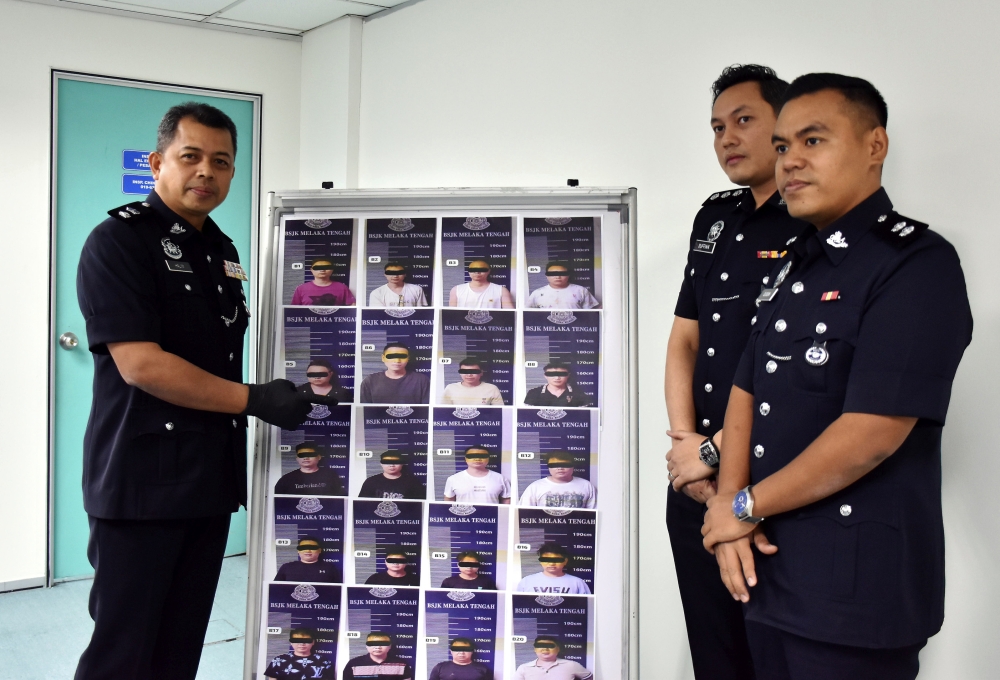
Police in Melaka have broken up a major transnational investment fraud syndicate, leading to the arrest of 21 Chinese nationals suspected of orchestrating an elaborate scheme that lured victims with promises of non-existent financial returns. The operation represents a significant development in law enforcement's ongoing battle against organised cross-border cybercrime networks that increasingly target Southeast Asian consumers with sophisticated digital deception tactics.
The arrests were made following an intensive investigation into complaints from multiple victims who had transferred substantial sums of money to fraudulent investment platforms. The suspects allegedly operated a coordinated operation designed to establish false legitimacy through fake digital platforms, professional-looking marketing materials, and impersonation of recognised financial institutions. This multi-layered approach enabled perpetrators to manipulate trust among potential investors who believed they were engaging with established investment firms.
The scale of this particular operation underscores how organised criminal networks from beyond Malaysia's borders have adapted to exploit digital technology and evolving financial systems. These syndicates typically recruit accomplices locally to help establish banking infrastructure, collect victim payments, and facilitate money laundering through multiple accounts. The involvement of 21 foreign nationals suggests a structured hierarchy with specialised roles—ranging from technical operators managing fake websites to individuals handling financial transactions and customer contact.
Investment fraud has emerged as one of Southeast Asia's fastest-growing financial crimes, particularly affecting middle-income earners and retirees who are often targeted through social media platforms and messaging applications. Perpetrators frequently pose as financial advisors or investment managers, building relationships with victims over weeks or months before requesting deposits into purported investment vehicles. Once money enters the fraudulent system, victims typically discover the deception only after attempting to withdraw profits or principal, by which time funds have been transferred across multiple jurisdictions.
Malaysian authorities have intensified efforts to combat such schemes through dedicated cybercrime task forces and cross-border cooperation mechanisms. The Melaka operation exemplifies how law enforcement agencies are adopting more proactive investigation strategies, working backwards from victim complaints to identify the infrastructure supporting these networks. However, the sophistication of modern fraud operations—including the use of encrypted communication channels, cryptocurrency transactions, and shell companies—continues to challenge conventional investigative approaches.
For Malaysian citizens and residents, this case serves as a critical reminder of the risks inherent in investment opportunities advertised through unregulated channels. Legitimate investment firms in Malaysia are regulated by authorities such as the Securities Commission and Bank Negara Malaysia, which maintain public registers of licensed advisors and platforms. The proliferation of fraudulent schemes has prompted regulatory bodies to issue regular advisories warning the public against unsolicited investment solicitations and encouraging verification of credentials before committing funds.
The arrest of such large numbers of foreign nationals simultaneously also highlights how Malaysia has become a significant transit point and operational base for transnational fraud networks. Geographic proximity to key financial centres, relatively developed digital infrastructure, and access to international banking systems make the country attractive to criminal organisations seeking to establish regional operations. Additionally, weak enforcement in some neighbouring jurisdictions and porous borders facilitate the movement of operatives and the establishment of supply chains for fraudulent materials.
Police have indicated that investigations are ongoing and additional arrests may follow as authorities pursue financial trails and trace victim funds. The operation likely involved cooperation between Malaysian federal police, state-level law enforcement agencies, and international partners through mechanisms such as Interpol. Such collaboration is essential given that victim compensation and asset recovery often require coordination across multiple countries and legal jurisdictions.
The implications of this case extend beyond the immediate arrests. The network's apparent success in accumulating sufficient capital to support 21 operatives suggests the scheme had defrauded numerous individuals across Malaysia and potentially other Southeast Asian countries. Victims may face lengthy processes to recover losses, as authorities work to trace and freeze assets while navigating complex international banking regulations. Many victims may never recover their investments, particularly if funds have already been transferred offshore or converted into cryptocurrency.
For policymakers and regulatory bodies, the case reinforces the need for enhanced digital financial literacy campaigns and stronger reporting mechanisms for suspicious investment activities. Public awareness initiatives must target vulnerable demographics specifically, while education systems should incorporate basic financial literacy and fraud recognition skills. Additionally, closer coordination between Malaysian financial institutions and law enforcement could help identify suspicious transaction patterns before they escalate into major fraud operations.
The international dimension of this operation also suggests that regional cooperation mechanisms within ASEAN require strengthening. Criminal networks operate seamlessly across borders, exploiting regulatory gaps and differences in enforcement capacity. A more coordinated Southeast Asian approach to financial crime investigation, information sharing, and asset recovery would significantly impede transnational fraud operations. The Melaka case demonstrates both the severity of the threat and the necessity for sustained regional commitment to combating organised cybercrime.

