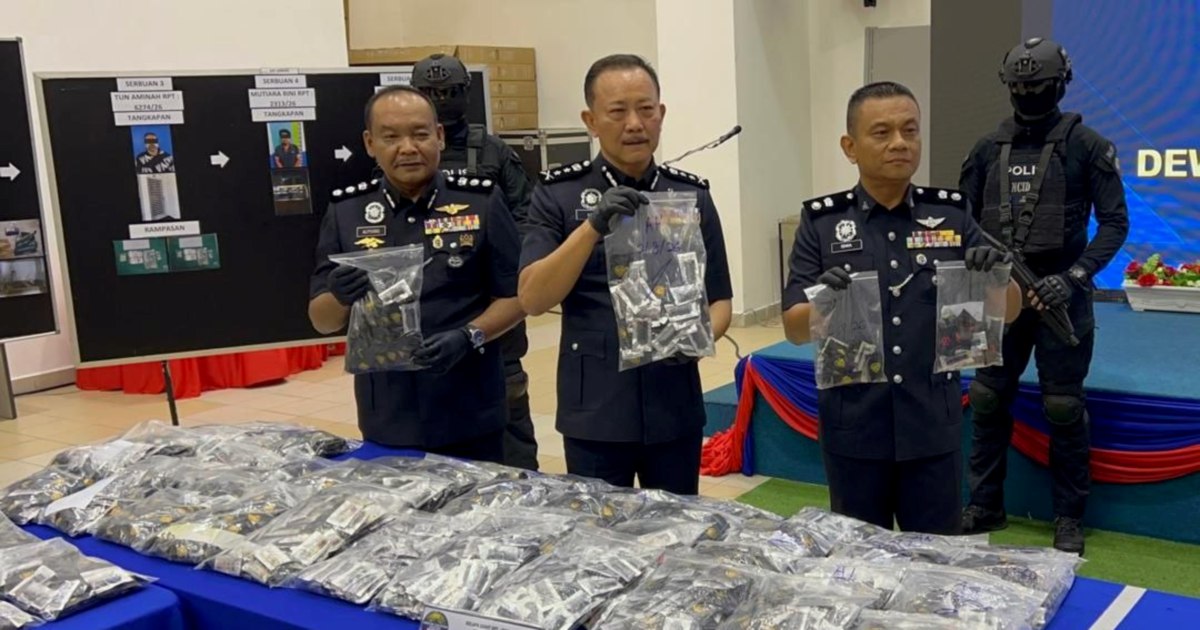
Sunday's coordinated enforcement action in Johor has delivered a significant blow to a sophisticated drug-infused vape cartridge network. The simultaneous raids, carried out across five locations throughout the state, resulted in the detention of seven individuals suspected of orchestrating the production and supply chain for these illicit products. The total estimated street value of materials and finished goods recovered stands at RM10.68 million, according to police assessments.
The operation underscores the evolving nature of drug trafficking in Malaysia, where criminal syndicates have adapted their methods to exploit the growing vaping market. Rather than relying solely on traditional drug distribution channels, organised groups have increasingly turned to vape cartridges as a delivery mechanism—a strategy that complicates detection and appeals to younger consumers. The timing of this bust coincides with mounting concerns across Southeast Asia about the intersection of illicit substance networks and increasingly popular recreational vaping devices.
Fortunately, this seizure illustrates the improving coordination between law enforcement agencies across Johor's jurisdictions. The five-location raid strategy demonstrates tactical sophistication, suggesting that police intelligence had been gathering actionable information on the syndicate's operational footprint for some time. Such synchronised operations are essential when targeting networks that may attempt to disperse assets or personnel if any single location faces imminent danger of discovery.
The sheer financial scale of this operation—approaching RM11 million—places it among the more substantial narcotics busts recorded in the state recently. This figure reflects not merely the street value of completed products but likely encompasses raw materials, cartridge components, and processing equipment seized during the raids. The investment required to establish such infrastructure suggests the group possessed significant capital and logistical capacity, potentially indicating connections to larger transnational trafficking arrangements.
Johor's strategic location as a major transportation hub between Malaysia and Singapore, combined with its proximity to international ports and land borders, has long made it attractive to smuggling operations. Criminal enterprises leverage these geographic advantages to import precursor chemicals, acquire equipment, and distribute finished products throughout the peninsula and potentially across the Strait to Singapore. This latest syndicate likely exploited similar vulnerabilities in border security and interstate movement patterns.
The choice of vape cartridges as a distribution vehicle represents a calculated risk by traffickers. Vaping devices, particularly cartridges and oils, exist within a regulatory grey zone in many Southeast Asian jurisdictions. Consumers perceive them as relatively benign compared to traditional drug paraphernalia, making retail channels and personal possession less immediately suspicious. This perception gap between public perception and actual danger has allowed organised crime groups to operate with reduced detection risk compared to conventional drug distribution.
Younger demographics form a particular point of vulnerability, as they already constitute a significant vaping user base. Marketing drug-laced cartridges as mere flavoured vape products allows traffickers to potentially reach populations with limited prior exposure to substance abuse. This approach also complicates prevention and harm-reduction messaging, requiring authorities to educate the public that vape products cannot be presumed safe merely because they appear commercial or come in packaging similar to legitimate products.
The investigation and arrests now place forensic specialists and prosecutors with the task of establishing the supply chain hierarchy and identifying upstream sources of precursor chemicals and equipment. Understanding whether the syndicate manufactured active ingredients domestically or imported them from abroad will determine the scope of follow-up investigations and potential international cooperation requirements. Similarly, tracing finished product distribution networks will reveal the extent of penetration into end-user markets across the peninsula.
For policymakers and enforcement authorities, this bust provides fresh evidence supporting calls for tighter regulation of vape manufacturing and sale, even in markets where recreational vaping remains legal. Several Malaysian states and neighbouring jurisdictions have begun implementing stricter licensing frameworks and import controls for vape components, recognising the dual-use potential of equipment and chemicals. This operation may accelerate those regulatory discussions by demonstrating organised crime's capacity to industrialise illicit cartridge production.
The successful dismantling of this particular network offers no cause for complacency, however. Seizures of this magnitude typically represent only a fraction of total illicit production and distribution. Other cells and syndicates continue operating elsewhere, potentially adjusting their tactics in response to enforcement success. The seven detained suspects will face investigation, but resource-intensive prosecutions often reveal connections to higher-level organisers who remain at large.
Longer-term disruption of these networks requires sustained intelligence work, cross-border cooperation with Singaporean and Thai authorities, and supply-side interventions targeting the chemical precursors and equipment these groups depend upon. Meanwhile, public health messaging must evolve to address the specific risks of drug-infused vaping products, moving beyond general vaping safety discussions. For Malaysian readers and Southeast Asian observers, Sunday's raid demonstrates that law enforcement recognises the threat—but the sophistication of these criminal enterprises suggests the battle remains far from won.

