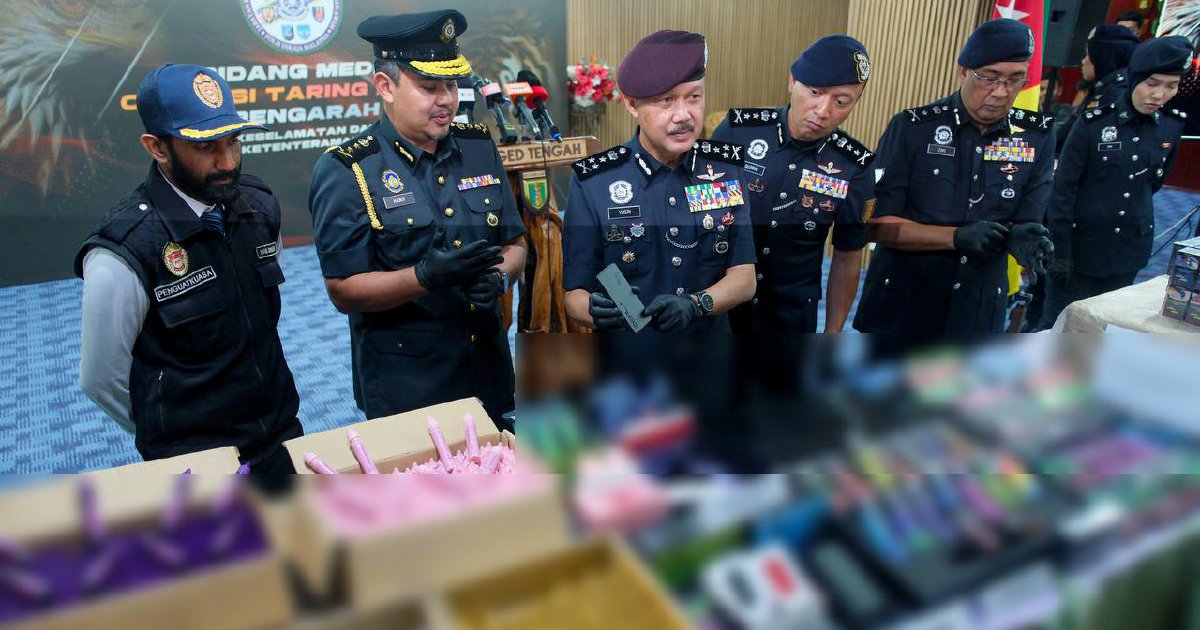
Malaysian law enforcement has struck a significant blow against tobacco smuggling networks, recovering more than RM15.5 million in illicit vaping products and counterfeit cigarettes following two intensive enforcement operations across Selangor in late last month. The raids represent an escalation in the authorities' battle against organised smuggling syndicates that have been systematically importing duty-evaded goods through port facilities and land borders.
The scale of the seizure underscores the substantial economic losses incurred by the government through smuggling operations. Illicit tobacco and vaping products represent one of Malaysia's most persistent contraband challenges, with syndicates exploiting the country's geography and infrastructure to distribute banned or heavily taxed goods to local retailers and consumers. The RM15.5 million valuation reflects the retail equivalent of these goods, indicating the sizeable criminal enterprise disrupted by this operation.
Smuggling of tobacco and vape products has become increasingly sophisticated, with international criminal networks coordinating supplies across Southeast Asia. These operations typically involve multiple layers of distribution, from port-based corruption networks facilitating import, through warehousing operations in designated free zones or industrial areas, to street-level retail distribution. The concentration of smuggling activity in Selangor is unsurprising given the state's strategic location encompassing major port facilities, industrial corridors, and proximity to Kuala Lumpur's consumer market.
The enforcement action carries particular significance for Malaysia's excise revenue. The government imposes substantial taxes on tobacco products to discourage consumption and generate fiscal revenue, with cigarette prices among the region's highest specifically due to duty structures. When smugglers undercut legal prices by avoiding these taxes, they directly erode government income while simultaneously undermining public health objectives. The illicit vape market similarly represents a parallel economy where products bypass regulatory approval processes and taxation mechanisms.
For Malaysian businesses operating legitimately in the tobacco retail sector, smuggling operations create unfair competition. Authorised tobacconists and convenience store operators cannot match the pricing of duty-evaded products, placing pressure on their margins and commercial viability. This competitive distortion incentivises some retailers to stock smuggled goods themselves, effectively corrupting the legitimate supply chain. The raids therefore provide some respite to compliant businesses, though enforcement remains inconsistent across the nation.
The vaping component of these seizures reflects broader regulatory complexities surrounding nicotine delivery devices. Malaysia's approach to vape regulation differs from many developed nations, with stricter limitations reflecting public health concerns and the influence of traditional tobacco interests. However, the high demand for vaping products—particularly among younger demographics and adult smokers seeking alternatives—has created a lucrative market for smugglers to exploit. Illicit vape products often contain unknown chemical compositions and carry significant health risks from unregulated manufacturing standards.
Smuggling syndicates typically operate with sophisticated logistics networks, utilising containerised shipping, falsified customs documentation, and corruption of border officials to move contraband through ports. Once goods clear ports—often misdeclared as legitimate products or routed through third countries to obscure origins—distribution occurs through established underground retail networks operating from premises with minimal regulatory oversight. The two-operation approach used by police suggests coordinated intelligence targeting both warehouse storage and retail distribution endpoints.
From a regional perspective, Malaysia's smuggling challenges are interconnected with broader Southeast Asian illicit trade networks. Syndicates exploiting the ASEAN Free Trade Area's reduced tariff environment sometimes use regional hubs for duty arbitrage, importing goods at lower rates in one jurisdiction then smuggling them to higher-tax markets like Malaysia. Thailand, which borders Malaysia and has different regulatory frameworks, features in several documented smuggling routes. International cooperation with ASEAN neighbours remains essential for disrupting these transnational networks.
The timing of these raids reflects intensified enforcement priorities, particularly as authorities recognise that disrupting smuggling operations requires sustained, coordinated action rather than isolated interventions. However, law enforcement operations alone cannot eliminate smuggling pressures. Addressing underlying demand factors—including price differentials with neighbouring jurisdictions and consumer interest in price-sensitive products—requires complementary policy approaches including tax review, border security modernisation, and supply chain transparency initiatives.
Moving forward, the success of this operation will be measured not merely by the seizure volume but by whether it disrupts the broader syndicate infrastructure. Arresting mid-level operators without dismantling financing, procurement, and distribution networks often results in temporary market disruptions before reconstitution under new management. Intelligence gathered during these raids potentially provides leads for investigating higher-level organisers, border corruption networks, and international supplier relationships—targets that would yield more permanent disruption to smuggling operations. The Malaysian authorities' sustained focus on this enforcement area signals recognition that organised smuggling represents a significant economic and regulatory challenge requiring comparable organisational sophistication from law enforcement.

