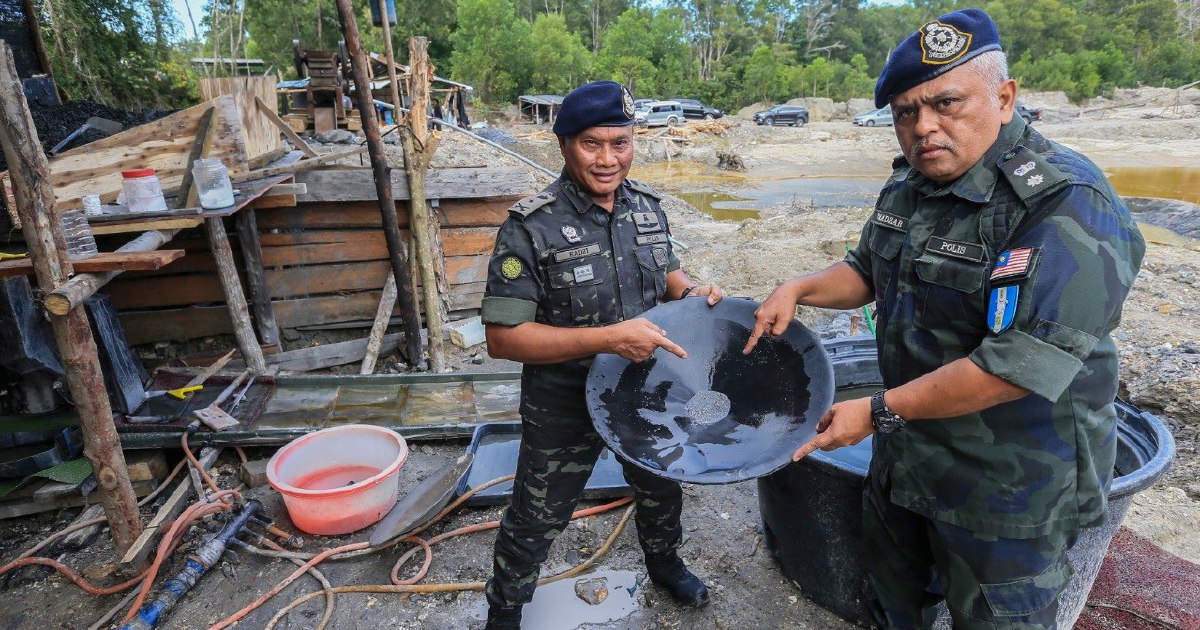
Police in Terengganu have successfully dismantled a sophisticated illegal gold mining operation that was generating substantial daily profits by processing ore extracted from forest reserves. The bust, which resulted in the arrest of fifteen individuals, marks a significant blow against organised small-scale mining activities that have increasingly plagued Malaysia's natural reserves. The syndicate, known locally as 'Mak Siti', was uncovered through a coordinated police raid conducted at Bukit Kor in the Marang district, an area long suspected of harbouring unauthorised mining operations.
The discovery of this organised network is particularly significant given the scale of its operations. Intelligence gathered by authorities revealed that the syndicate was generating approximately RM13,000 in daily revenue from its gold processing activities, translating to nearly RM400,000 monthly. This level of profitability indicates a well-organised enterprise with established supply chains, skilled personnel, and likely connections to downstream markets for processed gold. The financial incentives driving such operations have become increasingly attractive as global gold prices remain elevated, creating lucrative opportunities for criminal syndicates willing to exploit Malaysia's forest resources illegally.
The location of the bust at Bukit Kor is not incidental to understanding the broader pattern of illegal mining in Terengganu. The Marang district, situated in the eastern part of the peninsula, has become a focal point for enforcement efforts due to the concentration of small-scale mining activities in the region. Dense forests and relatively remote terrain provide natural cover for operations, while proximity to processing facilities and transportation networks facilitates the movement of extracted materials. The area's geological characteristics make it attractive for gold prospecting, creating a persistent tension between resource exploitation and environmental conservation.
The syndicate's operational structure, as revealed through police investigation, demonstrates the complexity of modern illegal mining networks in Southeast Asia. Beyond simple pit digging, the operation involved processing facilities where raw ore was refined into usable gold, suggesting technical expertise and investment in equipment. The presence of fifteen detained individuals indicates a layered hierarchy including supervisory staff, equipment operators, labourers, and potentially distribution personnel. Such organised hierarchies distinguish industrial-scale illegal mining from opportunistic small-scale extraction, and their dismantling requires sophisticated policing strategies beyond routine patrols.
From an environmental perspective, illegal mining operations of this scale inflict substantial damage on forest ecosystems that form part of Malaysia's natural heritage. Open-pit mining disrupts soil structures, contaminates water sources with sediment and chemical residues, and destroys habitat critical for forest-dependent species. The cumulative impact of multiple syndicates operating across regions like Terengganu has degraded significant forest areas, undermining Malaysia's efforts to maintain biodiversity and fulfil international environmental commitments. Restoration of such damaged sites requires years of active rehabilitation and substantial financial investment, costs that ultimately fall to the government and taxpayers.
The profitability calculus of illegal mining operations creates persistent enforcement challenges. Even when syndicates are dismantled and arrests made, the economic incentives remain for new operations to establish themselves in the same regions. Participants view the criminal enterprise as a rational economic choice, particularly in communities where alternative employment opportunities are limited. This dynamic requires law enforcement to move beyond reactive busting operations toward comprehensive strategies addressing the socioeconomic factors that drive participation in illegal extraction activities. Equally important are mechanisms to disrupt the downstream market for illegally sourced gold, interrupting the value chain that converts raw material into laundered profit.
The investigation and arrest process involved coordination between multiple police units, reflecting heightened institutional focus on environmental crime across Malaysia. Such busts require intelligence gathering, surveillance operations, and coordination with forest authorities and environmental agencies. The successful outcome at Bukit Kor demonstrates police capacity to mount sophisticated operations against organised crime networks, yet also underscores the ongoing nature of the challenge. Individual successes, however significant, represent temporary disruptions rather than permanent solutions to a structural problem rooted in economic incentives and the difficulty of patrolling vast forest areas.
For Malaysian readers and regional observers, this case illustrates broader trends in transnational organised crime increasingly focused on natural resource extraction. Gold mining syndicates operate across borders, with some operations connected to international networks that launder proceeds through multiple jurisdictions. Enhanced regional cooperation on intelligence sharing and coordinated enforcement has become essential to address this dimension of the problem. The Association of Southeast Asian Nations has begun recognising organised environmental crime as a significant security concern, though enforcement capacity varies substantially across the region.
The detained individuals now face prosecution under applicable laws governing illegal mining and environmental protection. Penalties for such offences include imprisonment and substantial fines, yet deterrent effects remain questionable given the profit margins involved. Policymakers increasingly debate whether criminal justice approaches alone suffice or whether regulatory reform—such as adjusted licensing frameworks for small-scale mining or community-based resource management agreements—might reduce illegal activity more effectively than enforcement alone. The case at Bukit Kor will likely inform ongoing discussions about optimal policy responses to illegal mining in Malaysia's natural reserves.

