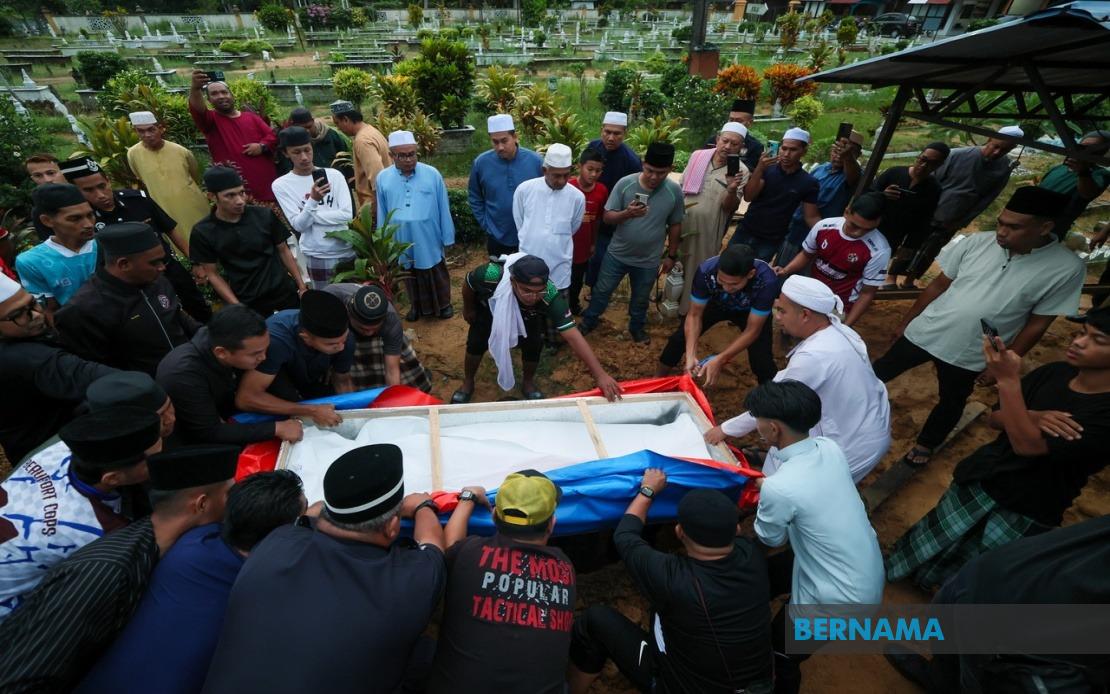
A 29-year-old Royal Malaysia Police corporal who died in an electrocution incident at a police station in Beaufort, Sabah was buried at Kampung Pangkal Kuang Muslim Cemetery in Ketereh, Kota Bharu on Thursday morning, following funeral prayers held at his family residence in Kampung Hutan Pasir. Corporal Mohamad Nur Hafiz Rahim's passing marks a tragic loss for the police force and his close-knit family, who maintained daily contact despite geographic separation across Malaysia.
The fatal incident occurred at 5.50 pm on Wednesday outside Weston Police Station in Beaufort when Mohamad Nur Hafiz and two colleagues were electrocuted while handling a 29-foot metal pole designed for harvesting coconuts near the station premises adjacent to Sekolah Kebangsaan Weston. The two other victims were Corporal Chiu Teck Siong, 40, from Sarawak and Constable Muhammad Raimi Ismarubee, 26, from Terengganu, highlighting the cross-state composition of police personnel working in the region.
Mohamad Nur Hafiz's eldest sister, Nurlella Rahim, 34, expressed her family's gratitude to the Royal Malaysia Police for coordinating the repatriation of her brother's remains to their Kelantan home. Speaking at the cemetery, she noted that the vehicle carrying his body arrived at 4.45 am, allowing the family to conduct burial rites according to Islamic practice. Her comments underscore both the emotional weight of the tragedy and the institutional support mechanisms within the police force during such crises.
The family's relationship with Mohamad Nur Hafiz, despite living across different states, had remained exceptionally strong through modern communication channels. Nurlella described how the five siblings maintained almost daily video calls, with the late corporal participating actively in family WhatsApp groups and consistently engaging with each other's social media posts. This pattern of connection reflects broader Malaysian family dynamics in an era of digital connectivity, where physical distance no longer necessarily diminishes familial bonds.
In her recollection of their final interactions, Nurlella revealed poignant details about her brother's mental and physical state in his last days. During a video call with their mother on Thursday afternoon—the day before his death—Mohamad Nur Hafiz appeared fatigued and unresponsive, though he managed to reassure his mother and promised to continue their conversation later because he needed to report for duty. Even during brief breaks at work, he maintained the family's tradition of video calls, demonstrating his commitment to staying connected with loved ones despite his professional responsibilities.
Nurlella's last interaction with her brother occurred on Sunday, when he shared a video call while taking his wife, Fatimah Shahira, and their child to the beach. These seemingly ordinary moments between family members have assumed profound significance in the aftermath of his sudden death, serving as cherished final memories. The tragic incident has left a young family grieving—Mohamad Nur Hafiz leaves behind a wife and child who must now navigate life without his presence.
The electrocution incident raises critical questions about workplace safety protocols at police stations across Malaysia, particularly regarding equipment handling procedures and electrical hazard management. The circumstances surrounding how three trained personnel came into contact with a live electrical current while using a coconut-harvesting pole warrant thorough technical investigation. Such incidents underscore the occupational hazards faced by police personnel engaged in routine station maintenance and operational activities, often without full awareness of potential electrical risks.
Prime Minister Datuk Seri Anwar Ibrahim responded to the tragedy by ordering a comprehensive, transparent and expedited investigation into the incident. In a Facebook statement, he emphasized that determining the root causes of this fatal accident was essential not only for accountability but also for implementing preventive measures that would protect other police personnel from similar dangers in the future. His directive reflects the government's recognition that institutional learning from tragedies can prevent recurrence and strengthen workplace safety across the police force.
The investigation will likely examine multiple factors including the condition and maintenance history of the electrical infrastructure at Weston Police Station, whether the metal pole had proper insulation or grounding mechanisms, whether safety protocols existed for handling equipment near electrical hazards, and whether personnel had received appropriate safety training. The findings may have implications extending beyond this single station, potentially informing safety reviews across other police facilities in Sabah and nationally.
For the police force, this incident represents not merely an operational loss but a reminder of the hidden dangers officers face in their daily routines. The death of three colleagues serving in Sabah—a region already facing resource constraints and operational challenges—underscores the need for enhanced safety infrastructure and training. Mohamad Nur Hafiz's burial in his home state of Kelantan provides closure for his family, but the broader institutional response will determine whether his death catalyzes meaningful changes in how police facilities manage electrical and equipment hazards.
The tragedy also highlights the human dimension behind police statistics and institutional structures. Mohamad Nur Hafiz was not merely a corporal in the organizational hierarchy but a devoted family member, a husband, a father, and a son who maintained genuine daily connections with his siblings despite postings far from home. His family's emphasis on their close bonds and their gratitude for institutional support demonstrates how such incidents reverberate through families and communities, leaving lasting absences in the fabric of everyday life.

