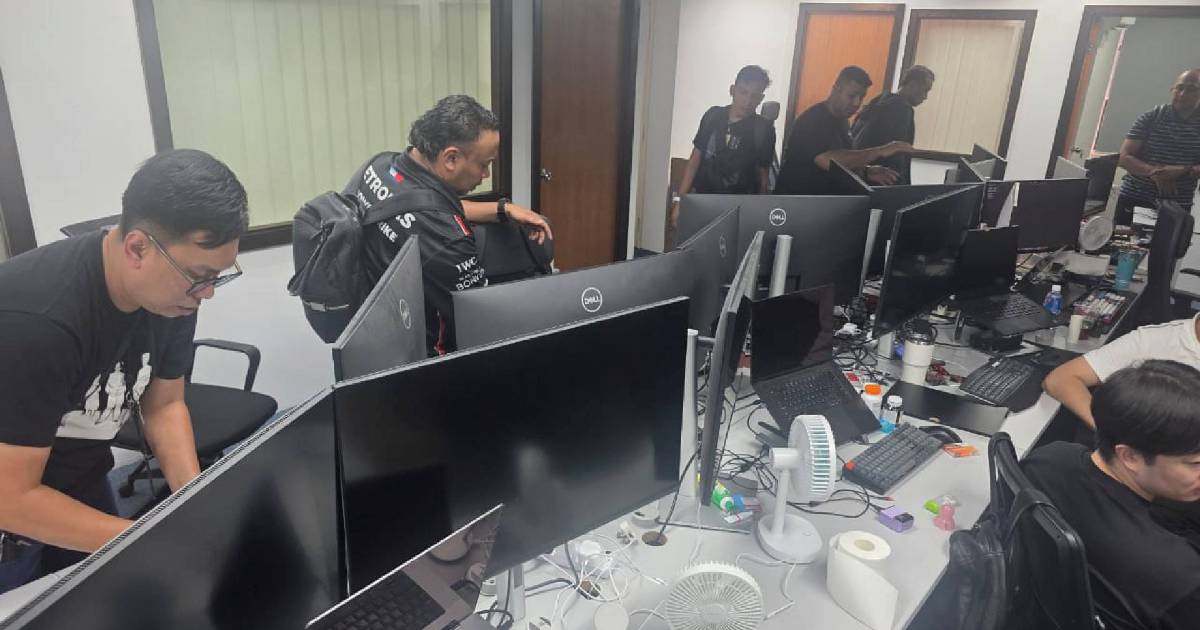
Law enforcement officials in Kuala Lumpur have concluded a significant raid targeting an illegal World Cup football betting operation, resulting in the apprehension of 11 suspects. The enforcement action took place at a commercial office premise situated in the Taman Desa area of Brickfields, where authorities uncovered a sophisticated call centre engaged in accepting wagering activities linked to international football matches.
The detained individuals comprised six nationals from South Korea alongside five others, whose nationalities remain under investigation. The cross-border composition of the suspects suggests an international dimension to the betting network, indicating that operators may have been facilitating wagering across multiple jurisdictions. The involvement of foreign nationals in underground gambling operations has become an increasingly common concern for Malaysian law enforcement, particularly when such activities target Asian markets from dedicated operational bases.
The facility operated as a call centre structure, a hallmark of modern organised betting syndicates that exploit modern telecommunications infrastructure to connect players with bookmakers. These setups typically maintain client lists, accept wagers through voice communication, and coordinate financial transactions across multiple channels. The World Cup represents a high-stakes betting season for underground operators globally, as the tournament's prominence and compressed match schedule create enormous wagering volumes.
The timing of this bust coincides with elevated enforcement activities against illegal gambling networks across Southeast Asia. Malaysian authorities have progressively intensified operations against unlicensed betting operations, recognising their connection to broader organised crime networks that often fund other illicit activities. The Brickfields location, a bustling commercial and residential district in central Kuala Lumpur, underscores how betting syndicates establish themselves within established business precincts to maintain operational cover.
World Cup betting attracts particular regulatory attention because the tournament's global reach and the substantial sums wagered through illegal channels create vulnerability. Malaysian law enforcement recognises that foreign-based operations frequently establish Malaysian call centres as they provide geographic distance from their headquarters while maintaining access to regional betting markets. The presence of six South Korean nationals suggests possible connection to broader Asian-based betting networks that coordinate operations across the continent.
The implications for Malaysian gaming oversight extend beyond this single operation. Sophisticated betting syndicates typically maintain redundant infrastructure, meaning other call centres likely remain operational. The bust highlights the cat-and-mouse dynamic between authorities and organised gambling networks, where enforcement breakthroughs frequently represent merely individual nodes within larger operational frameworks rather than comprehensive dismantling of entire networks.
The investigation phase following the raid will prove critical in establishing the syndicate's operational scope, client base, and financial mechanisms. Authorities will likely examine electronic records, communication logs, and financial transactions to map the network's broader architecture. Such analysis frequently reveals connections to other illegal enterprises and may uncover money laundering patterns that breach Malaysia's financial regulations.
For Malaysian readers and regional observers, this enforcement action demonstrates the ongoing challenge of managing cross-border organised crime. The football betting sector remains particularly vulnerable to exploitation because legitimate interest in major tournaments creates natural cover for underground operators. Additionally, the relatively straightforward technology required to operate call centre betting facilities means that international organised crime groups view Malaysia as an accessible market with sufficient infrastructure and population density to support sustained operations.
The involvement of South Korean nationals may also point toward a specific criminal network structure, as several well-documented betting syndicates operating across Asia maintain significant South Korean involvement. These networks frequently employ nationals from their home countries to operate overseas facilities, creating a familiar command structure and communication channels. Understanding these operational patterns helps Malaysian and regional authorities anticipate where future enforcement attention should concentrate.
Looking forward, this raid underscores the necessity for comprehensive digital monitoring capabilities within Malaysian law enforcement. Modern betting syndicates increasingly employ encrypted communications and sophisticated financial routing, requiring authorities to develop corresponding investigative techniques. The World Cup betting season will likely see additional enforcement operations, though experienced organisers typically implement contingency planning to mitigate single-operation disruptions.
The broader context involves Malaysia's regulatory framework for gambling activities. While licensed betting operations exist legally within the country, illegal betting syndicates undercut licensed operators while avoiding tax obligations and regulatory compliance. Authorities must balance enforcement priorities while potentially considering whether regulatory changes might capture market share currently dominated by underground networks.
Communication with South Korean authorities and coordination on international criminal investigations may become necessary if the syndicate's architecture extends beyond Malaysia. Bilateral law enforcement cooperation has improved substantially, and such cases often trigger information-sharing protocols that illuminate wider operational patterns. For those involved in financial compliance and anti-money laundering efforts, this case demonstrates the importance of monitoring unexpected international business remittances and gambling-related financial flows.

