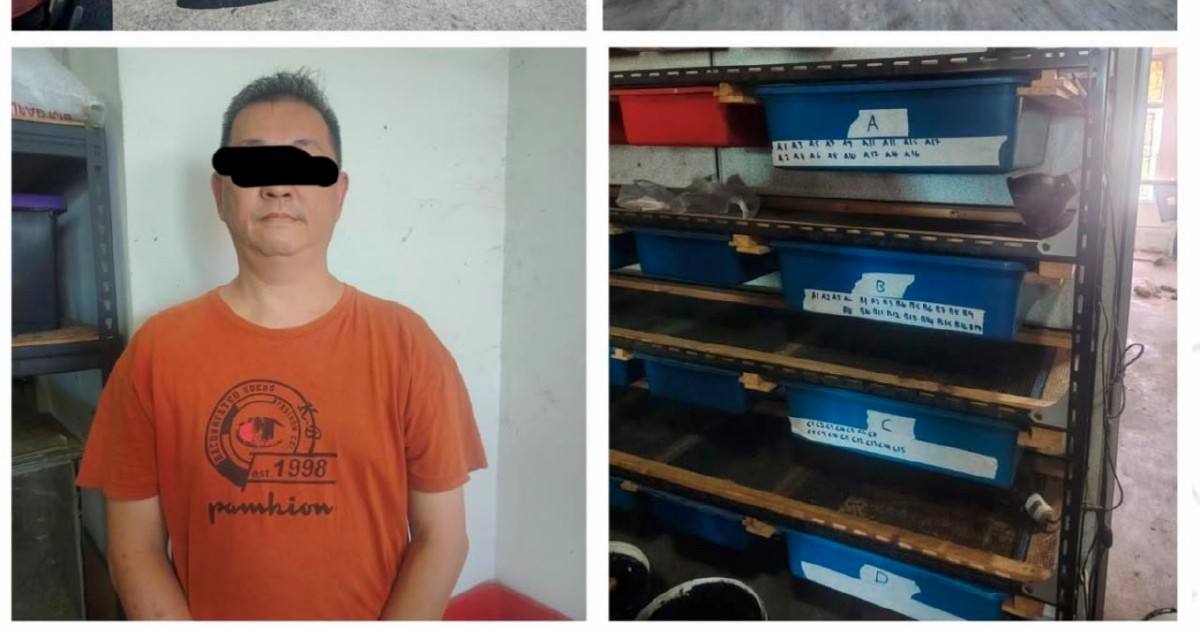
Police have disrupted an illegal reptile trafficking operation in Kedah, securing the rescue of 89 protected turtles and tortoises following coordinated enforcement actions across multiple locations. The raids, conducted in Lunas and Kulim yesterday, resulted in the arrest of one individual and mark another significant blow against Malaysia's persistent wildlife smuggling problem. The seizure underscores ongoing law enforcement efforts to combat the unlicensed breeding and trading of endangered species that threatens both conservation objectives and public safety.
The rescued reptiles represent a substantial cache typical of illegal breeding operations that operate across Malaysia's northern states. Turtle and tortoise species, particularly those protected under national conservation laws and international agreements, command considerable prices in underground markets spanning Southeast Asia and beyond. The scale of this single operation—with nearly 90 individual animals—suggests organised trafficking rather than casual pet ownership, indicating that enforcement agencies are targeting networks with significant financial incentives and potentially multiple distribution points.
Malaysia's biodiversity faces mounting pressure from illegal wildlife trade, an industry estimated to generate billions annually across the region. Turtles and tortoises feature prominently among trafficked reptiles due to their relatively easy care in captivity, high breeding potential, and persistent demand from collectors, traditional medicine practitioners, and food markets. Kedah's porous borders and established transportation networks make it a strategic location for trafficking operations seeking to move contraband toward Thai markets or international shipping hubs. The northern state has historically witnessed significant enforcement activity targeting wildlife smuggling routes.
The protection status of these 89 animals reflects Malaysia's commitment to scheduled species conservation. Many turtle and tortoise species fall under the Wildlife Conservation Ordinance and are designated as wholly protected, meaning their capture, breeding, or sale without permit constitutes a serious offence. International agreements including CITES further restrict trade in endangered reptiles, creating multiple layers of legal protection that traffickers routinely circumvent. The arrested individual faces potential prosecution that could include substantial fines and imprisonment, depending on the specific species involved and quantity trafficked.
Rescue operations of this magnitude present significant logistical and welfare challenges for authorities. The seized reptiles require immediate assessment, veterinary evaluation, and appropriate housing pending either rehabilitation or transfer to licensed facilities. Different species have distinct dietary, temperature, and environmental requirements; improper care during transit or storage can rapidly compromise animal health. Malaysian authorities have increasingly invested in specialised facilities and trained personnel capable of managing confiscated wildlife, recognising that successful prosecution requires maintaining animals in acceptable condition throughout legal proceedings.
The operation reflects broader regional trends in wildlife enforcement coordination. Police, customs, and environmental agencies across Southeast Asia have strengthened intelligence sharing and joint operation planning to disrupt trafficking networks that operate across multiple jurisdictions. Many reptile smugglers exploit the interconnected nature of regional trade routes, moving animals through different countries to obscure origins and complicate prosecution. Coordinated action across Lunas and Kulim suggests information derived from intelligence work or informant reporting that guided authorities to multiple supply or holding points simultaneously.
Illegal reptile trading generates demand across diverse markets, each with distinct characteristics and enforcement challenges. Hobby collectors in urban areas seek rare or unusual species for private collections, while some consumers view certain reptiles as having medicinal properties despite lacking scientific evidence. Food markets in parts of Southeast Asia regard turtle and tortoise meat as delicacies, creating persistent demand that drives capture and breeding operations. Traditional use in some communities, though declining, continues to sustain trafficking networks exploiting cultural practices and limited enforcement capacity in remote areas.
The environmental consequences of unrestricted reptile capture extend beyond individual species loss. Overexploitation disrupts ecological balance in freshwater and terrestrial ecosystems where turtles and tortoises play roles as herbivores, scavengers, and prey species. Illegal breeding operations, particularly those housing large numbers in confined conditions, create disease transmission risks that can spill over to wild populations if animals escape or are released. Escaped exotic reptiles sometimes establish invasive populations with unpredictable ecological impacts, as documented in several Malaysian locations where introduced species compete with natives or prey on endemic fauna.
Malaysian wildlife authorities increasingly recognise that disrupting trafficking requires not only law enforcement but also demand reduction and community engagement. Educational campaigns highlighting conservation needs and the welfare problems associated with illegal capture have achieved modest success in urban areas. However, persistent cultural practices and the profitable nature of wildlife trade ensure that enforcement resources remain stretched. The Kedah operation demonstrates that successful investigation and prosecution remain possible through dedicated investigation work, yet the volume of illegal activity suggests that detected cases represent only a fraction of actual trafficking.
This enforcement action carries particular significance for Kedah and northern Peninsular Malaysia, where biodiversity conservation competes for attention alongside economic development priorities. The state's agricultural and manufacturing sectors, while economically important, have historically driven habitat loss affecting reptile populations. Conversely, Kedah's natural areas, including freshwater systems and limestone formations, harbour several endemic and regionally significant reptile species worthy of protection. Enforcement actions targeting illegal trade help reinforce conservation narratives and demonstrate government commitment to protecting natural heritage despite economic pressures.
The arrested individual will face investigation regarding the scope of trafficking operations, potential accomplices, and destination markets for the seized animals. Such investigations frequently uncover wider networks involving breeders, transporters, retailers, and purchasers distributed across multiple states or countries. Successful prosecution can yield intelligence enabling authorities to pursue connected individuals and disrupt supply chains at various points. The outcome of this case may influence enforcement priorities and resources directed toward reptile trafficking in subsequent months.
Moving forward, the seizure highlights ongoing vulnerabilities in wildlife protection frameworks and enforcement capacity. Coordinated efforts involving enhanced border monitoring, intelligence operations, and international cooperation represent essential components of effective anti-trafficking strategy. The involvement of police rather than solely environmental enforcement personnel reflects recognition that wildlife crime constitutes serious criminality demanding full law enforcement engagement. Sustaining pressure against illegal trade requires continued investment in investigative capacity, specialist training, and inter-agency coordination across Malaysia's enforcement apparatus.

