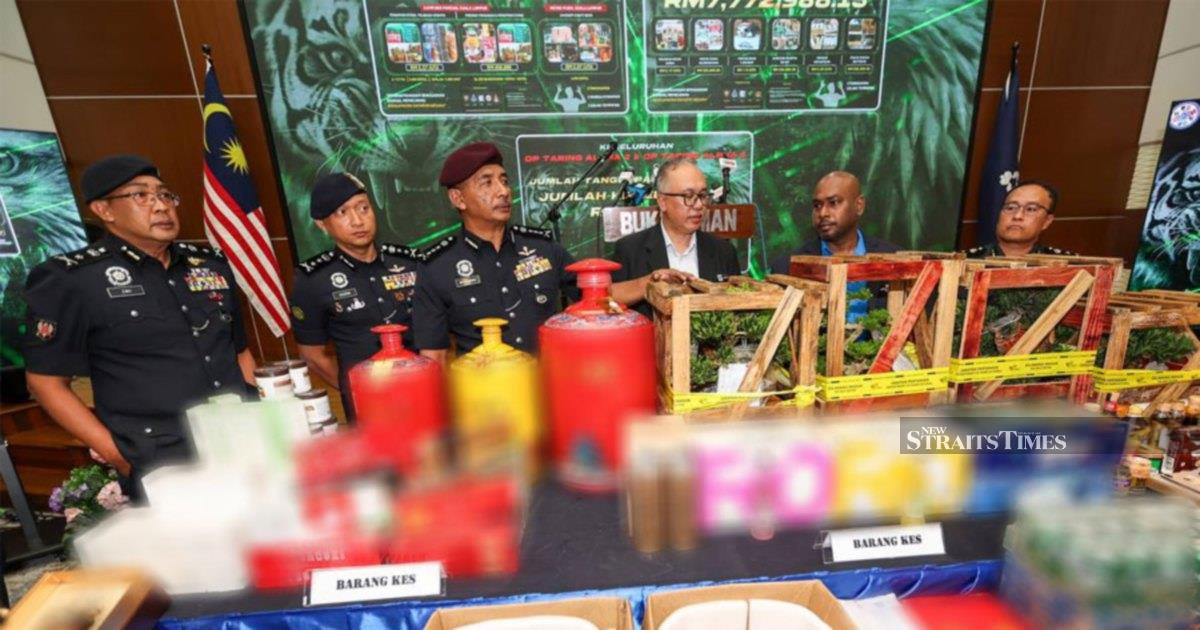
The Royal Malaysia Police have moved decisively against organized smuggling in the Klang Valley, culminating in two coordinated enforcement operations that have yielded five arrests and the confiscation of contraband and illicit goods valued at RM12.8 million. The twin raids, launched in Kuala Lumpur and Klang, represent a significant blow to criminal networks operating in Malaysia's most economically vital corridor.
The synchronized operations underscore intensifying police efforts to combat transnational smuggling activities that have become increasingly sophisticated in recent years. Smuggling operations targeting Malaysia typically involve complex supply chains spanning multiple countries, requiring coordination between maritime traffickers, warehouse operators, and distribution networks. The Klang Valley, with its position as a major regional trade hub and proximity to crucial port facilities, has become a strategic zone for such illicit enterprises seeking to circumvent customs and taxation authorities.
Law enforcement agencies have observed a troubling evolution in smuggling methodologies, with criminal syndicates employing advanced logistics systems and cryptocurrency transactions to obscure their activities. The scale of contraband recovered—valued at nearly RM13 million—suggests these operations were not opportunistic ventures but rather well-established criminal enterprises with substantial operational capacity. The arrests indicate authorities have successfully penetrated the organizational structure of these networks, identifying key operatives at various levels of the supply chain.
The geographic focus of these raids carries particular significance for Malaysia's economic security and trade integrity. Kuala Lumpur and Klang, serving as the country's administrative and commercial heartbeat respectively, are frequently used as transshipment and distribution hubs by smuggling networks. The proximity of Port Klang, one of Southeast Asia's busiest maritime facilities, provides smugglers with access to international shipping routes while enabling the rapid distribution of contraband throughout the region. Enforcement actions at these critical junctures prove essential for disrupting the flow of illicit goods before they permeate the broader market.
Contrabanded merchandise undermines the formal economy in multiple ways, creating unfair competition for legitimate businesses forced to operate under regulatory constraints and tax obligations. When smuggled goods penetrate retail and wholesale markets, they distort pricing mechanisms and reduce government revenue crucial for public services and infrastructure development. Malaysian consumers may unknowingly purchase substandard or counterfeit items lacking proper quality assurance and safety certifications, posing potential health and safety risks.
The financial implications extend beyond immediate revenue losses. Smuggling operations frequently intertwine with broader organized crime ecosystems, generating funding for networks involved in trafficking, money laundering, and other serious offences. By targeting significant smuggling ventures, police effectively interrupt revenue streams that finance wider criminal enterprises. The RM12.8 million seizure represents funds that would otherwise circulate within illicit financial networks operating across Southeast Asia.
International smuggling routes have become increasingly interconnected, with Malaysian ports serving as nodes in global supply chains for contraband destined for markets throughout the region and beyond. This regional dimension makes Malaysia's enforcement efforts particularly consequential for neighboring countries struggling with similar challenges. Disrupting smuggling operations in Kuala Lumpur and Klang creates ripple effects throughout Southeast Asian smuggling networks, complicating logistics and increasing operational costs for transnational criminal organizations.
The timing of these operations reflects broader police strategy emphasizing intelligence-led enforcement targeting organized criminal networks rather than street-level enforcement alone. Successful operations require extensive groundwork, surveillance, and coordination between multiple investigative units. The simultaneous execution of raids in two separate locations indicates thorough operational planning designed to prevent suspects from fleeing or destroying evidence as police close in on their operations.
The five arrests represent individuals at various organizational levels, though authorities have not yet disclosed whether these include network leadership or peripheral operatives. The distribution of arrests across both operations suggests police identified and apprehended targets across different segments of these smuggling enterprises. Subsequent investigation and interrogation will likely yield intelligence regarding supply sources, distribution channels, and market connections that could enable broader dismantling of these criminal networks.
These enforcement outcomes reflect Malaysia's commitment to border security and customs control amid challenging operational environments. The Klang Valley's status as a major regional economic zone inevitably attracts criminal enterprises seeking to exploit trade corridors and logistics infrastructure for illicit purposes. Police must continually adapt enforcement strategies to counter increasingly sophisticated smuggling methodologies while maintaining intelligence capabilities necessary for proactive rather than reactive operations.
The seizure of RM12.8 million in contraband sends a clear message to criminal networks that Malaysian authorities maintain capacity and determination to disrupt smuggling enterprises, regardless of operational sophistication. However, the scale of these operations also highlights the magnitude of smuggling challenges facing enforcement agencies across the region. Sustained enforcement effort, international cooperation, and port security improvements remain essential for combating what represents a persistent and evolving threat to Malaysia's economic integrity and public safety.

