A 34-year-old man identified by the initials MY has been arrested by Jakarta police following a bomb threat that forced the evacuation of SD Srengseng Sawah 15 Pagi state elementary school in the Jagakarsa district of South Jakarta. The incident unfolded on Monday, the first day of the school year, when a WhatsApp message was circulated to teachers and administrative staff claiming that explosives had been planted at eleven separate locations throughout the school compound. The threat was received while students were participating in a flag-raising ceremony, one of the most significant moments in Indonesia's school calendar, making the alarm particularly disruptive to what should have been an auspicious beginning to the academic year.
The suspect was apprehended in the vicinity of the school just hours after the threatening message was sent. According to investigators, MY lives in close proximity to the school, and his swift capture suggests that police were able to quickly identify and locate him through communications records. Greater Jakarta Police spokesperson Sr. Comr. Budi Hermanto confirmed that the individual had been taken into custody and transferred to South Jakarta Police headquarters for questioning. Authorities have begun the process of establishing the suspect's motivation for sending the threat and determining what he hoped to achieve through his actions, though no clear motive has yet been publicly disclosed.
The school's administration did not hesitate in responding to the threat. Recipients of the WhatsApp message reported it to authorities immediately after the flag-raising ceremony concluded, triggering a rapid evacuation of the entire school population. The decision to clear the premises reflected the seriousness with which Indonesian schools and law enforcement now treat such threats, particularly in the context of a nation that has experienced terrorism in the past. This precautionary approach, while undoubtedly causing disruption to students and families on an important day, prioritized the safety of nearly a thousand young pupils and their educators.
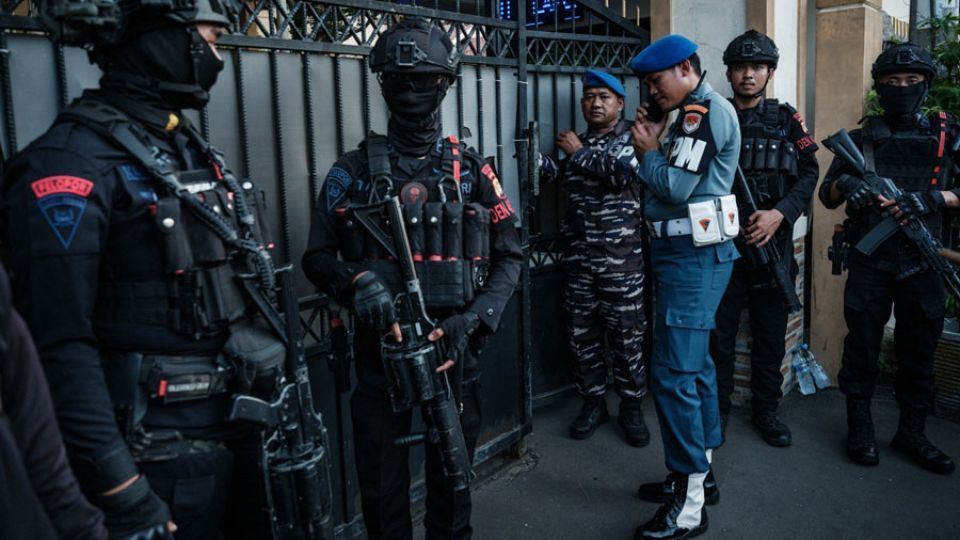
The police response was swift and comprehensive, reflecting the gravity attributed to bomb threats in Indonesia's security framework. The Gegana bomb disposal unit, Indonesia's specialized explosive ordnance team, was deployed to the school premises to conduct a thorough physical search of the compound. Alongside Gegana, the counterterrorism squad Densus 88, known for its expertise in terrorism-related investigations, also arrived at the location. These elite units collaborated to examine all eleven locations mentioned in the threatening message, conducting detailed sweeps to identify any suspicious devices or packages. The deployment of such high-level security personnel underscores how seriously such threats are treated within the Indonesian law enforcement system.
Despite the extensive and professional search conducted by these specialized units, no explosives or suspicious devices were discovered anywhere within the school grounds. This finding, while reassuring to parents and school administrators, does not diminish the severity of the threat or the disruption it caused. In an era where security concerns weigh heavily on public institutions, particularly those serving children, the distinction between a genuine threat and a hoax becomes largely academic—both demand the same emergency response protocols and both impose significant costs on educational institutions and families.
Jagakarsa Police chief Comr. Nurma Dewi provided additional details about how the threat was disseminated. The WhatsApp message was sent directly to members of the school's teaching staff and administrative personnel, ensuring that the threat would be rapidly detected and reported. This targeting of school staff rather than posting in public channels suggests a level of familiarity with the institution's communication structure. The decision to send the message during the flag-raising ceremony, a mandatory and highly visible school event, ensured maximum disruption and impact, raising questions about whether the suspect had prior knowledge of the school's schedule and procedures.
The timing of this incident carries particular significance for Malaysian and broader Southeast Asian readers, as school security has become an increasingly pressing concern across the region. Many schools in Malaysia, Singapore, and other ASEAN nations have similarly struggled to balance providing a safe, welcoming environment for students while implementing robust security measures. The Jakarta incident serves as a reminder that even in the region's largest and most developed nations, schools remain vulnerable to false threats that can nonetheless cause genuine alarm and disruption to learning. Educational institutions in Southeast Asia continue to grapple with how to respond proportionately to such incidents without creating a climate of fear among students and staff.
The investigation into MY's background and motivations is ongoing, with police emphasizing that all aspects of the case remain under active inquiry. Investigators are attempting to determine whether the suspect acted alone or whether others were involved in planning or facilitating the threat. They are also examining his history, relationships with the school community, and any personal grievances that might have motivated his actions. In some cases, such threats stem from disputes with school management or other institutions; in others, they reflect mental health crises or attention-seeking behavior. Understanding the root cause will be crucial not only for prosecution but also for developing preventive strategies.
The incident raises broader questions about the adequacy of security measures at primary schools in Indonesia and across Southeast Asia. While secondary schools and universities have long been recognized as potential terrorism targets, elementary schools serving young children have traditionally been considered lower-risk environments. This case challenges that assumption and suggests that all educational institutions, regardless of the age of their students, require thoughtful security protocols. However, balancing security with the need to maintain schools as open, welcoming spaces for children remains an ongoing challenge for administrators and policymakers throughout the region.
For the students of SD Srengseng Sawah 15 Pagi and their families, the incident has cast an unwelcome shadow over what should have been an exciting transition to a new school year. Parents who sent their children to school on Monday expecting a typical day of new beginnings instead found themselves caught up in a security emergency. The psychological impact of such incidents on young children, even when no actual danger materializes, should not be underestimated. School counselors and administrators will likely need to provide reassurance and support to help students process the disruption and restore their confidence in the safety of their learning environment.

