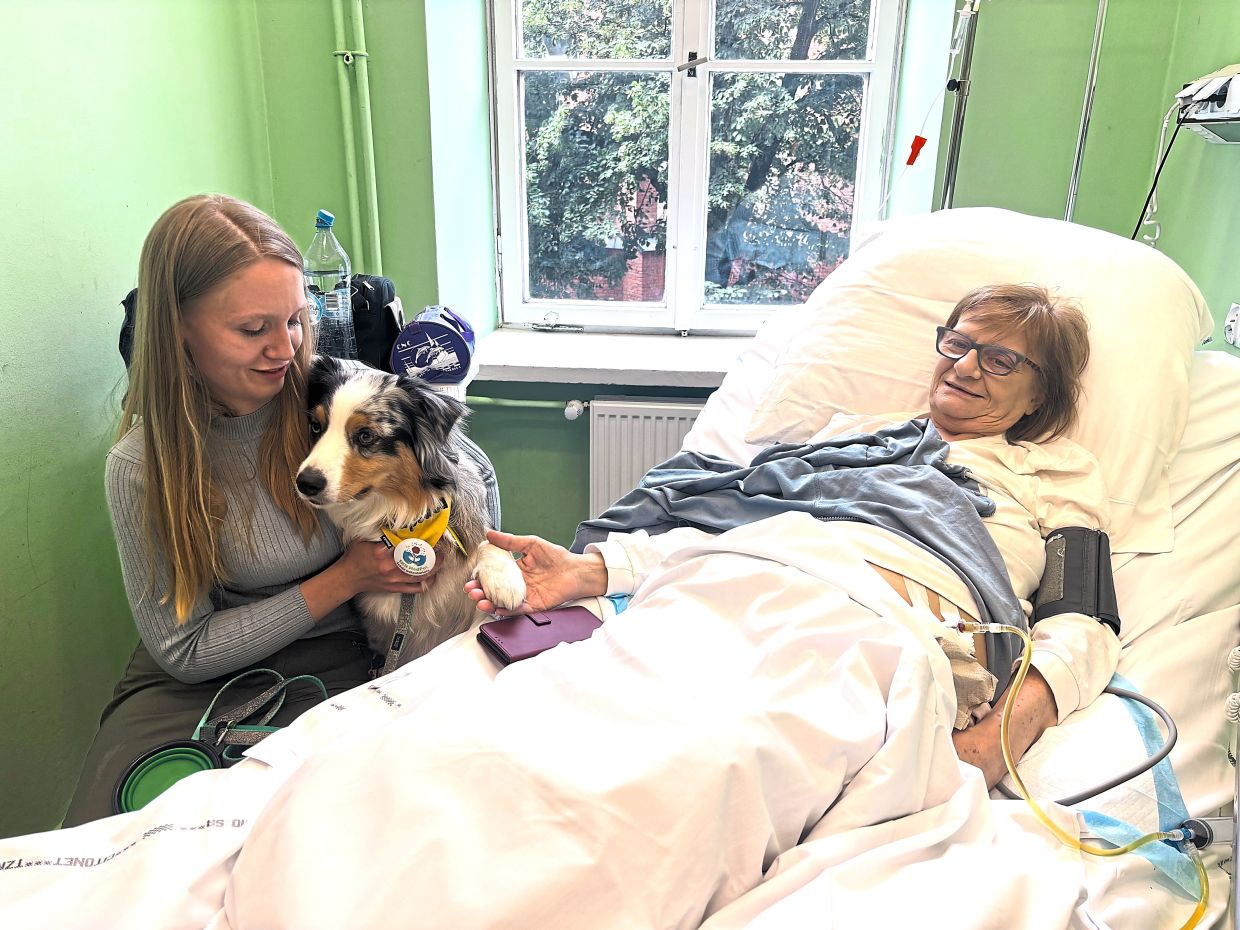
A proposed law in Poland would grant terminally ill patients an explicit legal right to receive visits from their own pets while in hospice and palliative care wards, addressing what medical professionals describe as a growing crisis of isolation among the dying. The legislation, introduced to parliament by a lawmaker from Prime Minister Donald Tusk's centrist party, emerged from the experiences of Dr Tomasz Dzierzanowski, director of the Palliative Medicine Clinic at the Medical University of Warsaw, who has witnessed firsthand the profound emotional and psychological impact that animal companionship provides to patients facing their final days.
The impetus for the initiative came from an encounter with a cancer patient named Waldemar who expressed greater concern for the welfare of his two cats than for his own deteriorating health condition. When Dzierzanowski arranged for the cats to be brought into the ward, the emotional reunion—witnessed by staff and other patients—proved transformative. The patient's visible joy and the reciprocal emotional response from his animals demonstrated something that contemporary medicine often overlooks: that the presence of a beloved companion animal can address dimensions of suffering that pharmaceutical interventions cannot touch. That moment crystallised for Dzierzanowski the necessity of placing this issue within a formal legal framework rather than leaving it to individual hospital discretion.
Currently, while many Polish clinics permit pet visits informally, no universal legal protection exists to guarantee this right. This patchwork approach creates uncertainty for patients and their families at precisely the moment when emotional security matters most. Ewa Lutka-Krawczyk, a 70-year-old gallbladder cancer patient admitted to the palliative ward at Dzierzanowski's clinic, exemplifies the human dimension of this issue. Upon receiving her diagnosis, her primary anxiety was not for herself but for Gaja, a shelter dog she had rescued three years earlier and with whom she had developed a profound bond. The separation has been acute: Gaja, left in the care of Lutka-Krawczyk's husband, has largely stopped eating, while her owner lies in her hospital bed awaiting what she describes as a reunion that would provide solace during her final period.
Dzierzanowski's analysis of why this legislation matters extends beyond individual cases to encompass broader sociological trends affecting modern palliative care. He observes that many of his patients—particularly elderly individuals—experience profound isolation because they have outlived their peer networks, having no family members or friends remaining to provide emotional support. Simultaneously, younger patients entering palliative care often lack the deep friendships that characterised earlier generations, having instead built social networks through digital means that prove inadequate when physical presence becomes essential. This creates what he describes as an epidemic of loneliness at the end of life, a form of suffering that manifests physically and spiritually in ways that complicate the dying process.
The role of animal companionship in mitigating this isolation has been demonstrated repeatedly within Dzierzanowski's clinic. In addition to facilitating visits from patients' own pets, he permits trained therapy animals to circulate through the wards. During a recent visit, Kluska, an Australian shepherd therapy dog whose name translates as "dumpling," moved through the ward providing comfort to multiple patients. Wojciech Zelik, a 58-year-old admitted with a tumour, found sufficient energy to raise himself in bed to interact with the animal, while Lutka-Krawczyk held Kluska's paw and experienced visible emotional relief from the tactile connection. These interactions, however brief, provided psychological respite from the weight of terminal illness.
Therapy dogs offer additional benefits beyond direct patient contact. Hospital staff—nurses, cooks, and other personnel who work regularly with dying patients—experience measurable stress relief from animal interactions. During Kluska's rounds, multiple staff members engaged in spontaneous, unstructured play with the dog in hallways and common areas, moments of levity and normalcy within an environment saturated with illness and loss. One cook supplemented Kluska's visit with ham from the hospital kitchen, a gesture suggesting how animals can rehumanise institutional spaces and create opportunities for small acts of kindness that restore dignity to caregiving relationships.
Malgorzata Brzozowska, a medical student who works with therapy dogs in palliative settings, emphasises that the benefits of animal visitation extend to all parties involved. Patients experience measurable calming effects; their loved ones gain reassurance witnessing the comfort their relatives derive from animal contact; and the animals themselves demonstrate reduced stress when visiting patients with whom they have established bonds. Brzozowska interprets the animals' behavioural responses as evidence of genuine comprehension: the dogs appear to understand that something has changed in their owners' circumstances, that the person who was consistently present has unexpectedly disappeared into an institutional environment. The reunion provides the animal with confirmation and comfort alongside whatever psychological benefits accrue to the human patient.
The legislation now under review in parliament's health committee represents an attempt to move beyond ad hoc compassion toward systematic recognition of animals' role in end-of-life care. Katarzyna Piekarska, the lawmaker sponsoring the bill, notes that despite the absence of explicit legal permission, animals are already present in many Polish hospitals—but their presence occurs in a regulatory grey zone that lacks formal safeguards or guidelines. Codifying the right to pet visitation would establish clear standards regarding health and safety protocols while simultaneously affirming a principle: that dying patients deserve access to sources of comfort and meaning, even when those sources do not fit neatly into biomedical models of care.
For Malaysia and other Southeast Asian nations developing palliative care infrastructure, Poland's legislative approach offers instructive precedent. As regional healthcare systems expand end-of-life care programmes, policymakers might consider how cultural attitudes toward animals and family structures intersect with contemporary patterns of urbanisation and demographic change. Many Southeast Asian societies maintain strong intergenerational family bonds that may reduce some sources of isolation, yet rapid urbanisation and migration patterns are creating conditions analogous to those Dzierzanowski describes in Poland. The introduction of formalised pet visitation rights could represent a measured intervention addressing genuine gaps in existential care without requiring substantial financial investment.

