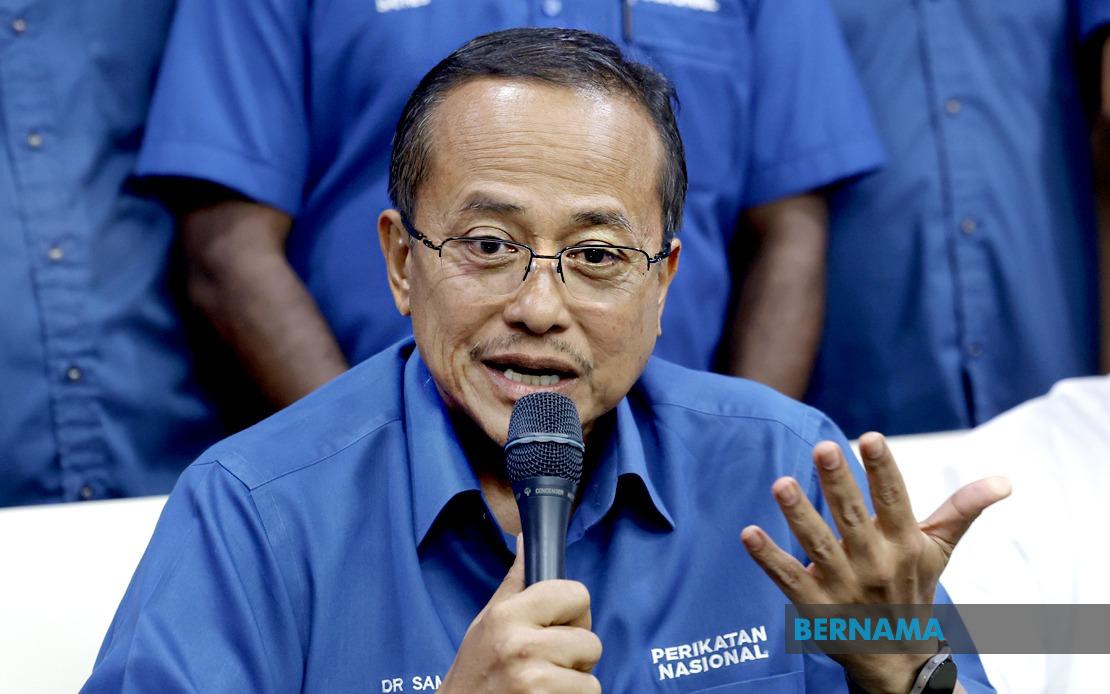
The political landscape in Melaka is poised for potential realignment as Perikatan Nasional signals its readiness to engage in serious negotiations with Barisan Nasional before the upcoming state election. Datuk Seri Dr Ahmad Samsuri Mokhtar, who chairs PN, conveyed this openness while addressing delegates at the 23rd Perak PAS Convention in Taiping, indicating that discussions between the two major coalitions remain possible given the timing of events. His remarks inject fresh momentum into speculation about post-election alliances and coalition-building strategies that could reshape Malaysian state politics.
Although formal talks between PN and BN have not yet commenced, Ahmad Samsuri emphasised that substantial opportunity remains for productive dialogue. He stressed that the absence of a fixed dissolution date for the Melaka State Legislative Assembly keeps negotiations feasible, suggesting that both coalitions could still reach an understanding before an election campaign officially begins. This procedural flexibility, he argued, offers a window during which the two coalitions might explore common ground and forge arrangements without the pressures and complications of active electioneering.
The timing of such an alliance would carry significant implications for Melaka's political future. Ahmad Samsuri's comments came in the presence of Perak PAS Commissioner and PAS vice-president Datuk Idris Ahmad, underscoring the seriousness with which PN's leadership views potential cooperation with BN. PAS, as a major component of PN, would play a crucial role in any such arrangement, making the presence of senior party figures at this announcement noteworthy for observers tracking the coalition's strategic direction.
More strikingly, Ahmad Samsuri presented analysis suggesting that a PN-BN partnership could achieve an estimated 75 per cent probability of victory in forming the next Melaka government. This statistical projection appears to rest on seat distribution calculations and voter preference assessments that PN's strategists have conducted. Such a substantial majority would not merely secure governance but could provide a comfortable mandate for implementing policy initiatives and maintaining stability throughout a full state term, a consideration likely weighing on both coalitions' minds as they evaluate cooperation prospects.
Yet Ahmad Samsuri tempered optimism with candid realism about the obstacles lying ahead. He characterised the path toward such cooperation as neither straightforward nor comfortable, employing the metaphor of a journey without highways or rest stops—one demanding prudence, tolerance, and patience from all parties involved. This acknowledgement hints at genuine tensions within and between the coalitions that any formal arrangement would need to navigate, including potentially contentious issues regarding seat allocations, ministerial positions, and policy priorities.
The broader context of these negotiations reflects deeper shifts within Malaysian politics. PN has spent recent years building itself as an alternative governing force, particularly at state level, while BN seeks to recover ground lost in recent years. A Melaka coalition could serve as a template for future cooperation arrangements across other states, or it might prove a cautionary tale if negotiations falter. For Malaysian voters and political observers, the success or failure of such talks holds considerable significance for understanding whether traditional rivals might work together against common adversaries or whether rigid ideological commitments will prevent meaningful collaboration.
From a Southeast Asian perspective, such coalition dynamics warrant attention given the region's broader experiences with multi-party democracies and power-sharing arrangements. Melaka's situation reflects challenges common to plural societies where multiple coalitions compete for support and where post-election alliances can rapidly reshape power distributions. The willingness of PN to engage BN signals political maturity and pragmatism, contrasting with scenarios where losing coalitions remain rigidly opposed to negotiations regardless of electoral outcomes or citizens' preferences.
For Malaysian stakeholders—whether businesspeople, civil society representatives, or ordinary citizens—the implications of PN-BN cooperation in Melaka extend beyond state-level governance. A successful partnership could establish precedents influencing federal-level politics and inter-coalition relations throughout the country. Conversely, if negotiations break down, it may reinforce existing patterns of confrontation and make future cooperation more difficult to achieve even when mutual interests align.
Ahmad Samsuri's closing remarks proved particularly intriguing, suggesting that the mechanism through which a PN-BN partnership might achieve governance represents itself a significant story deserving future explanation. This implies that the proposed cooperation framework, whether through pre-election pacts, post-election negotiations, or hybrid arrangements, involves novel elements or approaches not yet widely discussed. Such strategic innovation could either strengthen the resulting government through creative institutional design or complicate its operations through untested power-sharing mechanisms.
The coming weeks will prove decisive for determining whether these signals of openness translate into actual negotiations and eventually concrete agreements. Both coalitions face internal pressures from component parties with differing interests and ideological commitments, meaning that any final arrangement must satisfy multiple stakeholder groups. For Melaka voters and the broader Malaysian political system, the outcome of these discussions could signal either an encouraging turn toward pragmatic governance or a reminder that rigid political divisions remain difficult to overcome even when cooperation might serve public interests.

