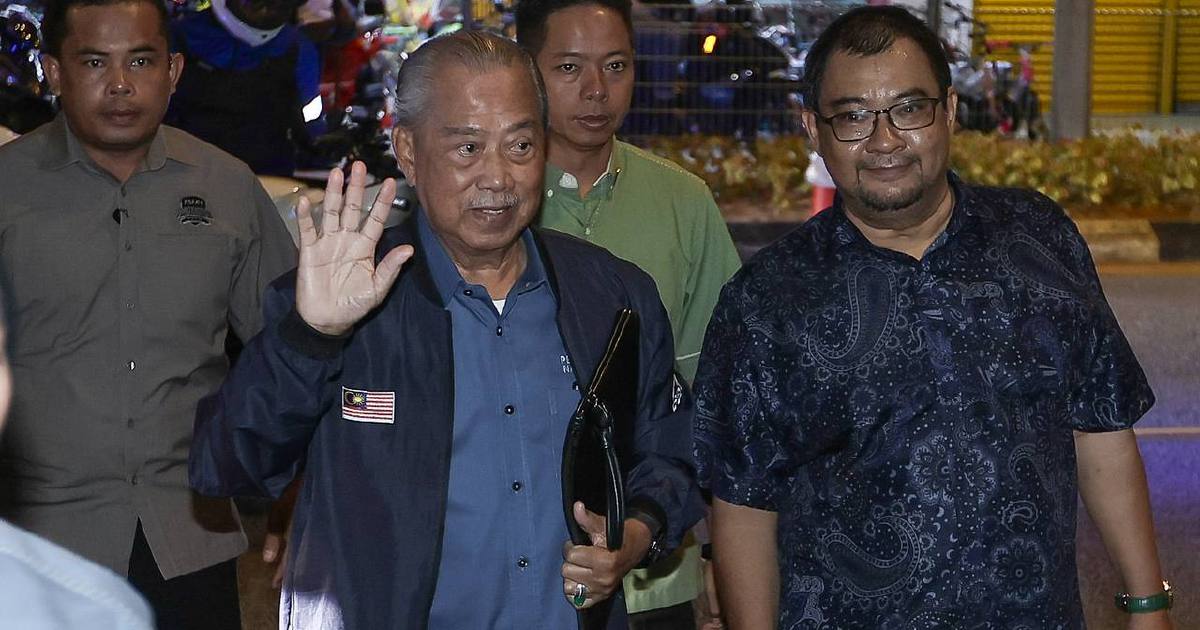
Perikatan Nasional held an emergency Supreme Council meeting in Kuala Lumpur that centred on the coalition's strategic direction and possible expansion, though discussions notably avoided the contentious question of Bersatu's own standing within the opposition alliance. The hurried convening of the session signalled underlying tensions within the bloc, yet party leaders steered clear of the internal friction that has periodically threatened to fracture the grouping's unity.
The timing of the emergency gathering underscores the fluid nature of Malaysian coalition politics, where alignments shift with considerable speed and where senior figures must carefully manage competing pressures from grassroots members, component parties, and the broader public. Bersatu's position as a prominent opposition force has been repeatedly scrutinized since the party's formation, with periodic debate over its role and direction generating considerable speculation among political analysts and observers.
By concentrating the meeting's agenda on prospective new members and coalition-level initiatives, the leadership appears to have prioritized institutional stability over addressing potentially divisive internal questions. This tactical approach reflects the practical reality that dwelling on contentious membership disputes could undermine the coalition's public messaging and coherence at a delicate political moment. The strategic calculus evidently favoured moving the conversation forward rather than reopening settled debates.
The emergence of potential new entrants to Perikatan Nasional signals the coalition's ongoing efforts to broaden its political base ahead of future electoral contests. In Malaysia's competitive political landscape, where regional and national elections cycle through with regularity, coalitions must continually assess their strength and explore opportunities to incorporate additional parties or influential figures. Such expansion efforts are integral to positioning any opposition alliance as a credible alternative to the ruling establishment.
For Malaysian observers tracking opposition dynamics, the meeting's focus on membership recruitment carries particular significance. The opposition sphere has experienced considerable volatility, with parties frequently shifting alliances, merging, or reorganizing in response to electoral performance, leadership changes, and broader political currents. Perikatan Nasional's expansion strategy suggests confidence in its longer-term viability, though whether such recruitment efforts will yield substantive gains remains uncertain.
The decision to avoid discussing Bersatu's own membership status points to deeper calculations within the coalition's hierarchy. By declining to engage directly with questions about the party's position, leadership avoided potentially contentious votes or statements that might have generated headlines emphasizing internal discord. This manoeuvre exemplifies the delicate balancing act required of coalition managers, who must maintain public unity whilst navigating legitimate disagreements among member parties and their leadership factions.
Bersatu's trajectory within Malaysian politics has been marked by considerable ambition and equally considerable friction with allied parties. The formation of the coalition itself represented a recalibration of opposition forces, bringing together parties with distinct ideological orientations and organizational traditions. Sustaining such alliances requires constant attention to the concerns and interests of each member party, even when those interests occasionally diverge.
The emergency nature of the meeting suggests that developments elsewhere in the political system had created urgency, though the specific triggers remained publicly opaque. Whether prompted by prospective defections, electoral calculations, or responses to government initiatives, the rapid convening of the Supreme Council indicated that senior party figures judged immediate consultation necessary. The circumscribed agenda, however, suggested a desire to channel that discussion in productive directions rather than reopening established arrangements.
For Southeast Asian political observers, the machinations within Perikatan Nasional reflect broader patterns evident across the region, where opposition coalitions frequently struggle to maintain coherence whilst pursuing competitive strategies. The tension between collective coalition action and individual party advancement represents a recurring challenge in multi-party democracies where proportional representation or coalition-based governance structures create incentives for both cooperation and competition.
The implications for Malaysian politics extend beyond immediate coalition management. The opposition's capacity to present itself as a unified alternative to the current government depends substantially on demonstrating internal discipline and strategic clarity. Public squabbles over membership or positioning risk undermining that presentation, particularly when voters are evaluating whether opposition coalitions possess the cohesion necessary to govern effectively should they gain electoral advantage.
Looking forward, Perikatan Nasional's apparent willingness to recruit additional members whilst maintaining ambiguity about existing members' positions reflects a pragmatic recognition that coalition politics requires flexibility. The focus on expansion rather than internal resolution may prove strategically sound if recruitment yields parties or figures that strengthen the opposition bloc's appeal. Conversely, unresolved questions about the terms and conditions of membership could resurface with greater urgency should electoral or political circumstances change.
The episode illustrates how Malaysian politics operates at multiple simultaneous levels: public declarations of unity and purpose coexist with private negotiations over power-sharing, resource allocation, and strategic direction. Understanding developments like the emergency meeting requires reading between carefully calibrated statements to discern the underlying tensions that coalition managers labour to contain.