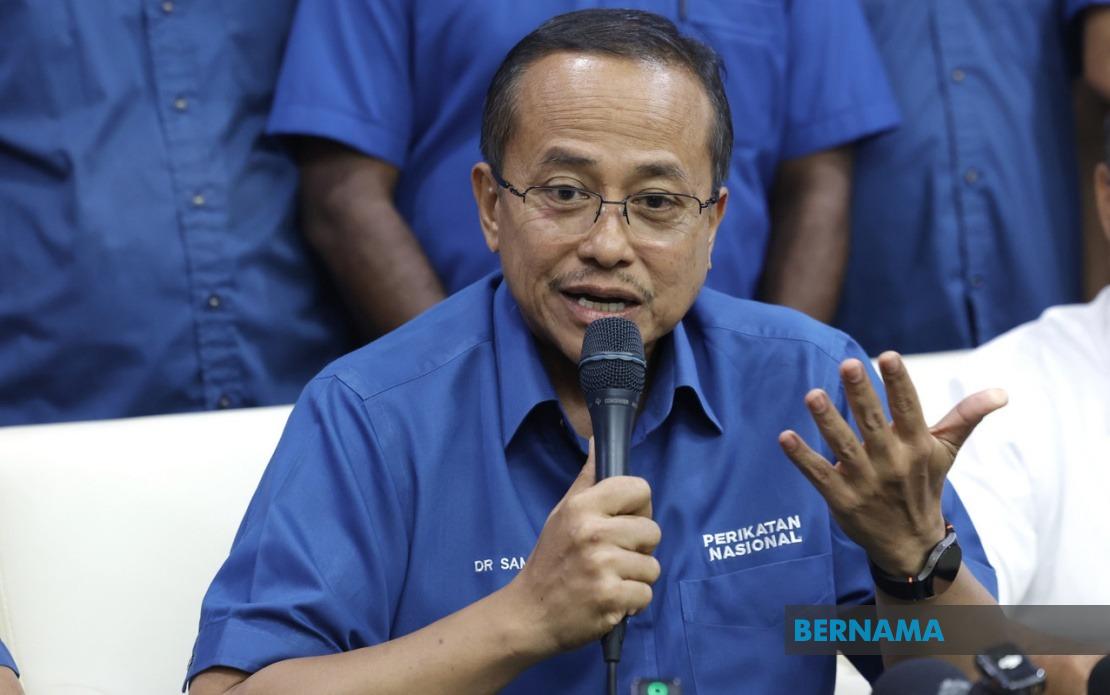
Perikatan Nasional's leadership has given the green light to seat allocation arrangements for the 16th Negeri Sembilan state election, marking a crucial moment in the coalition's electoral strategy even as internal tensions surface. PN chairman Datuk Seri Dr Ahmad Samsuri Mokhtar announced the decision following a special Supreme Council meeting in Seremban on July 16, confirming that all candidates fielded by the coalition would campaign under the unified PN logo rather than individual party symbols.
The approved allocation encompasses candidates from the coalition's four component parties: PAS, Gerakan, Wawasan, and MIPP. This unified branding approach represents a deliberate effort to present PN as a cohesive political force to Negeri Sembilan voters, potentially strengthening its electoral appeal through consolidated messaging and campaign resources. The decision to use a single coalition logo rather than allowing parties to contest independently carries significant implications for voter perception and party identity in the state, marking a departure from the more fragmented approach sometimes seen in Malaysian electoral contests.
Dr Ahmad Samsuri emphasised that the PN campaign strategy in Negeri Sembilan centres on three core pillars: advancing public welfare, propelling the state's development agenda, and maintaining communal harmony in a multiethnic society. This framing suggests PN's broader positioning as a stabilising force capable of addressing both immediate voter concerns and longer-term governance challenges. The emphasis on social cohesion reflects growing awareness among Malaysian political parties that electoral success increasingly depends on demonstrating commitment to inclusive governance and interethnic cooperation.
Crucially, the PN chairman took the opportunity to assert his authority within the coalition structure, stating that all preliminary negotiations with potential partners had proceeded under his knowledge and explicit approval. This clarification appears directed at addressing questions about decision-making processes within the coalition and establishing clear lines of accountability. The statement underscores internal discussions within PN regarding the degree of autonomy component parties should exercise and the extent to which the chairman's office should oversee critical electoral decisions.
Yet the announcement simultaneously masked a significant rupture within the opposition coalition. Bersatu president Tan Sri Muhyiddin Yassin publicly contradicted the narrative of unified PN planning, asserting that Bersatu had not been meaningfully included in discussions concerning seat allocations or engagement with Barisan Nasional. Muhyiddin's statement represents more than mere disagreement over procedural matters; it reflects deeper tensions regarding Bersatu's role and status within PN. The fact that Malaysia's former prime minister felt compelled to publicly distance his party from allocation decisions suggests frustration with how the coalition's power structure operates in practice.
Bersatu's decision to contest independently using its own party logo rather than under the PN banner represents a practical manifestation of this discord. For a coalition that has positioned itself as an alternative to the ruling government, such public divisions risk undermining electoral messaging and confusing voters about the party's actual identity and relationships. Bersatu's independence strategy also complicates the electoral mathematics in Negeri Sembilan, potentially fragmenting the anti-government vote in ways that could benefit the ruling coalition.
The Negeri Sembilan state election carries broader significance for Malaysian politics beyond the individual state. As one of the smaller state legislatures, election results provide early indicators of voter sentiment and coalition performance before larger elections. The contest also reflects nationwide tensions between Bersatu and other PN components, tensions that have periodically threatened the coalition's stability since its formation. How voters in Negeri Sembilan respond to competing narratives from Bersatu and the broader PN alliance will offer insights into the coalition's prospects for future electoral contests, particularly regarding the capacity of rival groups to work together effectively.
The allocation arrangement also carries implications for Malaysia's broader political realignment. The involvement of smaller parties like Wawasan and MIPP suggests attempts to build broader anti-government coalitions that extend beyond traditional political strongholds. These parties potentially bring access to specific voter constituencies and community networks that larger parties might otherwise struggle to reach. Their participation in coordinated coalition efforts reflects a calculated strategy to maximise electoral competitiveness through inclusivity.
For Negeri Sembilan voters, the Bersatu withdrawal introduces an additional choice dimension to the state election. Rather than simply deciding between PN's unified coalition and the ruling government, voters in constituencies where Bersatu contests can effectively choose between different opposition movements. This fragmentation may ultimately benefit the ruling coalition if opposition support becomes too diffuse, or it could reflect genuine voter preference for distinct political alternatives. The state election will demonstrate whether the PN coalition structure possesses sufficient internal cohesion to function effectively, a question increasingly relevant as Malaysian politics becomes more volatile and factional tensions within loose coalitions become more visible.

