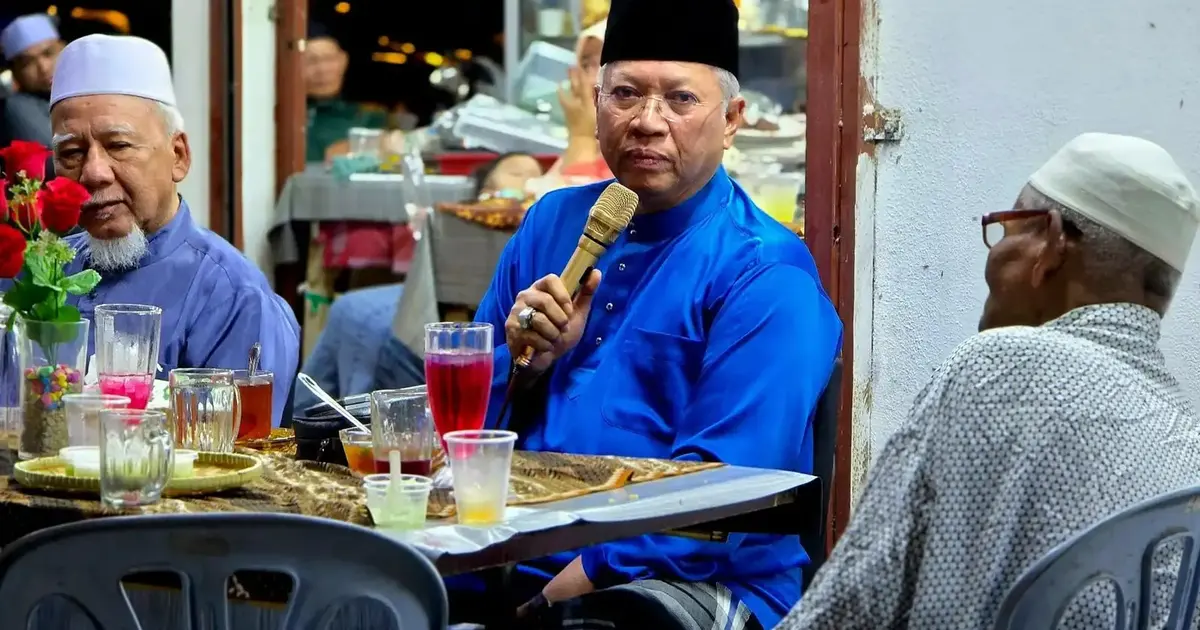
The Perikatan Nasional coalition faces mounting pressure over seat allocations ahead of the Negeri Sembilan state election, with PAS information chief Annuar Musa publicly stating that honouring Bersatu's request for 15 state assembly seats would be logistically unfeasible. The declaration marks a significant moment in the ongoing negotiations between coalition partners and underscores the delicate balance required to maintain unity within PN's ranks as it prepares for electoral competition.
Annuar's statement reflects the fundamental challenge confronting multi-party alliances in Malaysian politics: reconciling the ambitions of individual component parties with the collective viability of a unified electoral strategy. The Negeri Sembilan state assembly comprises 36 seats, meaning Bersatu's request for 15 would represent approximately 42 per cent of available positions. This demand far exceeds what most coalition arrangements would typically allocate to a single partner, particularly when PN comprises multiple parties competing for competitive seats.
The tension between Bersatu and other PN members, notably PAS, reveals the persistent difficulty in maintaining coalition discipline in East Coast and Klang Valley-focused alliances. Bersatu, despite its reduced parliamentary presence following defections and electoral setbacks, continues to assert demands based on historical positioning within PN rather than current electoral strength or grassroots organisational capacity. This dynamic mirrors broader patterns seen in Malaysian coalition politics, where perceived entitlements often clash with pragmatic seat-sharing arithmetic.
Negeri Sembilan holds particular strategic significance within the broader Malaysian political landscape. The state has traditionally been competitive between major coalitions, and control of state government carries implications for federal-level political dynamics. The state's mix of urban constituencies around Seremban and rural areas creates opportunities for different party types to excel, potentially explaining why Bersatu might feel entitled to substantial representation despite PN's overall positioning in the state.
Annuar's intervention suggests that PAS, as a major PN component with stronger grassroots presence in several Negeri Sembilan constituencies, is unwilling to cede disproportionate seats to Bersatu. PAS has invested significantly in building organisational capacity across multiple states and likely views its own electoral prospects in Negeri Sembilan as stronger than Bersatu's. The public nature of Annuar's statement indicates that quiet negotiations have reached an impasse, necessitating a more forthright position.
The seat-allocation dispute occurs within the context of broader questions about Bersatu's future trajectory. The party has experienced significant membership volatility and continues to grapple with the legacy of being perceived as a breakaway from UMNO. Its demands for substantive representation appear partly motivated by the need to demonstrate political relevance to remaining members and to maintain its position within PN's hierarchy. Failing to secure meaningful seat allocations could further erode internal morale and member retention.
For Malaysian voters in Negeri Sembilan, this impasse carries genuine implications. Coalition disputes over seat allocation often result in compromises that prioritise internal party satisfaction over candidate quality or constituency fit. Voters may ultimately be presented with candidates selected primarily to satisfy power-sharing arrangements rather than demonstrating particular suitability for their constituencies. This dynamic weakens representational effectiveness and voter engagement with electoral processes.
The trajectory of these negotiations will likely influence how PN members conduct themselves throughout the campaign period. If tensions fester unresolved, campaign coordination could suffer, with component parties potentially prioritising their own candidates over collective PN messaging. Conversely, if a compromise emerges, the terms will signal which parties hold greater leverage within the coalition and could reshape expectations for future state or federal electoral arrangements.
From a broader regional perspective, the PN dispute illuminates persistent challenges facing opposition coalitions across Southeast Asia. Malaysian politics continues to grapple with whether ideological alignment or power-sharing pragmatism forms the foundation of multi-party arrangements. Bersatu's demands reflect the assumption that PN exists primarily as a mechanism for distributing political spoils, rather than as a movement united by shared policy vision or electoral strategy.
The resolution of this dispute will carry consequences extending beyond Negeri Sembilan. Other PN members, watching how Bersatu's demands are handled, will calibrate their own expectations for seat allocations in future state elections. Should Annuar's position prevail and Bersatu receive fewer seats, other parties may feel emboldened to make more aggressive demands based on perceived organisational strength. If conversely, PN leadership overrules PAS objections to accommodate Bersatu, resentment within PAS could destabilise the coalition's cohesion elsewhere.
The coming weeks will determine whether PN leadership can broker an acceptable compromise or whether Negeri Sembilan becomes a flashpoint for coalition tensions. Either outcome carries implications for how PN positions itself nationally and whether internal disputes undermine its electoral prospects. Ultimately, voters will judge PN not on internal negotiations but on governance quality and candidate calibre—metrics that coalition disputes frequently compromise.

