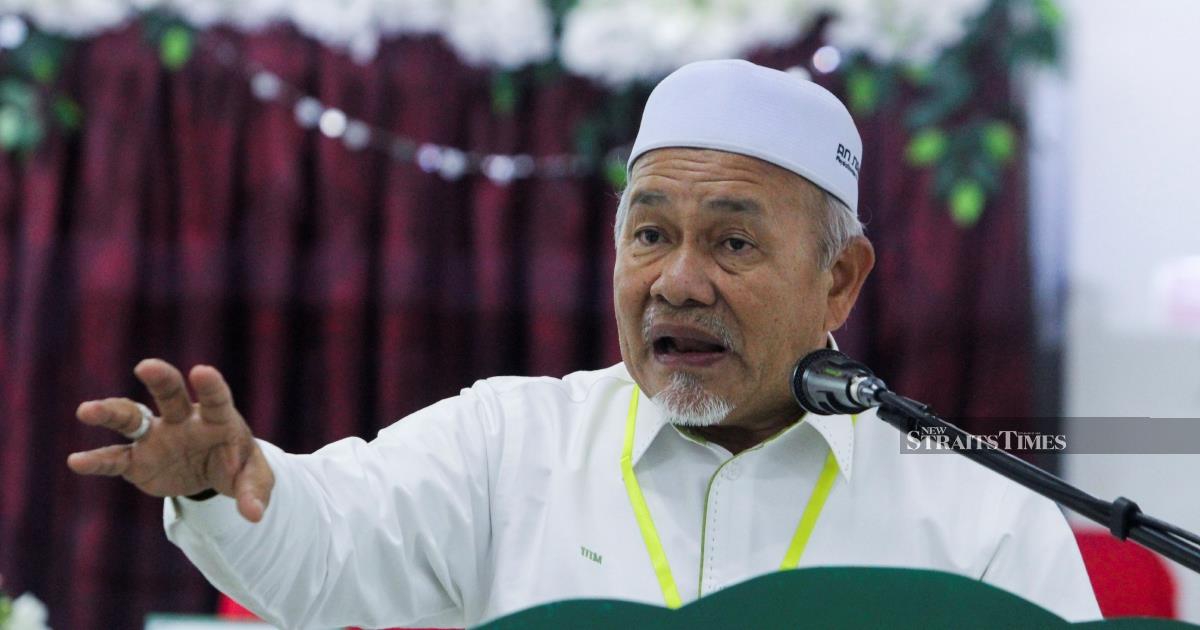
The campaign machinery bringing together Perikatan Nasional and Barisan Nasional continues to demonstrate functional coordination across Negri Sembilan, with grassroots-level operatives maintaining constructive engagement, according to PAS deputy president Datuk Seri Tuan Ibrahim Tuan Man. His assessment suggests that despite the inherent complexities of managing multi-coalition political movements, the two major blocs have managed to align their on-the-ground activities effectively during the current electoral push in the state.
The significance of this reported harmony cannot be understated within Malaysia's complex political landscape. Perikatan Nasional, which includes PAS, Bersatu, and other smaller parties, and Barisan Nasional, led by UMNO with MCA and MIC as key components, represent two substantial political entities that have increasingly found common ground on electoral cooperation. This partnership reflects the strategic calculations both coalitions have made regarding the changing contours of Malaysian politics since the 2022 general election reshuffled the country's political alignments.
Negri Sembilan specifically represents contested political territory where such cooperation carries particular weight. The state has historically been a battleground where UMNO's Barisan Nasional held considerable influence, yet the Islamic-oriented politics championed by PAS through Perikatan Nasional has made gradual inroads. The coordination between these two coalitions therefore signals an attempt to present a unified front to voters, rather than allowing fragmentation that could weaken their collective electoral prospects against Pakatan Harapan opposition forces in the state.
The phrase "grassroots coordination" carries operational implications that extend beyond headline declarations of unity. At the field level, this involves alignment on campaign schedules, voter contact strategies, resource allocation, and messaging discipline. Campaign volunteers and party machinery operatives from different organisations must coordinate their activities, share venues for events, and avoid overlapping efforts that would dilute electoral impact. That Tuan Ibrahim specifically highlighted the positive nature of this interaction suggests the potential pitfalls of poor coordination have been avoided, at least at the moment of his statement.
The operational smoothness extends to traditional structures of political campaigning that have shaped Malaysian elections for decades. Ceramah sessions, community engagement programs, house-to-house canvassing, and rally organisation require intricate scheduling when multiple parties share constituencies or state-level campaign responsibilities. The fact that tensions have not spilled into public view regarding these practical matters indicates either effective leadership at state level managing disparate interests, or genuine consensus on how best to contest the election.
For Malaysian voters in Negri Sembilan, such coordination carries tangible consequences. When coalition partners operate effectively together, messaging consistency improves and campaign resources reach communities more efficiently. Conversely, poor cooperation creates confusion, duplicated efforts, and ultimately reduces the combined coalition's ability to reach and persuade swing voters who remain undecided. Tuan Ibrahim's emphasis on smooth operations attempts to project confidence to these potential voters regarding the coalitions' organisational competence.
The statement also reflects broader strategic calculations about the 2023 political period and beyond. Both Perikatan Nasional and Barisan Nasional have recognised that their electoral fortunes depend increasingly on managing collaborative relationships rather than combative ones. The previous era where these coalitions engaged in fierce electoral competition has shifted toward pragmatic recognition that splitting opposition votes can benefit the Pakatan Harapan coalition. This reorientation has required cultural and organisational adjustments within both political movements.
At the party level, PAS has undergone significant repositioning in recent years, moving from its previous role as a junior partner in Pakatan Harapan toward leadership roles in Perikatan Nasional. This shift has necessitated developing new cooperation protocols with traditional rivals like UMNO-led Barisan Nasional. The fact that machinery coordination proceeds smoothly indicates that party leadership on both sides has successfully managed expectations and crafted conflict resolution mechanisms for inevitable disagreements that arise during campaigns.
The regional dimension should not be overlooked for Malaysian readers interested in broader Southeast Asian politics. Negri Sembilan's political complexion influences the composition of state governments and ultimately the federal parliament. When major coalitions successfully coordinate campaigns at state level, they demonstrate capacity for broader national-level governance scenarios. Conversely, coalition breakdowns at state level foreshadow potential difficulties in managing coalition governments that have become Malaysia's norm rather than exception since the 2022 general election.
Tuan Ibrahim's remarks also serve a morale function within party structures themselves. Campaign workers and party volunteers invest considerable effort during election periods, and public affirmations from leadership regarding cohesive machinery operations boost enthusiasm and motivation. When party officials describe operations as functioning smoothly, this message travels through party networks, reinforcing commitment and encouraging field-level cadres to maintain discipline and coordination with coalition partners.
Looking ahead, the sustainability of this reported cooperation will largely depend on electoral outcomes. If Perikatan Nasional and Barisan Nasional succeed in Negri Sembilan through their coordinated campaign approach, incentives for continuing such cooperation strengthen considerably. Conversely, electoral disappointments could generate tensions as blame-assignment begins. For now, the public positioning emphasises unity and effective organisation, setting positive expectations for campaign concluding phases.
The broader Malaysian political context makes this coordination significant for observers tracking coalition dynamics. Malaysia's transition toward multi-coalition competition, where major blocs must manage internal diversity while competing effectively, represents a relatively new development in the country's political history. Negri Sembilan becomes a laboratory where this new model of political competition is being tested, with success or failure carrying implications for how coalitions manage future electoral cycles and governance arrangements.

