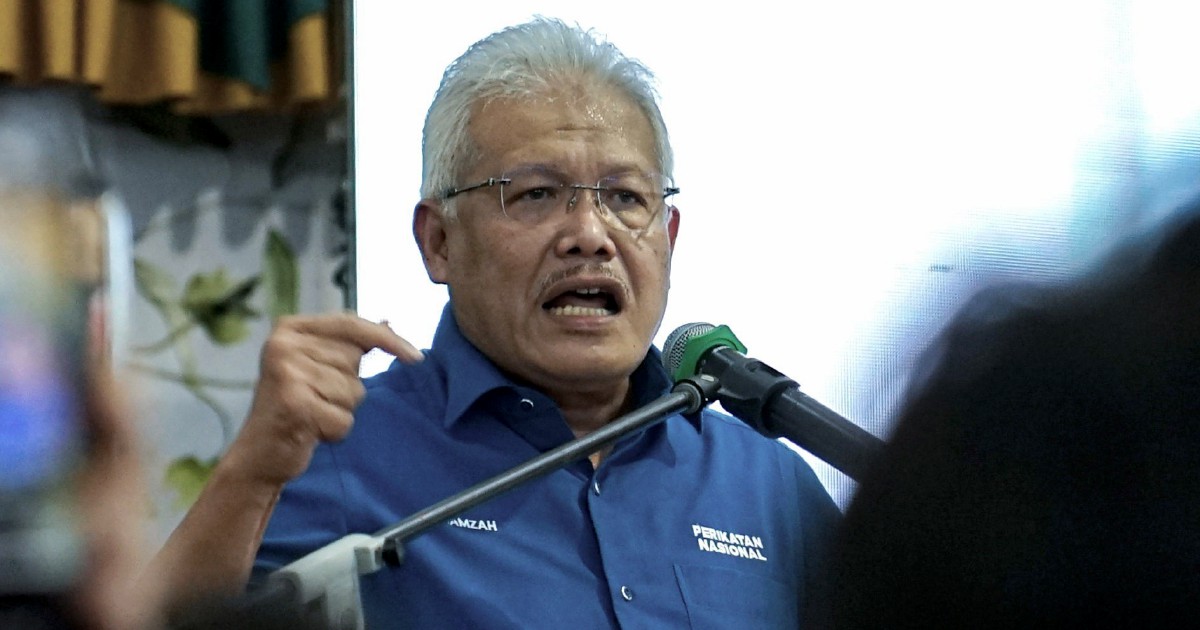
Perikatan Nasional has introduced a new electoral brand for its collaborative arrangement with Barisan Nasional ahead of the Negri Sembilan state election, adopting the acronym 'PBN' to encapsulate the political understanding between the two coalitions. The designation was announced in Tampin as part of a broader strategy to present a unified face to voters in one of Malaysia's most politically competitive states.
The creation of this unified acronym represents more than mere semantics—it signals an attempt by both major coalitions to move beyond their historical rivalry and present themselves as aligned partners willing to work together at the state level. This pact between PN and BN, which have frequently been at odds in recent years, underscores the pragmatic calculations driving contemporary Malaysian politics, where state-level contests often require flexible alliances despite national-level tensions.
For Negri Sembilan specifically, such electoral cooperation carries particular significance. The state has demonstrated itself to be a genuine battleground where traditional BN dominance has been challenged, making the consolidation of anti-opposition votes strategically essential for both coalitions. By presenting themselves under the PBN banner, they seek to avoid the vote-splitting that could allow opposition forces to capitalize on divisions among non-opposition supporters.
The branding choice itself merits examination. Rather than privileging either coalition's nomenclature, the hybrid 'PBN' suggests an attempt at equity between Perikatan Nasional and Barisan Nasional, even though BN remains the historically dominant force in Malaysian politics. This naming convention aims to facilitate voter acceptance in regions where either coalition maintains strong support bases, allowing candidates and campaigners to present the arrangement as a genuine partnership rather than a subordinate arrangement.
Historically, Negri Sembilan has served as a testing ground for political alliances in Malaysia. The state's electoral dynamics differ markedly from other regions, with a voter base that has shown willingness to split loyalties between different coalitions depending on specific contexts and local issues. The PBN arrangement reflects recognition that neither PN nor BN could confidently contest the state without strategic coordination, particularly given the strengthening presence of opposition Pakatan Harapan in urban and suburban constituencies.
The timing of this alliance announcement carries implications for Malaysia's broader political trajectory. It demonstrates that despite tensions between PN and BN at the federal level—particularly surrounding issues of ministerial appointments, policy direction, and leadership aspirations—both coalitions recognize the mutual benefit of cooperation at the state level. This compartmentalization of politics, where national rivalries coexist with state-level partnerships, has become increasingly common in Malaysian governance.
For voters in Negri Sembilan, the PBN branding presents both clarity and complexity. On one hand, it establishes transparent parameters for the electoral arrangement; on the other, it may prompt questions about accountability and policy coherence, since PN and BN retain distinct ideological positions on various issues. Voters will need to understand whether backing PBN candidates represents support for a genuine merger of principles or merely a tactical arrangement for electoral purposes.
The symbolism extends beyond Negri Sembilan's borders. Similar arrangements have been implemented or are under consideration in other states, suggesting that the PBN model could become a template for future electoral cooperation. This normalization of flexible coalitional politics reflects a shift in how Malaysian political parties view state elections—not as ideological tests but as pragmatic contests requiring optimal strategic positioning.
From an administrative perspective, the introduction of the PBN brand requires careful management. Election materials, campaign literature, and candidate identification all need consistent application of the new nomenclature. Both PN and BN have established machinery and institutional identities built over decades, making the subordination of these identities under a new umbrella organization a notable—if temporary—adjustment to their operational frameworks.
The electoral mathematics favoring this arrangement are straightforward. Negri Sembilan's voter population, while not enormous by national standards, is significant enough to influence the state government's composition. Fragmentation of the non-opposition vote through separate PN and BN candidacies would substantially improve the chances of opposition candidates winning marginal constituencies. By consolidating their candidacies and presenting a unified front, both coalitions aim to prevent the opposition from exploiting electoral divisions.
Looking forward, the success or failure of the PBN arrangement in Negri Sembilan will provide important data for Malaysian politics more broadly. If the rebranding successfully translates into electoral victories and voter acceptance, it could encourage similar partnerships elsewhere. Conversely, if internal tensions between PN and BN undermine the campaign or if the arrangement produces disappointing results, it may discourage future coalition-building experiments.
The announcement also reflects the evolving nature of Malaysian democracy, where coalition politics increasingly emphasizes flexibility and pragmatism over rigid ideological alignment. As demographic changes and urbanization reshape electoral landscapes, political parties are forced to adapt their strategies accordingly. The PBN experiment in Negri Sembilan exemplifies this adaptation, demonstrating how traditional rivals can collaborate when circumstances demand and when mutual electoral interests align.

