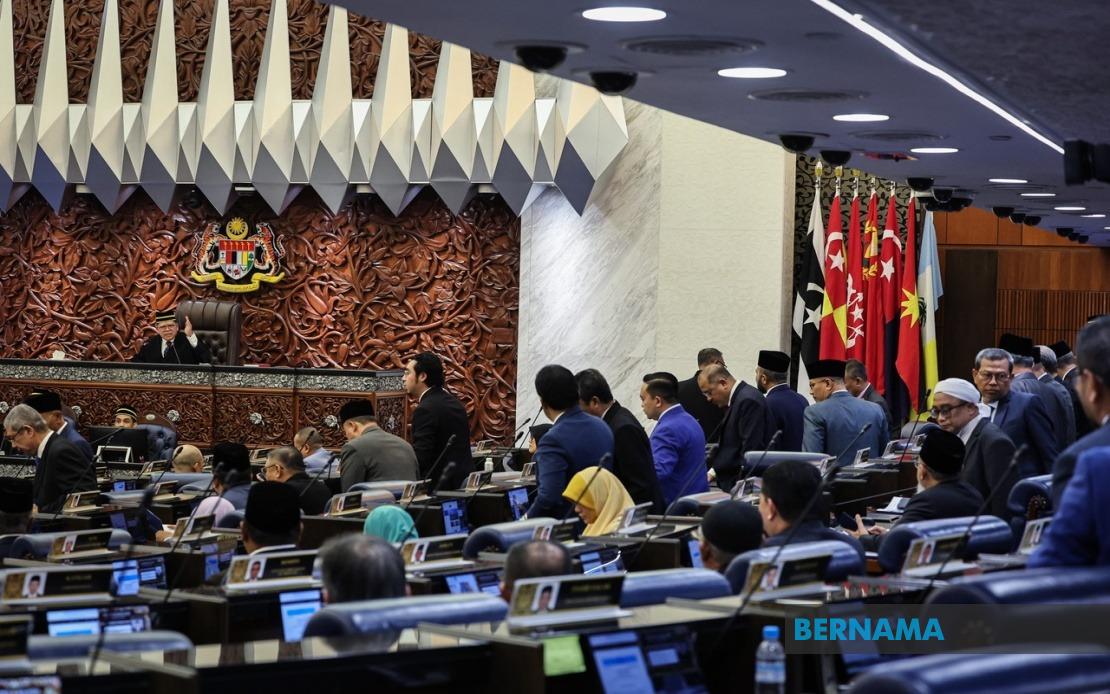
The Prime Minister's absence from parliament should not serve as justification for lawmakers to abandon their responsibilities in scrutinising a critical matter affecting millions of Muslim Malaysians, according to Tengku Datuk Seri Zafrul Tengku Abdul Aziz, Senior Political Adviser to the Prime Minister. His remarks came after several opposition Members of Parliament staged a coordinated walkout during the special sitting of the Dewan Rakyat dedicated to debating the Royal Commission of Inquiry report on Lembaga Tabung Haji.
The parliamentary session on August 11 represented a rare opportunity for the legislature to examine a 211-page RCI report that had been kept confidential until the government's decision to make it public on July 29. The inquiry focused on Tabung Haji's management and operational practices spanning the 2014 to 2020 period, a timeframe that encompasses several significant developments in the institution's governance. Tengku Zafrul's intervention underscores the high stakes surrounding the proceedings, framing the matter as transcending partisan politics and touching upon the financial security of a substantial portion of Malaysia's Muslim population.
In a social media statement, Tengku Zafrul posed a pointed question to the departing MPs: if the Prime Minister's absence prevents meaningful engagement with the substance of the RCI findings, then by extension, how can any parliamentary debate proceed without the chief executive? The rhetorical challenge highlights a fundamental principle of parliamentary democracy—that elected representatives bear an independent duty to examine governmental matters regardless of which minister is present in the chamber. He emphasised that the Tabung Haji situation constituted one of the most consequential issues touching upon the Muslim and Malay economic sphere in the nation's modern history, encompassing not merely religious concerns but the retirement security of Malaysians across diverse socioeconomic strata.
Among the MPs who vacated their seats were several prominent figures within the Perikatan Nasional coalition, including Opposition Leader Datuk Seri Hamzah Zainudin, PN chief whip Datuk Seri Takiyuddin Hassan, and PN chairman Datuk Seri Dr Samsuri Mokhtar. The coordinated departure suggested a deliberate strategic decision rather than isolated absenteeism, signalling a message of non-engagement with the government's handling of the issue. However, Tengku Zafrul's criticism suggests that such boycott tactics may undermine broader public perception of the opposition's commitment to safeguarding Muslim interests, particularly when the debate concerns the preservation and management of pooled savings rather than partisan policy disputes.
The minister responsible for presenting the findings, Dr Zulkifli Hasan, Minister in the Prime Minister's Department (Religious Affairs), led the parliamentary discussion of the RCI outcomes. His presentation provided lawmakers with the first comprehensive opportunity to question the commission's findings regarding how Tabung Haji had been administered during the preceding six years. The report's 211 pages presumably contain detailed assessments of financial management, investment decisions, governance structures, and possibly instances of mismanagement or operational shortcomings that prompted the inquiry's establishment.
Tengku Zafrul advocated for constructive parliamentary engagement rather than ceremonial or retaliatory walkouts. He invited MPs to utilise the sitting for its intended purpose: to question government performance, debate policy matters rigorously, and challenge decisions they considered flawed. His framework distinguished between legitimate disagreement, which he characterised as not merely acceptable but necessary in a functioning democracy, and the abdication of parliamentary duty that a mass departure appears to represent. He explicitly encouraged evidence-based criticism, urging MPs to confront governmental decisions with factual counterarguments rather than grandstanding through symbolic gestures.
The Tabung Haji controversy carries particular resonance within Malaysia's political economy, as the institution manages hajj savings for approximately 800,000 registered members, collectively holding billions in ringgit. Any mismanagement or governance failures carry immediate implications for Muslims planning to undertake the pilgrimage, potentially affecting their ability to fund this central religious obligation. Beyond the religious dimension, Tabung Haji operates as a significant financial intermediary, and its operational integrity bears upon broader Muslim economic participation and asset accumulation within Malaysia's financial system. The RCI's investigation signals that governance concerns had reached sufficient severity to warrant formal inquiry by a royal commission, Malaysia's highest-level investigative mechanism outside the courts.
The opposition's boycott strategy likely reflects frustration with the government's handling of Tabung Haji issues and may constitute an attempt to delegitimise the RCI process itself or the government's response to its findings. However, Tengku Zafrul's argument—that such tactics ultimately harm the Muslim public whose interests the opposition claims to champion—presents a countervailing perspective. From this viewpoint, walkouts sacrifice the opportunity to extract accountability, demand transparency, or propose alternative management frameworks during the sole parliamentary proceeding dedicated to comprehensive examination of the RCI report.
The broader implications extend to Malaysian governance standards and parliamentary norms. Selective engagement in parliamentary sittings, based on the presence or absence of specific ministers, establishes a problematic precedent whereby lawmakers might justify non-participation in numerous matters depending on perceived slights or protocol concerns. Conversely, from the opposition perspective, the Prime Minister's non-attendance might itself signal insufficient governmental concern for the matter, justifying a protest through non-participation. This interpretive divide reflects deeper tensions within Malaysian parliamentary culture regarding conventions of executive accountability and the opposition's appropriate role in scrutinising government conduct.
The RCI report's public release represented a significant transparency measure, presumably driven by pressure for governmental accountability regarding Tabung Haji's performance. The subsequent parliamentary debate provided a structured mechanism for examining the commission's conclusions and for proposing remedial measures. Tengku Zafrul's intervention suggests that the government—or at least its advisory apparatus—perceives the opposition's non-engagement as obstructing constructive legislative response to the RCI findings. Whether or how parliament subsequently acts upon the commission's recommendations may depend partly on whether opposition MPs eventually recommit to substantive participation in related discussions, or whether the boycott establishes a precedent of disengagement on this significant governance issue.
Moving forward, the TH controversy remains politically volatile. The opposition's walkout likely signals that the matter will feature prominently in subsequent parliamentary sessions and electoral messaging. However, Tengku Zafrul's framing—positioning engagement with the RCI report as a duty to Muslim citizens rather than a victory for any political faction—may resonate among MPs concerned with parliamentary integrity and Muslim economic interests. How individual lawmakers, particularly those from Perikatan Nasional and other opposition parties, respond to this characterisation may determine whether future parliamentary discussions on implementing RCI recommendations achieve the broad consensus necessary for meaningful governance reform at Tabung Haji.

