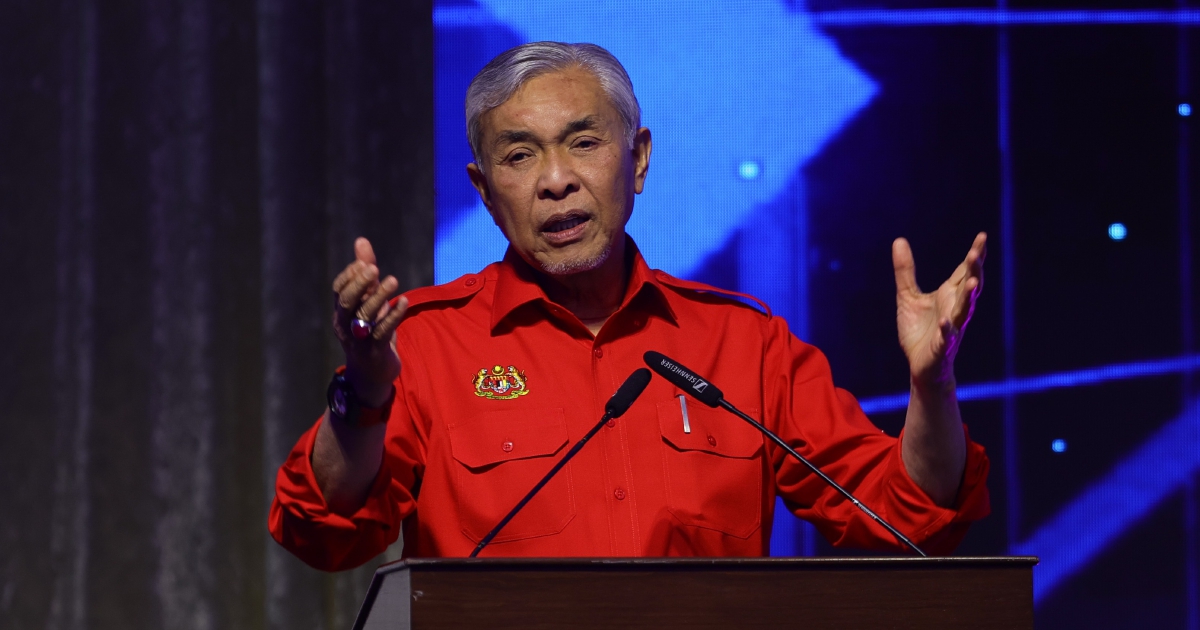
Barisan Nasional chairman Datuk Seri Dr Ahmad Zahid Hamidi has explicitly affirmed that Prime Minister Datuk Seri Anwar Ibrahim holds the authority to remove coalition ministers from their portfolios if their performance fails to meet expectations. Speaking in Seremban, Zahid's statement represents a clear delineation of executive power within Malaysia's governing coalition and reinforces the hierarchical chain of command under the PM's leadership.
The assertion carries particular significance given the dynamics of Malaysia's multi-party coalition government, where Barisan Nasional, the opposition Pakatan Harapan, and various other parliamentary allies form the foundation of parliamentary support. The BN chairman's public confirmation that the PM retains unilateral dismissal authority effectively removes ambiguity about ministerial accountability and demonstrates a pragmatic acceptance of constitutional prerogatives that have long anchored Malaysian governance structures.
Zahid's statement implicitly acknowledges that performance metrics and ministerial competence ultimately rest within the Prime Minister's purview to assess and act upon. By framing the issue in terms of ministerial effectiveness rather than political affiliation or coalition dynamics, Zahid positions performance-based accountability as a legitimate criterion for cabinet changes. This approach insulates the PM from potential criticism that any such dismissals would constitute unfair targeting of BN members specifically.
The timing of Zahid's clarification may reflect broader conversations about ministerial effectiveness within the current cabinet. Malaysia's coalition government has navigated considerable structural complexity since the 2022 general election, with ministers representing different parties and competing interests requiring careful balance. Performance standards provide a ostensibly neutral framework for evaluating whether individual ministers merit continued tenure, even if political considerations inevitably factor into such decisions.
From an institutional perspective, Zahid's endorsement of the PM's dismissal authority reaffirms fundamental principles of Westminster-derived parliamentary governance, where the Prime Minister functions as head of government with substantial powers over cabinet composition. While cabinet ministers derive their positions from their respective political parties and coalition arrangements, ultimate appointment and removal authority traditionally lodges with the PM. By accepting this arrangement publicly, BN signals that it will not mount institutional challenges to such decisions on procedural grounds.
The statement also communicates to BN's own ministerial ranks the expectations regarding their tenure and performance standards. Ministers serving in the cabinet should understand that their positions depend on satisfactory performance as assessed by the PM, not merely on maintaining party support or avoiding internal coalition friction. This clarification potentially strengthens the PM's position in relation to his own cabinet members and establishes clearer parameters for what constitutes acceptable ministerial conduct and results.
Within the broader Malaysian political landscape, the BN chairman's position acknowledges that coalition governments require stronger rather than weaker leadership structures to function effectively. A Prime Minister constrained by coalition partners' refusal to accept ministerial removals would face difficulty implementing policy priorities or managing underperforming portfolios. Zahid's statement suggests BN understands that coalition stability ultimately depends on the PM maintaining sufficient authority to drive the government's agenda and hold ministers accountable.
For federal ministries currently led by BN representatives, Zahid's pronouncement establishes no special protection from performance-based dismissal. Whether a minister comes from Barisan Nasional, Pakatan Harapan, or other coalition partners, they remain subject to the same accountability framework. This principle helps ensure that ministerial selection and retention decisions can be based on competence and results rather than devolving into protectionist squabbles where larger coalition partners shield their members from oversight.
The statement also reflects constitutional realities that sometimes remain implicit in Malaysian political discourse but carry substantial weight in practice. The Yang di-Pertuan Agong ultimately approves ministerial appointments and dismissals, yet the PM effectively determines which candidates receive this approval. By confirming that the PM can exercise this authority regarding BN ministers, Zahid acknowledges constitutional arrangements that have undergone little change even as political coalitions have shifted dramatically in recent years.
Looking forward, Zahid's position may influence how the BN approaches potential future cabinet reshuffles or policy disagreements with the PM. Rather than invoking coalition solidarity to resist ministerial changes, BN appears positioned to accept performance-based restructuring as a legitimate aspect of coalition governance. This potentially reduces friction that might otherwise arise from political disputes over ministerial portfolios and allows policy differences to be addressed through dismissal rather than through protracted coalition negotiations.
The broader implication extends to Malaysian governance frameworks during coalition governments, where clarity about power distribution and accountability mechanisms becomes particularly valuable. Zahid's clarity about the PM's dismissal authority helps establish norms that may govern future coalition arrangements. As Malaysian politics continues evolving with no single party commanding parliamentary majorities, understanding and accepting the PM's core executive powers becomes increasingly important for sustaining government stability and effectiveness across multiple election cycles.

