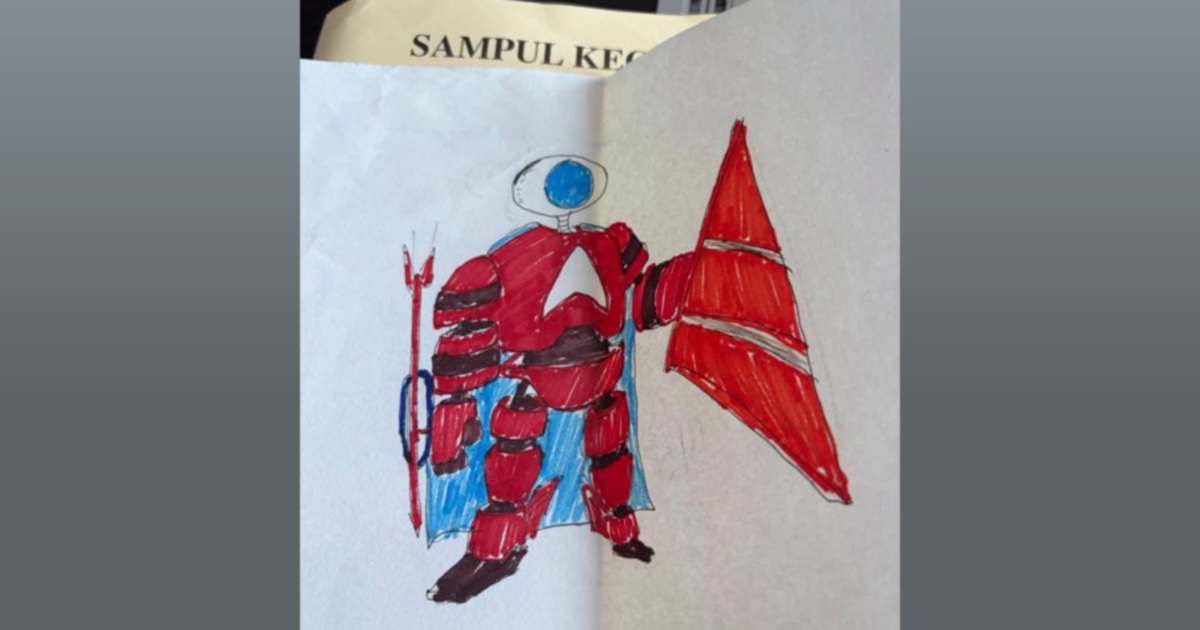
Prime Minister Datuk Seri Anwar Ibrahim has kept a drawing presented by a child with special needs as a treasured memento following the recent Temu Anwar programme held in Negri Sembilan, underscoring the deeply personal nature of his grassroots engagement initiatives.
The touching moment reflects the inclusive approach that characterises the Temu Anwar series, which brings the prime minister into direct dialogue with citizens from diverse backgrounds and circumstances. The programme has become a cornerstone of the government's effort to bridge the gap between leadership and the people, creating spaces where voices from all segments of society can be heard and valued.
Special needs individuals and their families often find themselves at the margins of mainstream political discourse in Malaysia. The fact that a child with special needs felt comfortable enough to present a drawing to the prime minister, and that Anwar chose to preserve and treasure this gift, carries symbolic weight beyond the moment itself. It suggests a shift towards more inclusive representations of national dialogue where marginalised communities are not merely acknowledged but genuinely engaged.
Negri Sembilan, as the location for this particular Temu Anwar session, represents one of Malaysia's smaller states that frequently receives less media attention than larger peninsular territories. By holding such events across different regions, the government signals that no state or community is too small or overlooked for direct prime ministerial engagement. This geographical distribution of Temu Anwar programmes has helped normalise the idea of accessible leadership across the country.
The preservation of the drawing by Anwar carries implications for how Malaysia approaches disability inclusion at the highest levels of governance. Symbolic gestures, when demonstrated consistently by leaders, can influence broader cultural attitudes towards individuals with special needs. When a prime minister visibly treasures artwork from a child with disabilities, it sends a message to civil society, private sector institutions, and other government agencies about the intrinsic value and dignity of all citizens regardless of ability.
For families managing special needs, direct recognition from national leadership can provide meaningful affirmation and encouragement. Parents and caregivers often advocate tirelessly for better services, infrastructure, and social acceptance for their children. Moments of personal connection with high-ranking officials, even brief ones, frequently become remembered and shared within these communities as evidence that their concerns matter at the highest echelons of power.
The Temu Anwar programme itself has evolved into a significant component of the current administration's governance model. By design, these sessions prioritise listening over speechmaking, creating forums where ordinary Malaysians can raise concerns directly rather than through bureaucratic channels. The continued emphasis on such programmes, particularly their extension into smaller states and their intentional inclusion of marginalised groups, reflects a deliberate strategy to rebuild public trust in institutions that many citizens felt had become disconnected from their realities.
Special needs advocacy groups across Southeast Asia have increasingly highlighted the importance of such visibility and representation. When children with disabilities witness recognition from the highest levels of government, it contributes to their sense of belonging within the national narrative. In Malaysia's context, where diverse populations must navigate competing visions of national identity, moments of inclusive recognition become particularly valuable for social cohesion.
The drawing, as a physical artifact, now represents more than artistic expression by a young person. It has become a symbol of the administration's stated commitment to inclusive governance and accessibility. Should such items be displayed or referenced in future communications, they carry authenticating power that statistics or policy documents alone cannot convey. Personal stories and objects resonate differently with publics than abstract policy frameworks.
Moving forward, the preservation of such meaningful gifts could serve as inspiration for other officials and institutions to similarly recognise and value contributions from special needs communities. When high-profile gestures of inclusion are made, they create benchmarks against which subsequent government actions are measured. Advocacy groups may well point to Anwar's cherishing of this drawing as a baseline expectation for how officials should engage with and value all citizens.
The broader question for Malaysian society concerns whether these symbolic moments translate into substantive policy improvements for special needs populations. Enhanced funding for special education, accessible infrastructure development, and employment support programmes for individuals with disabilities remain areas where consistent investment and political priority are essential. One keepsake drawing, however meaningful, must be accompanied by systemic support to constitute genuine progress.

