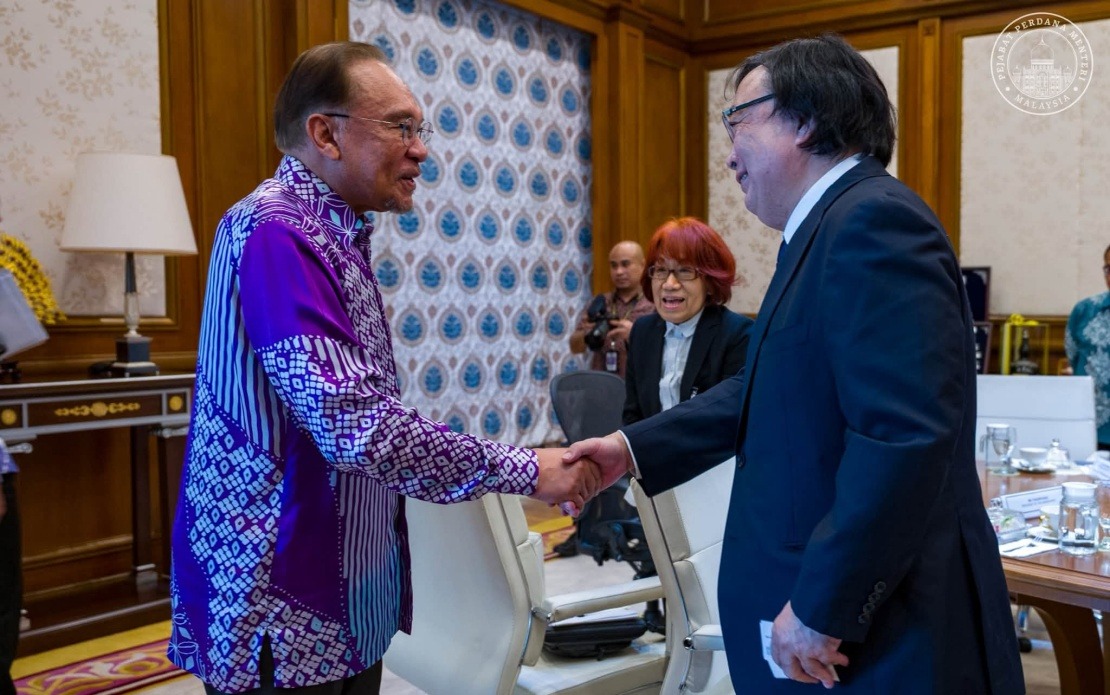
Prime Minister Datuk Seri Anwar Ibrahim welcomed Genron NPO President Yasushi Kudo at an audience in Kuala Lumpur on July 23, underscoring Kuala Lumpur's commitment to expanding multilateral engagement channels in Asia. The meeting centred on advancing the Asia Leaders Roundtable, a forum designed to facilitate high-level strategic conversations among regional policymakers grappling with complex transnational issues that shape the contemporary geopolitical and economic landscape.
Genron NPO operates as an independent, non-profit research institution headquartered in Japan, specialising in policy analysis and international dialogue initiatives. The think tank has established itself as a credible convener of Asian leaders and intellectuals seeking to build consensus on pressing matters affecting the region's collective interests. Its prominence in shaping regional discourse makes it a natural partner for Malaysian diplomatic outreach, particularly given Kuala Lumpur's pivot towards sophisticated multilateral engagement beyond traditional bilateral channels.
Anwar seized the occasion to reaffirm Malaysia's appreciation for Japan's reception during his official state visit in June, highlighting the warmth and ceremonial respect extended by Tokyo's leadership. Such expressions of gratitude carry diplomatic weight in Southeast Asian-East Asian relations, signalling that bilateral courtesies translate into substantive partnership commitments. The Prime Minister's public acknowledgment of Japanese hospitality reinforces the foundations upon which Malaysia intends to construct deeper institutional ties with one of Asia's most economically developed and technologically advanced nations.
Central to Anwar's remarks was Malaysia's valuation of its Comprehensive Strategic Partnership with Japan, a designation that extends beyond conventional diplomatic engagement into coordinated action on defence, trade, technology transfer, and regional stability. This partnership framework positions Japan among Malaysia's most important bilateral relationships, alongside traditional allies and regional powers. The formality of the designation reflects the sophisticated nature of contemporary Malaysia-Japan cooperation, which encompasses financial services, automotive manufacturing, semiconductor production, and renewable energy initiatives.
Japan's significance for Malaysia transcends political symbolism. As a mature, innovation-driven economy with substantial capital reserves and technological expertise, Japan represents a crucial conduit for Malaysian access to advanced manufacturing capabilities, research and development networks, and capital markets. Simultaneously, Malaysia offers Japan strategic positioning within Southeast Asia, including access to shipping lanes critical for Japanese commerce and diplomatic leverage in an increasingly competitive regional environment. This mutuality of interest provides durable foundations for partnership even as international circumstances shift.
The Genron NPO connection introduces an additional dimension to this relationship. Whereas official government-to-government channels operate within established protocols, track-two dialogue through think tanks and civil society organisations permits more candid exploration of complex issues without the constraints of formal diplomatic positioning. By engaging with Genron NPO, Malaysia signals its willingness to participate in substantive intellectual exchanges that can inform policy development and build personal relationships among influential regional figures who often shape their nations' strategic directions.
Anwar's acceptance of invitations to both the 2026 and 2027 Tokyo Conferences reflects Malaysia's commitment to sustained engagement with Japan-led multilateral processes. These conferences function as venues where senior policymakers, academics, and business leaders converge to examine regional trends, identify emerging challenges, and develop frameworks for coordinated responses. Anwar's prior contribution of a recorded message to the 2026 gathering, alongside his anticipated attendance at the 2027 iteration, demonstrates Malaysia's active rather than passive participation in these forums, positioning the nation as a contributor to regional strategic thinking rather than merely a recipient of Japanese policy preferences.
The emphasis placed on shared pursuit of peace, stability, and prosperity reflects aspirations that extend beyond the Malaysia-Japan dyad to encompass the broader Indo-Pacific region. Both nations face common interests in maintaining freedom of navigation, preventing regional conflicts from destabilising supply chains, and promoting rules-based international order. As geopolitical competition intensifies between major powers, middle powers like Malaysia and developed democracies like Japan find mutual benefit in reinforcing multilateral institutions and dialogue mechanisms that create space for consensus-building and peaceful resolution of disputes.
For Malaysian audiences, this engagement carries implications for how their nation positions itself within evolving Asian architecture. By strengthening ties with Japan through both official channels and civil society networks, Malaysia reinforces its identity as a connected, sophisticated player in regional affairs rather than a peripheral actor buffeted by larger powers' strategic competition. Such positioning enhances Malaysia's ability to influence regional outcomes, attract investment, and maintain strategic autonomy as geopolitical tensions potentially increase throughout the Indo-Pacific.
The Genron NPO engagement also signals Malaysia's interest in intellectual partnerships that enhance policy capacity. By participating in think tank networks anchored by respected institutions, Malaysian officials and intellectuals gain exposure to cutting-edge analysis and comparative policy insights that can inform domestic decision-making. This soft power dimension of diplomacy, often overlooked in favour of headline-grabbing bilateral summits, represents a methodical approach to building enduring relationships grounded in shared intellectual frameworks and mutual respect for expertise.
Looking forward, the trajectory of Malaysia-Japan relations appears oriented towards deepening rather than merely maintaining established partnerships. The investment of high-level political attention through Prime Ministerial meetings, combined with participation in major conferences and think tank initiatives, suggests deliberate efforts to elevate the relationship's sophistication and scope. For Malaysia's regional standing and economic prospects, cultivating such partnerships with mature, technology-advanced economies remains strategically prudent, particularly as regional uncertainties mount.

