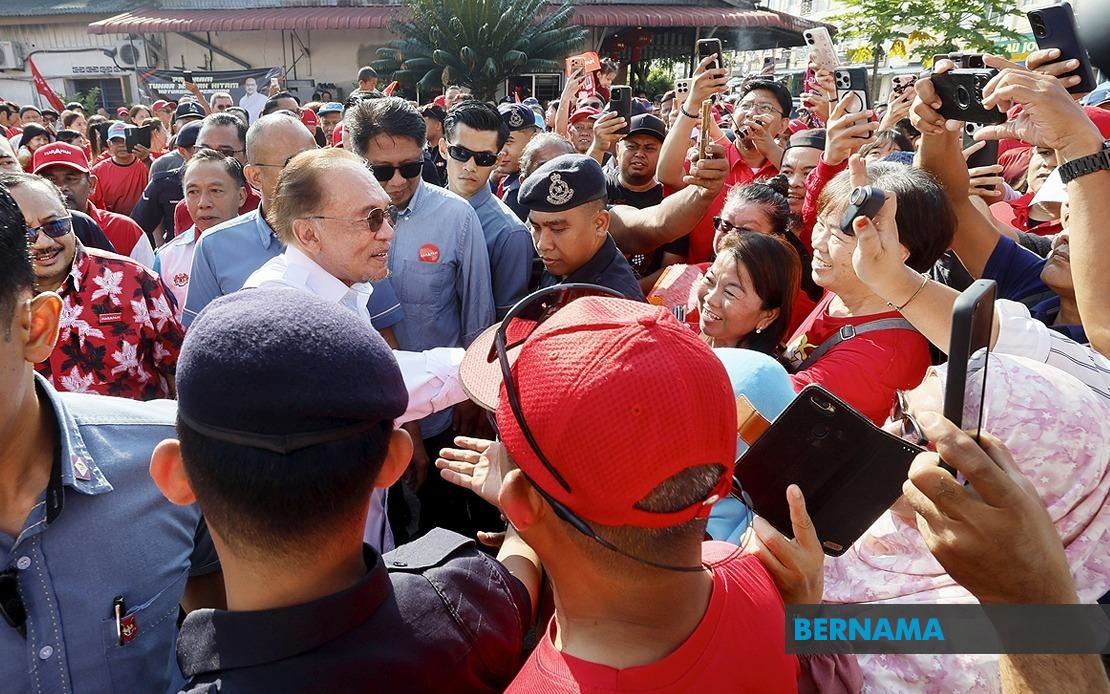
Prime Minister Datuk Seri Anwar Ibrahim has reunited with an octogenarian couple whose determination to meet him became a touching viral moment during campaigning in Johor. The encounter took place on Wednesday in Senggarang, where Anwar attended a Pakatan Harapan rally organised around the state election campaign. Abdul Razak Pelangga, who at 86 years old demonstrated remarkable spirit, had pedalled a trishaw nearly one kilometre the previous Sunday simply to fulfil his wife's wish of seeing the Prime Minister during a breakfast visit to the area.
The reunion unfolded with characteristic warmth, as Anwar shared a lighthearted exchange with Abdul Razak, playfully remarking on the elderly man's physical prowess in operating the three-wheeled vehicle. The interaction reflected a broader pattern in Malaysian political culture where grassroots encounters between national leaders and ordinary citizens carry symbolic weight, particularly during electoral campaigns. Anwar's deliberate scheduling of a separate meeting with the couple underscored the political value of such moments in an era where social media amplifies human-interest stories and shapes voter sentiment.
Abdul Razak's wife, Jamilah Samsudin, aged 64, stood beside her husband throughout the reunion, having been the catalyst for their original Sunday trishaw expedition. The couple's spontaneous journey had resonated with Malaysians across social media platforms, where stories of elderly citizens making sacrifices to participate in political processes often strike a chord with younger voters and urban audiences who view such dedication as admirable. Their presence at the formal campaign event, now as invited guests rather than chance encounters, reflected how political campaigns strategically incorporate genuine human moments into their messaging.
The "Yok! Meriahkan Johor! Undi Harapan" programme where the reunion occurred drew several prominent figures from Pakatan Harapan's political machinery. Datuk Fahmi Fadzil, the coalition's Communications director and Minister of Communications, attended the event, signalling the campaign's emphasis on building narrative momentum ahead of the election. The programme also featured three PH candidates contesting in the Senggarang, Semerah, and Penggaram constituencies, each seeking to leverage the gathering's energy and the positive media attention surrounding Abdul Razak and Jamilah's story.
For Malaysian voters, particularly those in Johor, the timing of this reunion held particular significance. The state election was scheduled for the following Saturday, with early voting having already occurred the previous Tuesday. This compressed campaign cycle meant that every public event carried heightened importance in shaping voter perception and turnout. Johor, as Malaysia's second-largest state by population and a traditionally competitive political battleground, has long been strategically crucial for both Pakatan Harapan and its political opponents in terms of securing legislative support and demonstrating electoral viability.
The narrative surrounding Abdul Razak's trishaw journey illustrated broader themes within Malaysian electoral politics about accessibility and the performative aspects of democratic participation. That an 86-year-old felt motivated to undertake physical exertion to meet a national leader speaks to the residual respect for the office of Prime Minister within Malaysian society, even among elderly citizens who may recall multiple administrations. Simultaneously, the viral nature of the story demonstrated how contemporary political campaigns function within digital ecosystems where authentic human moments generate exponentially greater engagement than scripted announcements or policy statements.
Anwar's engagement with the couple also positioned Pakatan Harapan as a coalition responsive to grassroots enthusiasm and willing to acknowledge ordinary citizens' efforts. This contrasts with political narratives that emphasise top-down governance structures or technocratic approaches to leadership. By making time for Abdul Razak and Jamilah despite his demanding schedule, Anwar reinforced messaging about accessible leadership and connection with communities, particularly important in rural and semi-urban areas of Johor where personal relationships and trust in political figures remain decisive factors in voting behaviour.
The Senggarang constituency, where the original encounter and subsequent reunion occurred, represents the type of marginal seat that frequently determines overall electoral outcomes in Johor. Candidate Onn Abu Bakar's presence at the programme alongside his counterparts in Semerah and Penggaram indicated a coordinated campaign effort to build momentum across multiple constituencies. The participation of three candidates suggested a broader push by Pakatan Harapan to consolidate support across the Batu Pahat district, a region that has experienced shifting political allegiances in recent electoral cycles.
For Southeast Asian observers monitoring Malaysian politics, the Abdul Razak and Jamilah story offered insights into how electoral campaigns in the region function at the intersection of traditional respect-based politics and modern social media dynamics. Unlike more developed democracies where such moments might be dismissed as contrived, Malaysian politics still accommodates genuine spontaneity and emotion within campaign frameworks, reflecting the nation's distinct political culture. This authenticity, whether intentional or circumstantial, resonates particularly with voters who feel increasingly disconnected from formal political institutions.
The elderly couple's journey also highlighted demographic patterns in Malaysian electoral engagement. Senior citizens represent a growing proportion of the voting population, yet their concerns and preferences are often underrepresented in campaign messaging that frequently targets younger, urban voters. Abdul Razak and Jamilah's visibility at the formal campaign event potentially signalled Pakatan Harapan's recognition of the need to court older demographic segments who maintain relatively consistent voting patterns and high turnout rates compared to younger age groups.
As Johor headed toward its election day the following Saturday, the narrative established around Abdul Razak and Jamilah contributed to the broader emotional tenor of the campaign. Rather than focusing solely on policy differences or governance records, Pakatan Harapan had capitalised on a human-interest story that reinforced themes of dedication, sacrifice, and the democratic right of citizens to engage with their leaders. Whether such moments ultimately influenced electoral outcomes would require post-election analysis, but their importance in shaping campaign narratives and public discourse remained undeniable in the contemporary Malaysian political landscape.

