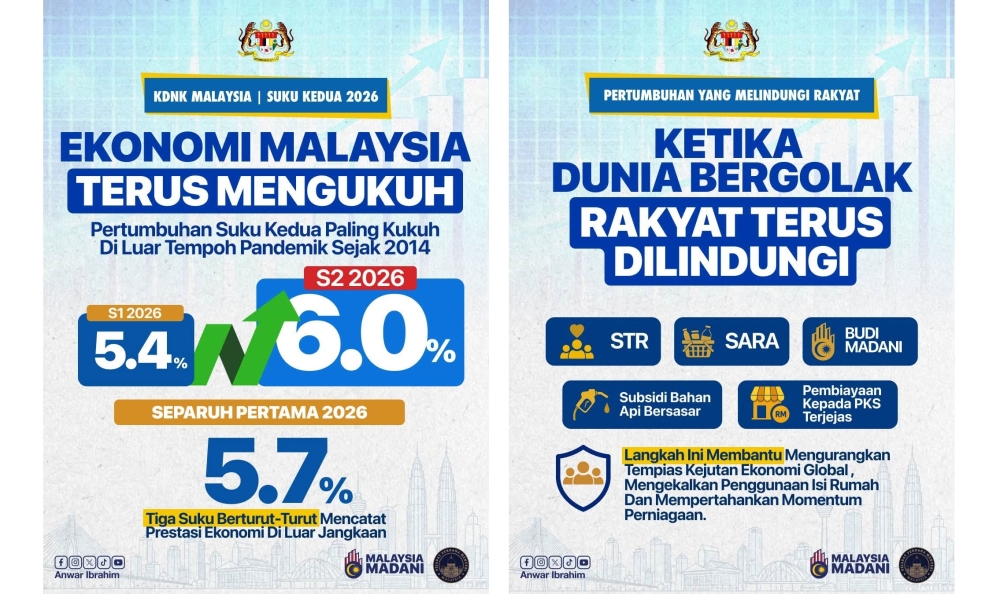
Prime Minister Datuk Seri Anwar Ibrahim has pointed to Malaysia's stronger-than-forecast economic growth in the second quarter as evidence that the government's economic management is delivering tangible benefits to ordinary Malaysians amid challenging global conditions. Speaking in Kuala Lumpur on August 14, Anwar framed the nation's improved expansion trajectory as a direct outcome of deliberate policy choices designed to insulate households and consumers from the international cost-of-living squeeze that has battered many developing economies over the past two years.
The Prime Minister's remarks underscored a central narrative in the government's economic messaging: that Malaysia's performance, while modest by historical standards, represents relative resilience compared to regional peers facing deeper inflationary and growth headwinds. For Malaysian voters and investors alike, this characterization carries political weight, signalling competence at a time when household budgets remain strained and public confidence in economic stewardship remains contested.
Anwar's framing of government protection against global inflation reflects specific policy interventions introduced since his administration took office in November 2022. These have included targeted fuel subsidies, price controls on essential food items, electricity tariff management, and expansion of direct cash transfers to vulnerable groups. By positioning these measures as effective shields rather than temporary relief, the Prime Minister is making a case that his coalition government has moved beyond reactive crisis management toward a more sustained, pro-poor economic strategy.
The timing of Anwar's statement is significant, arriving as Malaysia's central bank and independent economists continue to scrutinize whether the improved quarterly momentum can be sustained in the latter half of 2024. Second-quarter data often reflects seasonal patterns and base effects from the prior year, making headline growth figures potentially misleading about underlying economic dynamism. The government's narrative of strong, durable expansion thus invites closer examination of whether growth is broad-based across sectors or concentrated in specific areas with limited spillover effects on employment and household incomes.
For Southeast Asia's largest economies, Malaysia's economic trajectory holds lessons in managing the competing demands of fiscal sustainability and social protection. Regional policymakers across Vietnam, Thailand, and Indonesia have grappled with similar dilemmas—how to support purchasing power and living standards while maintaining macroeconomic stability and investor confidence. Anwar's public confidence in Malaysia's approach may reflect genuine optimism about medium-term prospects, or it may signal political necessity to demonstrate visible governance success ahead of potential electoral contests.
The Prime Minister's emphasis on household protection is also notable given the divergence between headline growth figures and real wage growth in Malaysia. While GDP expansion accelerates on paper, many workers have experienced minimal real income improvement over the past decade, and purchasing power erosion from past inflationary episodes continues to weigh on consumption patterns. Government interventions have prevented sharper declines in living standards, but whether they have fundamentally reversed the trajectory of wage stagnation remains an open question that extends beyond quarterly economic data.
Anwar's remarks come within a broader regional context of subdued growth expectations. The International Monetary Fund and Asian Development Bank have tempered growth forecasts for Southeast Asia as global trade momentum weakens and major economies decelerate. Within this landscape, even modest outperformance by Malaysia can carry diplomatic and political significance, offering Anwar a platform to argue for continuity of his administration's economic direction.
The government's anti-inflation efforts have not been cost-free, however. Fiscal deficits have widened, and targeted subsidies have created market distortions that economists warn could undermine long-term productivity and efficiency. Whether these trade-offs represent necessary short-term sacrifices or the beginning of unsustainable fiscal drift remains contentious among analysts and opposition figures alike. Anwar's confidence in the government's balancing act suggests an expectation that growth will accelerate sufficiently to ease future fiscal pressures, though this projection depends heavily on external conditions beyond Malaysian policymakers' direct control.
The Prime Minister's economic messaging also reflects broader international positioning. As geopolitical tensions shape global supply chains and investment flows, Malaysia's economic stability and growth profile matter for its standing among regional partners and foreign investors. By highlighting improved growth and effective household protection, Anwar is signalling both macroeconomic competence and commitment to inclusive development—themes that resonate with the consensus among Southeast Asian governments about the necessity of broad-based prosperity for political stability.
Looking ahead, the government faces the challenge of sustaining public confidence in its economic stewardship as global uncertainties persist and households continue navigating tight financial circumstances. Second-quarter improvements may or may not translate into sustained momentum, and future quarterly releases will test whether Anwar's optimism is warranted or premature. The political and economic stakes of accurate forecasting—and maintaining public belief in government competence—remain substantial for the administration and the nation's development trajectory.

