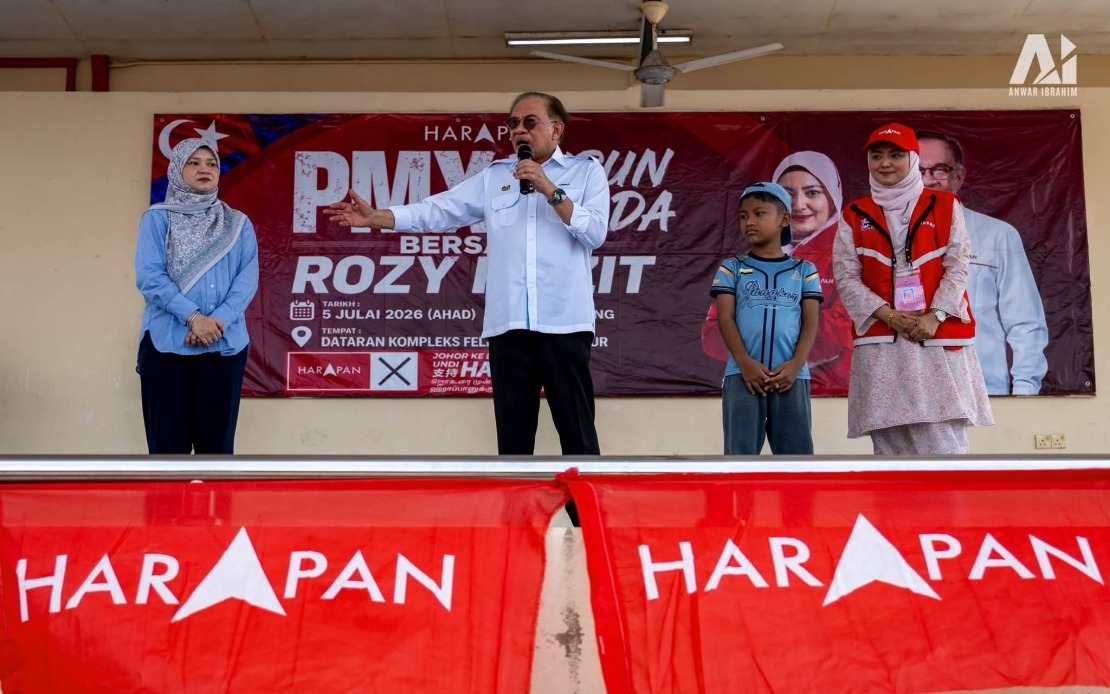
Prime Minister Datuk Seri Anwar Ibrahim has been deeply moved by the determination of a nine-year-old boy and his grandmother to meet him during a recent visit to Johor. The encounter, which took place at Felda Palong Timur in Segamat, left such an impression on the Premier that he subsequently arranged for a bicycle to be presented to the youngster. In a Facebook post reflecting on the meeting, Anwar described how the brief interaction carried unexpected emotional weight, highlighting the human element that sometimes gets overshadowed by the demands of governing a nation.
Muhammad Afif Ikhwan's story exemplifies the kinds of everyday acts of determination that often go unnoticed in the hustle of political life. The boy's grandmother, Rosimah Mohammad, a 58-year-old resident of Kampung Pudu in Segamat, navigated her motorcycle along the narrow tracks cutting through oil palm plantations solely to give her grandson the opportunity to catch a glimpse of the Prime Minister. This was not a casual outing or something accomplished without significant effort—it represented a deliberate commitment to fulfilling what was clearly an important wish for the child.
What strikes many observers about this incident is the juxtaposition of scales involved. What administrators and policy makers might dismiss as trivial—a brief handshake, a momentary connection in a crowd—possessed immense significance for a single family. The boy managed to reach through the throng of people surrounding the Prime Minister, their hands connected for what was undoubtedly a fleeting moment, before being invited to join Anwar on stage at the Felda programme. The simplicity of the gesture belies its emotional resonance.
Anwar's public reflection on the meeting reveals something noteworthy about his approach to leadership and personal engagement with constituents. Rather than simply moving on to the next programme or engagement, he took the initiative to have someone visit Muhammad Afif at his home, delivering the bicycle as a tangible token of connection and encouragement. This follow-up gesture demonstrates a commitment to acknowledging the effort made by ordinary Malaysians, particularly those in rural areas who may feel distant from the corridors of power. For a family in Kampung Pudu, a visit from a representative of the Prime Minister's office carries profound symbolic weight.
The narrative also touches on broader themes about governance and human connection that resonate across Malaysia's diverse landscape. The Prime Minister emphasised in his post that despite the considerable pressures of managing national affairs and addressing major policy challenges, those in leadership positions must retain their capacity for compassion and humanity. This message carries particular relevance in an era when political discourse often becomes fractious and polarised, sometimes losing sight of the human stories that exist at the grassroots level.
For residents of rural areas like Segamat, particularly those in agricultural communities dependent on the palm oil industry, such moments of direct acknowledgement from national leadership can feel meaningful. Many Malaysians in these zones experience a sense of geographic and political distance from the capital, and a Prime Minister's genuine engagement with a child from their community—however brief—can amplify feelings of inclusion in the national project. Rosimah's willingness to undertake what was clearly an arduous journey speaks to the emotional investment rural Malaysians sometimes have in their national leaders.
The incident also raises interesting questions about the informal channels through which leadership communicates with ordinary citizens. Social media platforms, particularly Facebook, have become important vehicles for leaders to share personal reflections and connect with the public on a more intimate level than traditional media might allow. By posting his thoughts about the encounter, Anwar was not merely documenting an event; he was offering a window into his own values and sensibilities, suggesting that he views such human connections as integral to his role.
Muhammad Afif's story, as Anwar framed it in his reflection, serves as inspiration for the boy's future pathway. The Prime Minister expressed hope that the encounter would become a cherished memory motivating the youngster to excel in his studies and eventually contribute meaningfully to his family, community, and country. This forward-looking perspective transforms what might be a simple anecdote into a narrative about continuity and investment in Malaysia's next generation. For a child in a rural setting, knowing that the nation's leader has taken time to acknowledge him may plant seeds of aspiration.
The broader context of Malaysian governance involves consistent efforts to reach out to communities beyond urban centres. While Kuala Lumpur and other major cities tend to dominate national headlines, the experiences of children and families in Felda settlements and kampung areas shape the social fabric of the nation. Anwar's willingness to publicly celebrate such an encounter suggests a recognition that nation-building requires sustained attention to these communities and their members, regardless of their economic or political prominence.
What ultimately emerges from this account is a portrait of leadership that values the personal dimensions of public service. In a world where political calculations and strategic planning often dominate, Anwar's choice to gift a bicycle to Muhammad Afif and to reflect publicly on the meaning of the encounter represents a different priority. It signals that in his view, the office of Prime Minister carries not just technical responsibilities but also an obligation to recognise and honour the aspirations of ordinary Malaysians who take extraordinary steps to connect with their national leadership.

