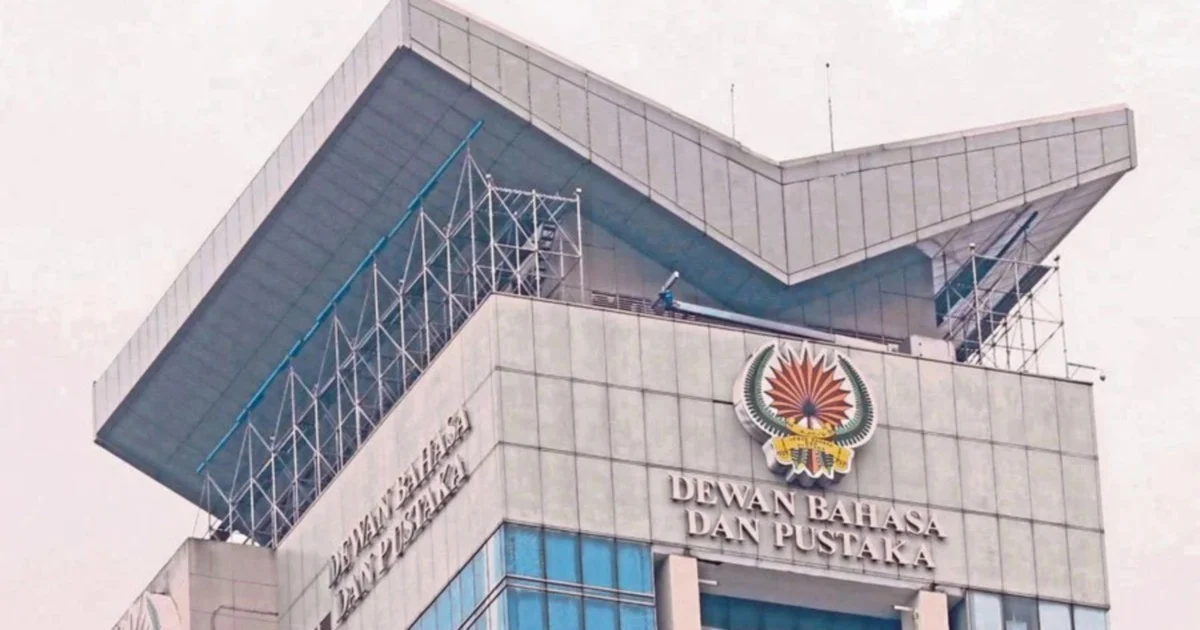
Prime Minister Datuk Seri Anwar Ibrahim has extended his greetings to Dewan Bahasa dan Pustaka (DBP) on the occasion of its 70th anniversary, acknowledging the institution's enduring role in the preservation and advancement of the Malay language across the nation and region.
The milestone anniversary represents seven decades of consistent institutional effort to maintain linguistic standards, develop vocabulary responsive to contemporary usage, and ensure the Malay language remains vibrant in an increasingly digital and globalised world. DBP's longevity as a government agency reflects the Malaysian state's commitment to constitutional obligations regarding the national language, a commitment that has proven resilient across multiple administrations and periods of significant social and technological change.
Established in the immediate post-independence period, DBP emerged during a formative moment when Malaysia was consolidating national identity and institutions. The organisation inherited responsibility for implementing language policies that had become central to the nation-building project, translating legislative frameworks into practical programmes and resources. Over successive decades, DBP has expanded from its initial mandate into broader cultural work, establishing itself as the authoritative body for standard Malay usage across government, education, and public discourse.
The institution's work encompasses dictionary compilation, which represents an ongoing archive of linguistic evolution and standardisation. Modern dictionaries maintained by DBP incorporate neologisms reflecting technological advancement, scientific discovery, and contemporary life while maintaining fidelity to established grammatical principles. This balancing act—between preservation and innovation—requires sophisticated institutional expertise and reflects the complex dynamics of language maintenance in developing societies.
DBP's educational programmes and promotional activities have made the organisation visible across Malaysian classrooms and cultural institutions. The institution distributes learning materials, organises language competitions, and maintains publishing operations that make Malay literature and reference works accessible to students and general readers. These functions represent crucial infrastructure supporting mother-tongue education policies that differentiate Malaysia's approach from post-colonial states that permitted linguistic displacement through educational systems.
The anniversary comes at a moment when regional interest in Malay language study is evident across Southeast Asia and beyond. Language learners in neighbouring countries increasingly recognise Malay's importance as a regional lingua franca and gateway to understanding Malaysian and Indonesian cultures. DBP's international visibility has correspondingly grown, with the institution engaging in bilateral educational exchanges and linguistic cooperation agreements that position the Malay language within broader regional intellectual frameworks.
For Malaysian policymakers, DBP's institutional continuity provides a foundation for language policy implementation without requiring constant institutional rebuilding or theoretical reconceptualisation. The organisation's institutional memory permits longitudinal perspectives on linguistic change and enables comparative analysis of how policy interventions have shaped language usage patterns across generations. This accumulated expertise represents substantial public investment that persists regardless of political transitions at the national level.
The digital transformation of communications presents contemporary challenges that DBP must navigate, including the standardisation of Malay usage across social media platforms, online publishing, and digital communications systems. The organisation's capacity to influence linguistic norms in digital spaces remains limited compared to its historical authority in print media and formal institutional contexts. Establishing standards for internet-mediated communication requires different approaches than traditional dictionary work, involving collaboration with technology companies and online communities rather than top-down standardisation mechanisms.
DBP's anniversary milestone also prompts reflection on regional linguistic cooperation arrangements. The institution maintains relationships with counterpart organisations in Indonesia, Brunei, and other Malay-speaking jurisdictions, coordinating efforts to maintain mutual intelligibility and prevent divergence into separate standardised forms. These cooperative arrangements remain relatively informal despite their importance for regional communication and cultural cohesion, suggesting potential for deeper institutional coordination in the future.
The institution faces ongoing questions about funding adequacy and staffing levels, particularly as digital transition requires investment in new technological capabilities while maintaining legacy functions. Public sector resource constraints have occasionally strained DBP's operational capacity, raising questions about whether current institutional structures and funding models remain appropriate for contemporary demands on language maintenance and development.
DBP's seven decades of institutional operation demonstrate that deliberate, sustained effort can successfully defend national languages against displacement pressures, though such success requires continued commitment and resources. The institution's future trajectory will substantially depend on whether Malaysian policymakers maintain support for language maintenance as a national priority, particularly when competing demands press on government budgets and institutional attention. The anniversary celebration provides opportunity to reaffirm that commitment publicly.