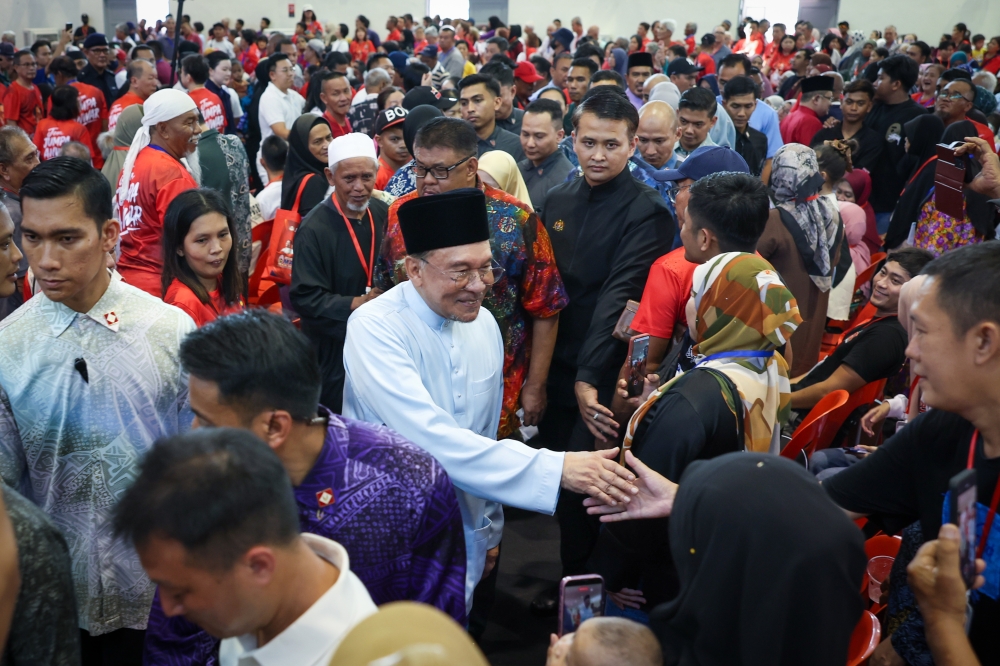
Prime Minister Datuk Seri Anwar Ibrahim has commenced a series of medical examinations and specialist procedures, according to confirmation from the Prime Minister's Office. The comprehensive health assessment, spanning two days of specialist-led observation, represents routine preventative care measures undertaken to maintain the prime minister's fitness for high office.
The decision to conduct these examinations reflects standard practice among heads of government across Asia and globally, where regular medical evaluations form part of broader health management protocols. Such assessments typically encompass cardiovascular function, metabolic health, and comprehensive physical evaluations designed to detect any emerging health concerns at an early stage. Given the demanding nature of the prime ministerial role—which routinely involves extensive domestic travel, international diplomatic engagements, and sustained periods of high-intensity decision-making—maintaining documented records of executive health has become an established governance norm in most Commonwealth-influenced democracies.
Malaysia's political establishment has historically maintained relatively transparent communication regarding prime ministerial health matters, though detailed medical information remains appropriately confidential under patient privacy conventions. The PMO's willingness to publicly acknowledge the medical process, rather than obscuring the prime minister's whereabouts, suggests confidence in the routine nature of these investigations. This openness contrasts with previous periods in Malaysian politics when health-related absences from public duties generated considerable speculation and uncertainty among government observers and international partners.
For Malaysian citizens and regional observers, prime ministerial health carries significant implications beyond personal wellness. The continuity and stability of executive leadership directly influences investor confidence, the stability of government policy implementation, and Malaysia's standing within regional diplomatic frameworks. Any prolonged absence from active executive duties can create governance vacuums, particularly concerning time-sensitive decisions on economic policy, security matters, or international relations. The advance notification of this medical evaluation therefore serves a reassuring function, demonstrating institutional preparedness and transparent succession planning conventions.
The two-day observation period suggests investigations extending beyond simple outpatient procedures. Specialist observation typically encompasses diagnostic imaging, laboratory investigations, cardiac monitoring, and possibly gastroenterological assessments—the comprehensive battery of tests considered standard for senior executives entering their second year of tenure. Such thoroughness provides baseline health documentation against which future assessments can be measured, establishing clear medical benchmarks for ongoing health monitoring throughout the remainder of the prime minister's term.
Within the Malaysian political context, public health disclosures also carry symbolic weight. Previous prime ministers faced considerable public concern and rumour-mongering regarding undisclosed health issues, which inevitably affected government stability and policy effectiveness. By proactively communicating Anwar Ibrahim's medical schedule, the PMO appears committed to normalising transparent health governance—a departure from earlier practices that kept such matters entirely beyond public knowledge or speculation.
The timing and nature of these examinations reflect international best practice for executive health management. Many developed democracies require or encourage periodic comprehensive health assessments of heads of government, with results sometimes made available to relevant parliamentary committees or security advisors. Malaysia's approach appears consistent with this evolving standard, balancing the legitimate public interest in executive health fitness against appropriate privacy protections regarding specific medical diagnoses or findings.
Regional political analysts note that periodic health assessments have become increasingly routine as prime ministers age and as stakeholders—from international partners to domestic investors—demand greater certainty regarding governance continuity. In Southeast Asia's political landscape, where leadership transitions occasionally generate institutional friction, documented health management protocols reduce uncertainty and strengthen domestic and international confidence in government stability.
For the broader Malaysian public and the business community, the significance extends beyond the immediate health concern. The PMO's matter-of-fact communication style regarding this medical process signals an administration comfortable with institutional transparency and routine governance procedures. This approach contrasts with patterns of information withholding that characterised earlier administrations and contributes to rebuilding public trust in the integrity of governmental institutions.
The completion of these specialist observations will likely result in routine communiqués confirming the prime minister's fitness to discharge his duties, contingent upon his physicians' recommendations. Barring unexpected findings, such medical evaluations typically conclude with clearance to resume normal executive functions, with recommendations for ongoing health monitoring and lifestyle management adjusting to any identified risk factors.
Looking forward, the establishment of periodic medical evaluation protocols for Malaysia's prime minister may set a precedent that future administrations will likely continue. This represents a subtle but meaningful evolution in Malaysian governance culture—one that emphasises predictability, institutional responsibility, and the primacy of stable executive leadership over personalised political narratives or opacity regarding matters of public concern.

