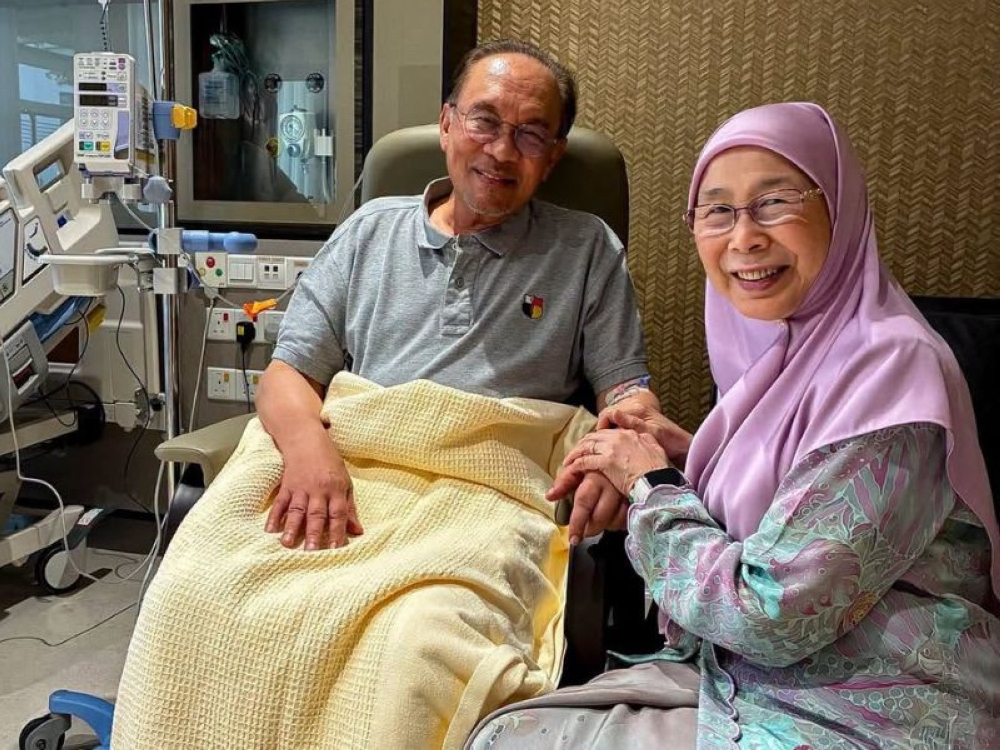
Prime Minister Datuk Seri Anwar Ibrahim is set to return home today after undergoing a hernia procedure at the hospital, his wife Datin Seri Wan Azizah Wan Ismail confirmed. The operation, which was conducted to address the medical condition, has proceeded smoothly, and the prime minister's recovery trajectory remains positive, signalling his readiness for discharge.
The timing of the procedure comes amid the government's ongoing legislative agenda and policy implementation across various sectors. The Prime Minister's temporary absence from his official duties during the hospitalisation period necessitated careful coordination among cabinet members to ensure continuity in governance and ministerial functions. Such medical procedures, while routine for many, require particular attention when involving high-ranking government officials given the implications for state administration.
Datin Seri Wan Azizah's public confirmation of the discharge represents a reassuring update for the Malaysian public and international observers monitoring developments at the highest levels of government. Her role in communicating the Prime Minister's health status underscores the importance of transparency in such matters, particularly given the pivotal nature of the prime ministerial position in the country's political landscape and decision-making apparatus.
Hernia procedures are common surgical interventions designed to repair weakened abdominal muscles or tissue, where internal organs protrude through the weakened area. Recovery timelines typically vary depending on the severity of the condition and the surgical approach employed. Most patients resume their regular activities within several weeks, though strenuous activities may require a longer recuperation period. For someone in the Prime Minister's position, the recovery process naturally involves careful management to balance medical requirements with the demands of high office.
The Prime Minister's health situation highlights the broader reality that public officials, regardless of their position or responsibility, remain subject to the same medical circumstances as the general population. The need for periodic medical intervention is part of the human condition, and the transparent handling of such matters serves to normalise discussions around health while maintaining appropriate privacy and dignity. Malaysia's political leadership has generally maintained relatively open communication regarding such medical matters affecting senior government figures.
The discharge comes at a juncture when the government continues navigating multiple policy priorities and economic considerations affecting the nation. The coordination required during the Prime Minister's recovery period likely involved detailed handover of urgent matters to relevant deputy ministers and cabinet colleagues. Such arrangements reflect the institutional maturity of the Malaysian government's administrative structure, which has established protocols for managing temporary absences of key officials without disrupting critical government functions.
For the broader Malaysian public and international community, confirmation of the Prime Minister's satisfactory recovery provides assurance regarding the stability and continuity of government operations. Political observers and international partners often monitor the health and availability of senior leaders closely, as these factors influence policy direction and diplomatic engagement. The timely update addresses such concerns proactively, reducing speculation or uncertainty that could otherwise emerge during periods of reduced public visibility.
The Prime Minister's return home also signals his anticipated resumption of full duties in the coming days following post-operative recuperation. Depending on his medical team's recommendations, he may initially undertake lighter schedules before progressively resuming the full spectrum of his responsibilities. This measured approach balances the need for adequate recovery time with the demands of his office, ensuring he returns to work while maintaining the physical wellbeing necessary for his demanding position.
The episode serves as a reminder of the importance of accessible healthcare and the availability of quality medical facilities in Malaysia. The successful management of the Prime Minister's condition reflects the capabilities of the country's medical infrastructure and healthcare professionals. Such confidence in the nation's medical system carries positive implications for public health perception and the broader healthcare sector's reputation both domestically and regionally.
Moving forward, the Prime Minister's recuperation period will likely be brief given the nature of the procedure and the positive recovery indicators already evident. His anticipated presence in parliamentary and cabinet settings will allow him to directly engage with pending legislative matters and policy discussions that accumulated during his absence. The resumption of his regular duties represents a return to full operational capacity for the government's executive branch.

