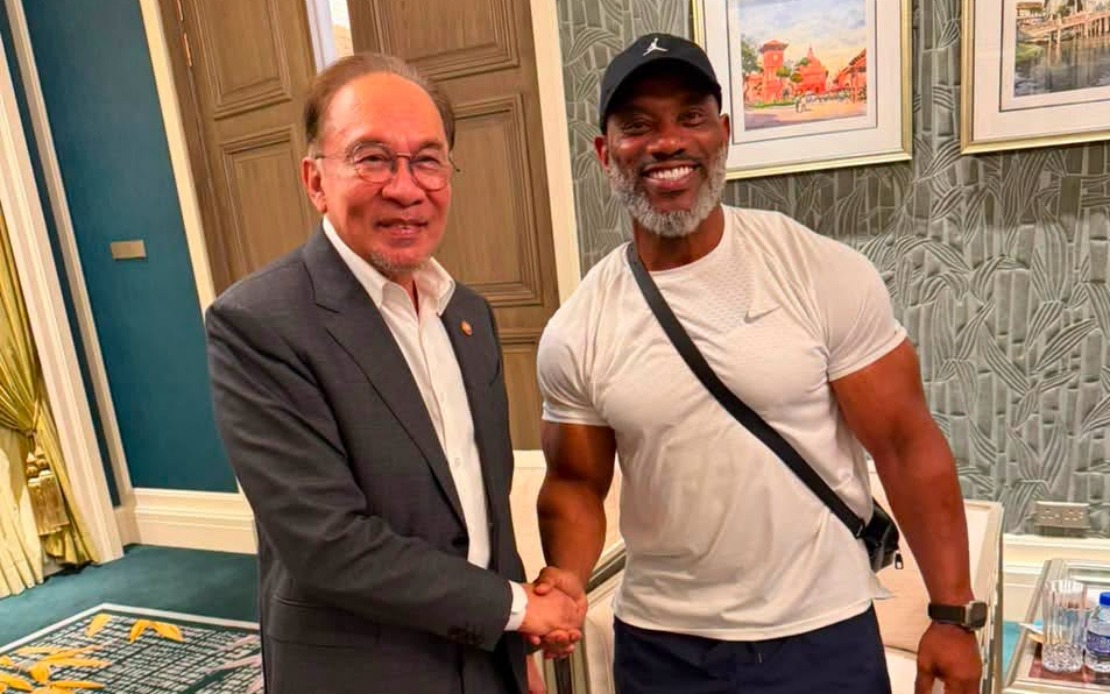
Prime Minister Datuk Seri Anwar Ibrahim expressed his enthusiasm this week after meeting one of professional bodybuilding's most decorated athletes, Dexter Jackson, capturing the moment with a photograph posted to his Facebook account. The encounter showcased Anwar's inclination toward engaging with international sporting figures and personalities across diverse disciplines, reflecting Malaysia's broader positioning within the global sports and wellness community.
Jackson, now 56 years old, remains one of bodybuilding's most accomplished competitors in competitive history. His trophy cabinet includes the prestigious Mr Olympia title from 2008 and the Masters Mr Olympia championship in 2012, representing the pinnacle of achievement in what is arguably the sport's most elite competition. Beyond these crowning accolades, Jackson holds a particularly impressive distinction that sets him apart from his peers: he has claimed the Arnold Classic title an unprecedented nine times, making him the most successful competitor in that particular competition's distinguished history.
The prime minister's response to the meeting reflected his characteristic approach to public engagement, blending acknowledgment of Jackson's remarkable athletic achievements with self-deprecating humour. In his social media post, Anwar noted his inspiration from meeting the bodybuilding icon and playfully remarked that the encounter might be motivation for him to intensify his own gymnasium routine. This conversational tone has become familiar to Malaysian observers of Anwar's digital communications, where official commentary frequently adopts a personable register that seeks to connect with his audience beyond traditional political discourse.
The significance of such high-profile meetings extends beyond mere ceremonial pleasantries in Malaysia's diplomatic and cultural landscape. When senior government figures meet international sporting legends, these encounters often signal openness to global sporting partnerships, potential investments in fitness and wellness infrastructure, and broader cultural exchange opportunities. For a nation like Malaysia, which has invested increasingly in sports tourism and health and wellness sectors, such interactions carry implicit messages about national priorities and the government's engagement with international excellence across various domains.
Dexter Jackson's prominence in bodybuilding circles reflects decades of disciplined competition and achievement spanning multiple decades of professional competition. His longevity at the sport's highest levels—competing at elite standards well into his fifties—has made him a respected figure not only among devoted bodybuilding enthusiasts but increasingly among mainstream sports audiences who appreciate his professional trajectory and contributions to the sport's evolution. His record of nine Arnold Classic victories demonstrates consistency and competitive excellence across an extended period, a distinction that relatively few athletes across any discipline achieve.
The Arnold Classic, established by fitness entrepreneur Arnold Schwarzenegger and held annually in different cities worldwide, represents one of bodybuilding and fitness sport's most prestigious international stages. The competition attracts elite competitors from across the globe and has become a significant event in the international sports calendar, with host cities leveraging the occasion for sports tourism and media attention. Jackson's nine victories speak to both his individual prowess and the enduring quality of his athletic preparation across numerous competitive cycles.
For Malaysian observers, such encounters between political leadership and international sporting personalities often spark conversations about national sporting aspirations and the importance of cultivating home-grown athletic excellence. While Malaysia has historically produced accomplished athletes across various disciplines, from badminton and squash to athletics and motorsports, the fitness and bodybuilding sectors have attracted increasing participation and commercial investment in recent years. Events like the Asian Bodybuilding and Physique Sports Championships have been held in Malaysia, indicating growing recognition of the sport within the regional sporting ecosystem.
Anwar's engagement with Jackson also reflects the broader trend among contemporary political leaders of leveraging social media to maintain direct communication with constituents and international audiences. By sharing personal moments and observations on platforms like Facebook, political figures create informal narratives that humanise their public personas and demonstrate accessibility. The self-aware humour employed in Anwar's post—the reference to his own gymnasium obligations—serves as a relatable touch that bridges the formal distance typically maintained between high office and the general public.
The meeting carries implicit significance regarding Malaysia's positioning within the global health and wellness discourse. As countries increasingly emphasise public health initiatives and preventive healthcare through fitness and exercise, encounters between national leadership and internationally recognised fitness personalities acquire additional meaning. Jackson's sustained excellence and athletic longevity provide a compelling narrative about the possibilities of disciplined physical training across different life stages, a message that resonates within contemporary wellness and healthy ageing conversations.
Moreover, such interactions between Malaysian leadership and international sporting figures contribute to the nation's cultural soft power and international image. They demonstrate that Malaysia remains engaged with global sporting communities and maintains openness to the international circulation of ideas, expertise, and inspiration across various domains. For a nation seeking to position itself as a regional hub for diverse economic and cultural activities, such encounters reinforce that positioning and signal active participation in contemporary global conversations across multiple sectors beyond traditional trade and diplomacy.

