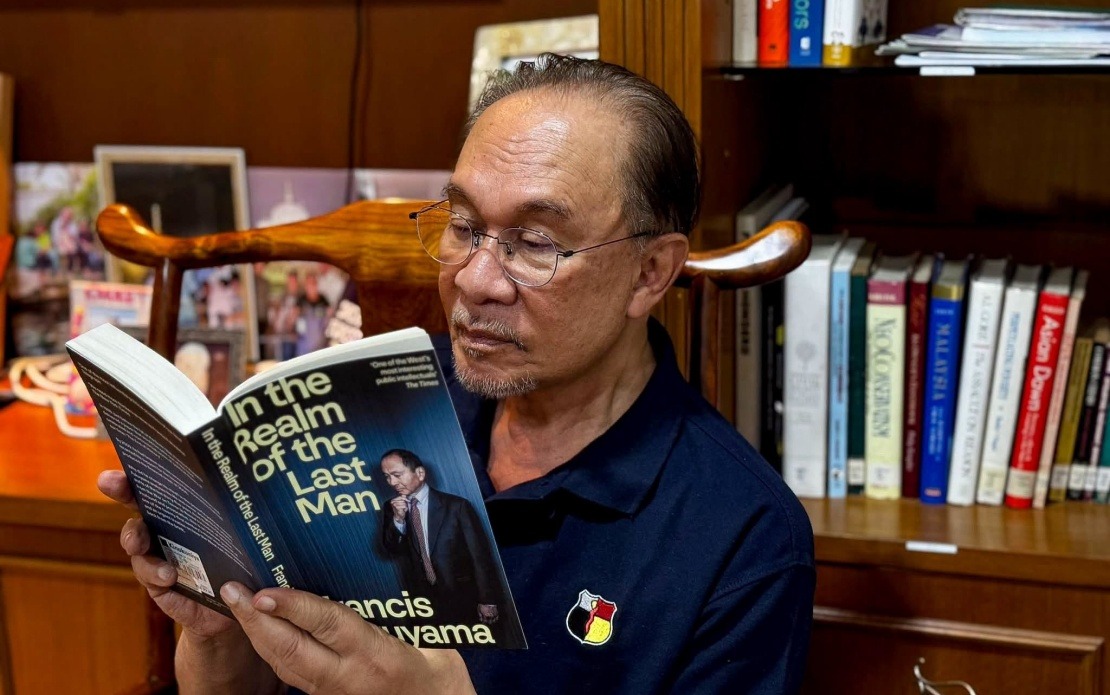
Prime Minister Datuk Seri Anwar Ibrahim has returned to his residence following his discharge from hospital on August 12, marking the conclusion of his brief medical admission. The Prime Minister shared news of his homecoming through a social media post featuring an image of himself engaged in reading, accompanied by a caption expressing gratitude for his recovery.
Anwar's wife, Datuk Seri Dr Wan Azizah Wan Ismail, had previously indicated that her husband's discharge was expected on the day it occurred, following several days of post-operative care and monitoring. The announcement came as part of standard medical protocol following surgical intervention, with the family's confirmation providing reassurance to the public regarding the Prime Minister's health status and recovery trajectory.
On the preceding Monday, the Prime Minister underwent a planned laparoscopic surgical procedure designed to address a para-umbilical hernia, a relatively common abdominal condition requiring surgical correction. This minimally invasive technique, which utilizes small incisions and specialized instruments, is the preferred approach for many hernia repairs due to reduced tissue trauma and faster patient recovery compared to traditional open surgery.
Following the procedure, Anwar remained under the attentive care of a comprehensive medical team comprising specialist physicians and surgical professionals. The close medical supervision reflected standard practice for post-operative patients, particularly those in high-profile government positions where health stability carries national implications. During his hospital stay, the medical team monitored his vital signs, managed pain, and ensured proper wound healing.
The disclosure of Anwar's medical condition and treatment represents a significant moment in Malaysia's political landscape, given his central role as the nation's chief executive. Public figures in Southeast Asia have increasingly adopted greater transparency regarding health matters, recognizing both the public interest in leadership continuity and the benefits of reducing unnecessary speculation about political succession or governmental capacity.
The elective nature of the surgery indicates that the condition, while requiring treatment, was not acute or immediately life-threatening. Para-umbilical hernias develop when abdominal tissue protrudes through the abdominal wall near the umbilicus, and while many can be managed conservatively, surgical intervention becomes necessary when the hernia causes discomfort, shows signs of enlargement, or poses complication risks. The decision to proceed with surgery during Anwar's tenure as Prime Minister suggests careful coordination between his medical advisors and political staff.
The use of laparoscopic methodology carries particular relevance in modern surgical practice, particularly for leaders and professionals who need to minimize recovery time. The minimally invasive approach typically involves several small incisions through which a camera and surgical instruments are introduced, allowing surgeons to visualize and repair the hernia with precision. Recovery periods following laparoscopic procedures are substantially shorter than traditional open surgery, often permitting return to regular activities within weeks rather than months.
For Malaysian readers and regional observers, Anwar's medical situation underscores the ongoing importance of institutional governance frameworks that accommodate leadership transitions or delegations of authority during temporary incapacities. The smooth announcement and handling of his hospitalization and recovery demonstrate operational continuity within the Prime Minister's office and broader governmental structures, a critical consideration for investor confidence and international relations.
The Prime Minister's prompt return to his residence and his engagement in leisure activities, as evidenced by the social media photograph, suggests an uncomplicated post-operative course without immediate complications. This positive indication would typically be followed by a structured rehabilitation period involving activity restrictions and follow-up medical appointments to ensure optimal healing and to rule out any delayed complications.
The management of this medical episode also reflects broader Southeast Asian trends toward greater transparency from political leadership regarding health matters. Unlike previous decades when such information might have been closely guarded or deliberately obscured, contemporary political communication increasingly recognizes that public disclosure, managed appropriately, builds confidence in governmental stability and leadership continuity.
For stakeholders monitoring Malaysian politics and governance, Anwar's swift recovery and return home represent continuity of executive function without significant disruption to national decision-making processes. The elective nature of the procedure and the brief hospitalization period suggest minimal impact on Malaysia's domestic policy agenda or international commitments during the medical interlude.

