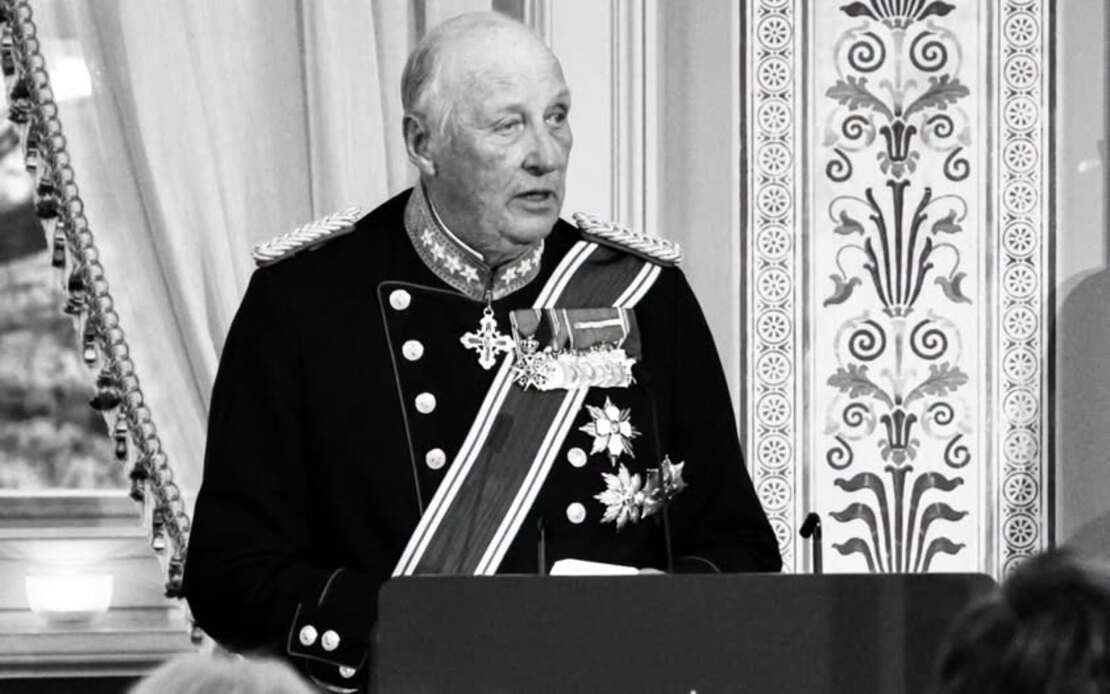
Malaysia's Prime Minister Datuk Seri Anwar Ibrahim has formally conveyed the nation's condolences to the people of Norway following the death of King Harald V, who passed away on Friday at the age of 89. The late monarch died at the National Hospital in Oslo after a period of hospitalisation that began on August 17, during which he received treatment for hemolytic anemia, including cortisone therapy. Through a statement posted on his Facebook page on Thursday, Anwar offered heartfelt sympathies to the Norwegian people during their time of mourning.
In his remarks, Anwar highlighted the profound legacy that King Harald V leaves behind, particularly regarding his vision of what constitutes national identity and belonging in the modern era. The Prime Minister drew attention to the late king's remarkable capacity to articulate an inclusive understanding of Norwegian nationhood, one that embraced the contributions and presence of immigrants and their descendants within the fabric of Norwegian society. This emphasis underscores a theme that resonated throughout King Harald's reign: the notion that a nation's true strength lies not in ethnic homogeneity but in the degree to which it welcomes and integrates people from diverse backgrounds.
Anwar specifically referenced King Harald's public recognition of Norway's multicultural composition, quoting the late monarch's affirmation that individuals whose families originated from Afghanistan, Pakistan, Poland, and numerous other countries were equally Norwegian. Such pronouncements, delivered by a reigning monarch, carried particular symbolic weight in establishing the moral and social framework within which debates about integration and national identity could take place. For Malaysia, a nation with its own complex history of managing religious and ethnic diversity, the late king's progressive stance offered a model worthy of reflection, particularly as discussions about pluralism and social cohesion remain relevant in Southeast Asia.
The Prime Minister's framing of King Harald's approach to nationhood as a source of collective strength reflects contemporary challenges facing many societies globally. Anwar emphasised that the dignity accorded to all citizens, regardless of their ancestral origins, constitutes a foundational principle upon which national resilience is built. This perspective aligns with Malaysia's own constitutional framework, which enshrines protections for minority communities and establishes Islam as the federation's religion whilst guaranteeing freedom of worship for other faiths. By drawing this parallel, Anwar positioned the late Norwegian king's legacy as relevant to ongoing conversations within Malaysia about social unity and the proper basis for national solidarity.
Beyond his observations on inclusivity and nationhood, Anwar also commended King Harald's personal commitment to duty and oath-keeping. The Prime Minister noted that the late monarch possessed a deep understanding of the weight carried by formal vows and the moral imperative to remain faithful to one's solemn commitments. This characterisation speaks to the ceremonial and constitutional role that monarchs occupy, wherein the sanctity of their pledges—whether made upon accession to the throne or during formal state functions—serves as an anchor for institutional stability and public trust. For a Malaysian audience familiar with the reverence accorded to constitutional monarchy, this dimension of Anwar's tribute resonates as a recognition of shared values regarding leadership and accountability.
King Harald V's reign, which began in 1991 following the death of his father King Olav V, spanned more than three decades of significant change within Norway and across Europe. His tenure witnessed the country's negotiation of its relationship with the European Union, the management of substantial oil wealth, and the navigation of evolving social attitudes towards immigration, gender equality, and religious pluralism. Throughout these transformations, the late king maintained a reputation for thoughtful leadership and a willingness to engage with contemporary social issues in ways that demonstrated both tradition and progressive thinking.
The diplomatic gesture embodied in Anwar's statement reflects the importance that Malaysia places on its international relationships, particularly with European nations. Norway, as a significant player in global affairs and a leading economy, maintains considerable influence within international forums and development initiatives. The expression of condolences through carefully chosen words about King Harald's vision serves not merely as a courtesy but as an affirmation of shared values regarding governance, pluralism, and the responsibilities that leaders bear towards their societies.
For Southeast Asia more broadly, the passing of King Harald V marks the end of an era in Scandinavian monarchy characterised by a particular approach to modernisation and social change. His successor, King Harald's son Crown Prince Haakon, now assumes the throne at a time when Norway faces contemporary challenges ranging from climate change to geopolitical realignments in Europe. The continuity of Norwegian institutions and constitutional principles will depend significantly on how seamlessly this transition occurs and how the new monarch articulates his own vision for the nation's future.
Anwar's statement, whilst formal in nature, contributes to the broader international conversation about leadership, national identity, and the evolving role of monarchies in contemporary democracies. By highlighting King Harald's inclusive vision of Norwegian identity, the Malaysian Prime Minister invokes values that transcend cultural and geographical boundaries—principles concerning human dignity, social cohesion, and the responsibilities of leadership that remain universally resonant. As Malaysia continues to navigate its own complex social landscape, the example set by King Harald V regarding the importance of affirming the dignity of all citizens, irrespective of their origins, offers timely perspective for reflection and emulation.

