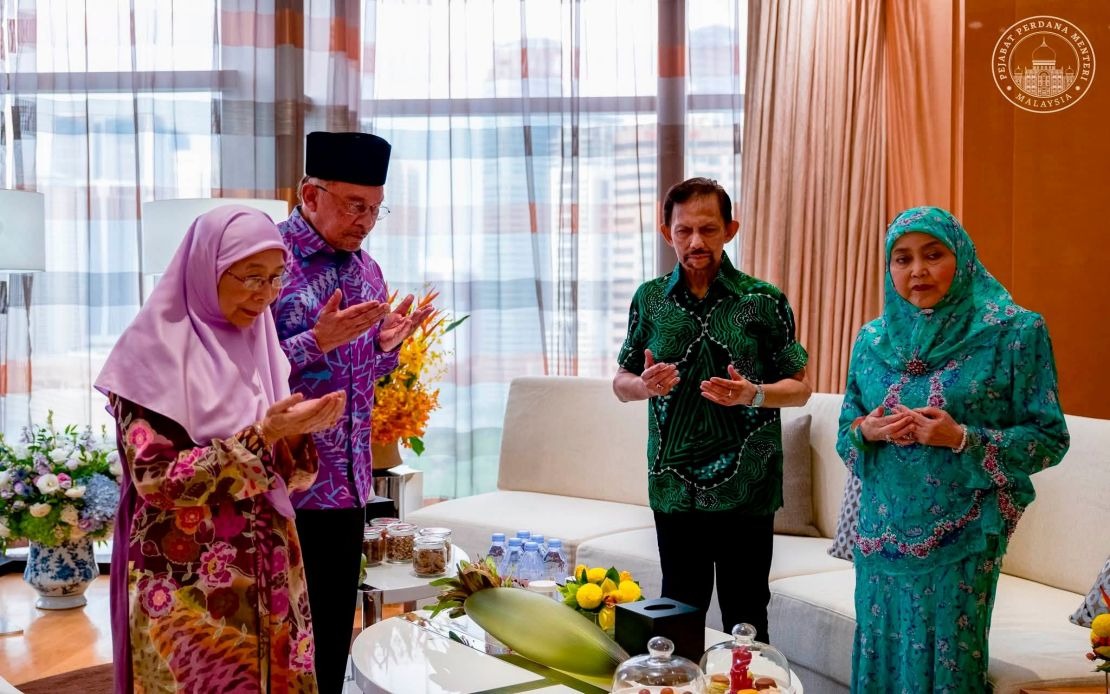
Prime Minister Datuk Seri Anwar Ibrahim has extended warm birthday wishes to Sultan Hassanal Bolkiah, the reigning monarch of Brunei Darussalam, marking His Majesty's 80th birthday on July 15. The congratulations were delivered through a Facebook post in which Anwar, speaking on behalf of the Malaysian Government and its citizens, expressed hopes that the Sultan would continue to guide his nation with wisdom and measured governance in the years ahead.
The gesture underscores the diplomatic significance Malaysia places on its relationship with Brunei, a smaller but strategically important neighbour in Southeast Asia. Anwar's message went beyond mere pleasantries, explicitly invoking Insya-Allah—an expression of faith in divine will—as he articulated hopes that Malaysia and Brunei would deepen their cooperation for mutual benefit. This carefully worded sentiment reflects the warmth that characterizes the bilateral relationship between the two Muslim-majority nations sharing close cultural, historical, and economic ties.
Sultan Hassanal Bolkiah occupies a unique position in global monarchies. Born on July 15, 1946, in Bandar Brunei, which has since been renamed Bandar Seri Begawan, he was proclaimed the 29th Sultan of Brunei in 1967 at a relatively young age. His reign has spanned more than five decades, during which Brunei has navigated significant economic and social transitions, particularly following the discovery and development of vast petroleum resources that transformed the sultanate into one of the world's wealthiest nations per capita.
The Sultan's longevity on the throne took on added historical significance following the death of Queen Elizabeth II in September 2022. With the British monarch's passing, Sultan Hassanal Bolkiah became the world's longest-reigning sovereign currently in power, a distinction that carries considerable symbolic weight in Commonwealth circles and beyond. This milestone marks not merely the passage of years, but represents continuity and stability in a region marked by significant political and economic change.
For Malaysia, which shares both land and maritime borders with Brunei, the relationship extends beyond ceremonial exchanges. The two nations collaborate on matters ranging from trade and investment to maritime security and disaster management. Brunei's strategic location on the northern coast of the island of Borneo, coupled with its substantial sovereign wealth fund and business-friendly policies, makes it an important economic partner for Malaysia, particularly for companies seeking to establish operations in Southeast Asia.
The birthday acknowledgment also carries broader implications for ASEAN cohesion. As a founding member of the Association of Southeast Asian Nations alongside Malaysia, Brunei plays a role in regional discussions and initiatives, though its smaller size and wealth concentration mean its influence is exercised differently from more populous neighbours. The Sultan's steady leadership has contributed to regional stability and his longevity provides a reassuring continuity amid the region's complex geopolitical dynamics.
Anwar's public recognition of this milestone reflects contemporary diplomatic practice, where social media platforms enable leaders to communicate directly with global audiences while simultaneously sending carefully calibrated messages to peer governments and domestic constituencies. The Facebook post serves multiple audiences: it assures Bruneian officials of Malaysia's goodwill, signals to Malaysian citizens the importance of regional partnership, and contributes to the broader narrative of Southeast Asian unity and mutual respect among sovereigns.
The significance of Anwar extending these wishes personally, rather than through a protocol officer or ministry statement, underscores the importance placed on maintaining cordial relations with Brunei. As Prime Minister navigating Malaysia's complex domestic political landscape and regional responsibilities, Anwar's direct engagement signals to both Brunei and the wider international community that Malaysia views this relationship as a priority deserving of high-level attention.
Looking forward, the relationship between Malaysia and Brunei is likely to remain grounded in pragmatism and shared interests. Both nations face similar challenges regarding economic diversification beyond hydrocarbon dependency, youth employment, and adapting to climate change impacts in the maritime and forestry sectors. Collaborative approaches to these challenges, underpinned by the kind of goodwill expressed in birthday messages, create the foundation for deeper integration and mutual prosperity in the years ahead.

