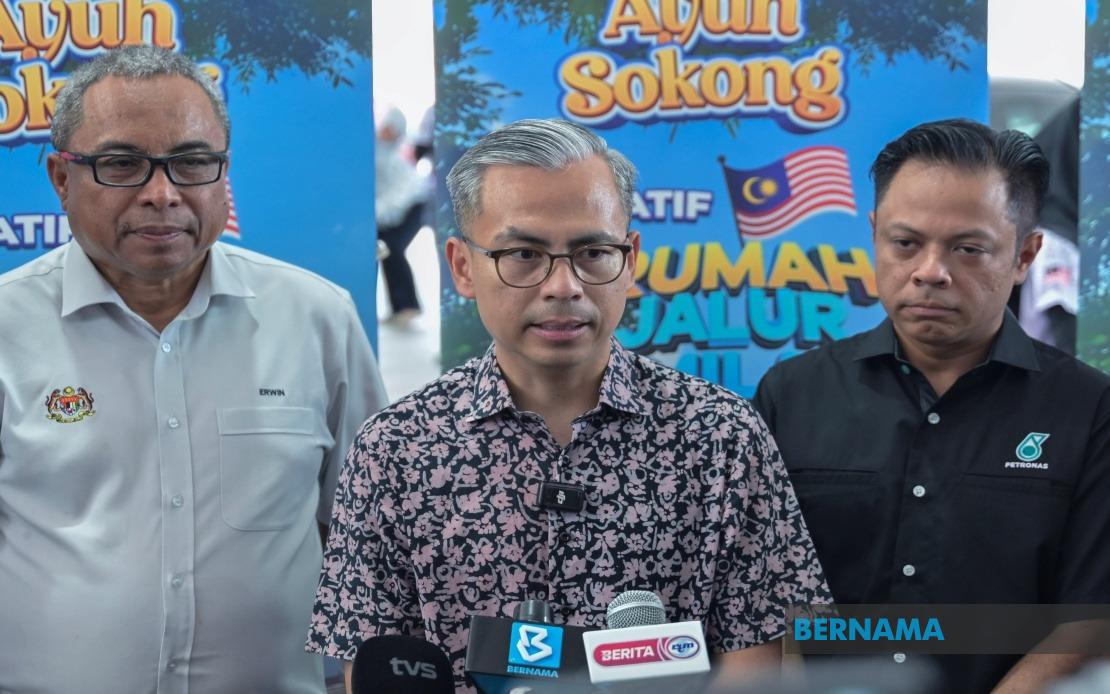
Prime Minister Datuk Seri Anwar Ibrahim has reiterated his administration's commitment to proceeding with the redelineation of Sarawak's state legislative boundaries, instructing the Election Commission to furnish an updated progress report on the expansion exercise. Government spokesman Datuk Seri Fahmi Fadzil disclosed that the matter was tabled during a recent Cabinet session, where the PM signalled his determination to move forward with the initiative once outstanding procedural requirements are fulfilled.
The Sarawak State Legislative Assembly redelineation project seeks to boost the number of state seats from the current 82 to 99 through the addition of 17 new constituencies. This constitutional amendment, formally documented as the Sarawak State Legislative Assembly (Composition of Membership) Bill 2025, represents a significant expansion of representation capacity in the state chamber. The move carries considerable political implications for Sarawak, potentially reshaping electoral dynamics and political competition in Malaysian Borneo's largest state.
According to Fahmi, who is also Minister of Communications, the implementation timeline has not yet been communicated to the Cabinet primarily because the government is awaiting several deliverables from the Election Commission. The EC's role in this process encompasses technical aspects such as boundary demarcation studies, demographic analysis, and feasibility assessments necessary before the legislative changes can be formally enacted. The fact that no concrete implementation date has been set suggests the exercise involves substantial groundwork that must be completed methodically.
The issue was formally raised in the Cabinet by two ministers: Datuk Seri Nancy Shukri, who heads the Ministry of Women, Family and Community Development, and Datuk Seri Alexander Nanta Linggi, the Minister of Works. Their participation in advancing the Sarawak redelineation proposal underscores the cross-ministry support for the initiative within the MADANI government framework. The presence of multiple Cabinet members championing the measure indicates it has secured backing from the administration's leadership core.
For Malaysian observers, the Sarawak redelineation holds broader significance. Sarawak occupies a unique constitutional position within the federation, with special provisions governing its autonomy and representation arrangements. Any modification to its legislative structure must therefore navigate both federal constitutional requirements and the state's distinctive legal framework, explaining why the process demands careful coordination between the federal Election Commission and state authorities.
The expansion of Sarawak's legislative seats reflects demographic realities in the state, where population growth and urbanisation have altered the balance between constituencies. Increasing the number of seats allows for improved constituent representation and reduces the disparity in electoral quotas across districts. This modernisation of Sarawak's electoral architecture responds to longstanding arguments that the state's legislative chamber size had not kept pace with population expansion and changing settlement patterns.
Fahmi's announcement also touched upon electoral preparations in another context: the upcoming Melaka state election. The Communications Minister disclosed that his party was actively organising for the Melaka contest, including securing suitable media facilities and verifying digital infrastructure at polling stations. This dual focus on future elections demonstrates how the government is managing multiple electoral exercises simultaneously across different states.
The Malaysian Communications and Multimedia Commission has been enlisted to liaise with the Election Commission regarding internet connectivity requirements at Melaka's polling centres. Such coordination reflects lessons learned from previous state elections in Johor and Negeri Sembilan, where similar infrastructure preparations proved essential for smooth electoral administration. The government's proactive approach to ensuring adequate telecommunications capacity at polling venues addresses practical challenges that can affect voting accessibility and the overall quality of electoral conduct.
Sarawak's political landscape has evolved considerably in recent years, particularly following the 2022 Peninsular Malaysian elections that brought the MADANI coalition to power. The state's relationship with the federal government has remained relatively stable, with the Gabungan Parti Sarawak maintaining governance at state level. Against this backdrop, the redelineation exercise can be understood partly as the federal government demonstrating tangible commitment to Sarawak's development priorities and responding to state-level political wishes.
The timing of the redelineation initiative also invites analysis of longer-term political calculations. By advancing constitutional reforms that expand Sarawak's representation, the federal government strengthens goodwill with the state administration and electorate. For Sarawak, the increased legislative seats offer opportunities for greater diversity within the state chamber and potentially smoother pathways for fresh political voices, although the ultimate electoral impact will depend on how constituencies are configured and demographic patterns within each proposed division.
The EC's forthcoming report will be crucial in determining when the redelineation can proceed to legislative approval and implementation. Election Commission reports on boundary matters typically involve extensive data analysis, public consultation periods, and technical verification, meaning the timeline could extend across several months or longer. Fahmi's remarks suggest the government is prepared to observe proper procedures rather than expedite the process artificially, indicating a commitment to executing the expansion within established constitutional and legal frameworks.
As Malaysia continues to refine its electoral systems across both federal and state levels, the Sarawak redelineation serves as a case study in how constitutional amendments require patient coordination between different governmental institutions. The project's advancement reflects broader patterns of electoral renewal occurring within Southeast Asia's established democracies, where demographic change and political development periodically necessitate adjustments to representation structures. For Sarawak specifically, the expansion represents recognition that the state's political voice within the federation warrants commensurate institutional capacity.

