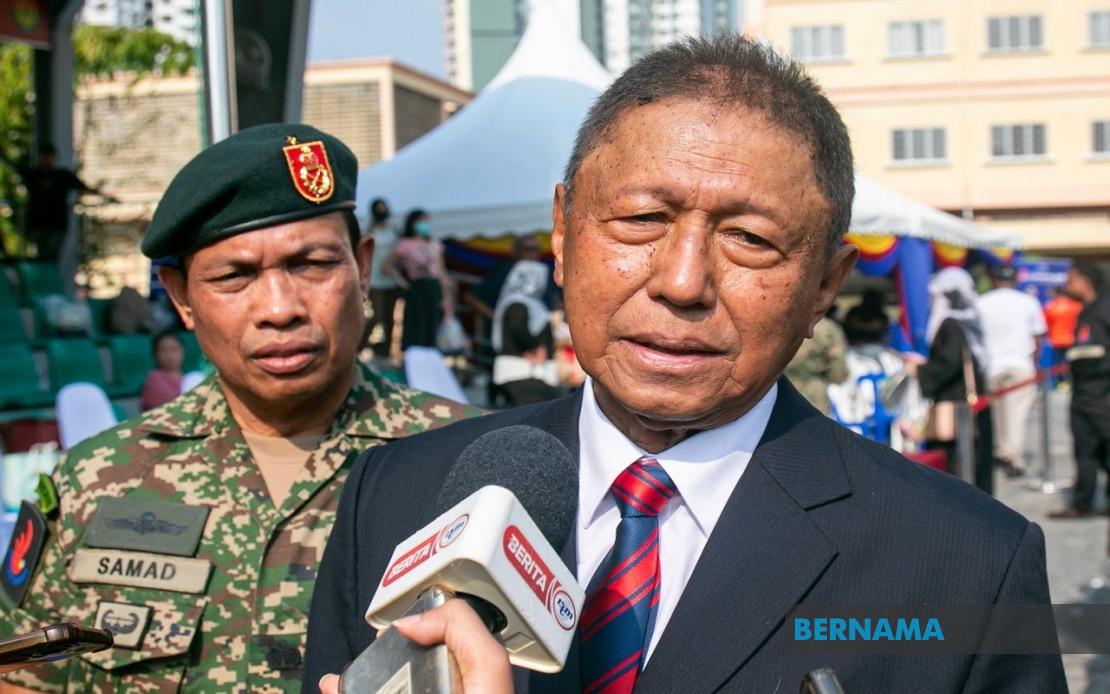
A landmark moment for Malaysia's reimagined national service framework is approaching as 200 trainees from the National Service Training Programme (PLKN) 3.0 prepare to march in the National Day parade in Putrajaya on August 31. The contingent will perform before the King, Prime Minister, Cabinet members, and assembled citizens, marking an unprecedented public display of the programme that has undergone significant restructuring in recent years.
General (Rtd) Tan Sri Dr Abdul Aziz Zainal, chairman of the National Service Training Council (MLKN), announced that the selected participants commenced practice sessions in Putrajaya to prepare for the ceremonial event. His statement underscores the deliberate integration of PLKN 3.0 into Malaysia's highest-profile civic celebration, signalling governmental confidence in the reinvigorated training initiative. The visibility afforded by the National Day platform represents a strategic opportunity to elevate public perception of the programme and demonstrate tangible outcomes of the curriculum to Malaysian society.
The timing of this announcement carries symbolic significance as the government seeks to position PLKN 3.0 as a transformative national institution. By featuring trainees alongside the nation's ceremonial leadership, policymakers are making a statement about youth development and national pride. For many Malaysian citizens who may harbour reservations about compulsory service frameworks, the parade appearance offers visual evidence of discipline, unity, and patriotic commitment among young participants. This represents a calculated effort to rebrand national service as a source of national strength rather than administrative burden.
The most recent cohort, designated Series 3/2026, concluded training after 45 days across three geographically dispersed camps. A total of 795 trainees successfully completed the programme, distributed across Camp 504 AW in Bukit Keteri, Perlis, which trained 106 female participants; Camp 505 AW in Pekan, Pahang, with 442 male trainees; and Camp 515 AW in Kuala Lumpur, accommodating 247 female participants. This distribution reflects efforts to establish training infrastructure across multiple regions, reducing geographic barriers to participation and creating employment opportunities in less developed areas.
Recognition of outstanding achievers from each camp underscores the competitive dimension embedded within the training framework. An'nur Najiha Muhammad from Ipoh, Muhammad Firdaus Muhammad Said from Kuantan, and Cheyenne Alessandra Michael from Kuala Lumpur emerged as best trainees from their respective facilities. These selections demonstrate that the programme maintains rigorous assessment standards while identifying potential future leaders from diverse socioeconomic and ethnic backgrounds. Such recognition mechanisms contribute to programme legitimacy and incentivise genuine commitment among participants.
The government's expansion strategy for PLKN 3.0 reflects confidence in the training model's viability and effectiveness. Series 4/2026 will introduce five additional camps, incorporating facilities in Hutan Melintang, Perak; Sungai Durian, Kelantan; and Bukit Pinang, Kedah, supplemented by two Public Training Institute centres in Sungai Petani and Tuaran, Sabah. This geographic diversification addresses logistical constraints and enhances accessibility for youth across Peninsular and East Malaysian territories.
Particularly noteworthy is the incorporation of Malaysian Volunteer Corps Department (RELA) training centres into the PLKN 3.0 infrastructure. This partnership leverages existing state security apparatus and volunteer networks, creating synergies between civilian national service and established territorial defence mechanisms. General Dr Abdul Aziz projected that combined capacity across existing and new facilities could accommodate over 1,000 trainees per series, representing substantial expansion from current throughput. Such scaling demonstrates governmental commitment to embedding national service as a mainstream experience rather than marginal initiative.
Trainee testimonials offer insight into subjective experience within the framework. Cheyenne Alessandra Michael, one of the three best-performing participants from the recent series, disclosed that she voluntarily enrolled motivated by aspirations toward military service. Her account suggests the programme functions as recruitment pipeline and professional pathway for motivated youth, though it remains officially non-compulsory. She credited the 45-day experience with fostering patriotic commitment, particularly through proximity to Territorial Army soldiers at her training camp. Such narratives, whether representative or exceptional, underscore the psychological transformation that institutional military training environments can produce.
The emphasis on patriotism and historical consciousness evident in trainee reflections aligns with explicit pedagogical objectives within PLKN 3.0 curriculum. Cheyenne Alessandra explicitly referenced enhanced gratitude for sacrifices made during independence struggles and recognised intergenerational responsibility for maintaining national peace and security. This consciousness-raising function represents a deliberately cultivated outcome of the training experience, beyond purely physical conditioning or administrative processing. Whether such attitudinal shifts persist beyond the programme's conclusion remains an open empirical question, but institutional design clearly targets the formation of politically committed citizenry.
For regional observers, Malaysia's experimentation with revamped national service carries implications extending beyond domestic policy. In a Southeast Asian context characterised by varying approaches to youth mobilisation and national integration, PLKN 3.0 represents a middle path between compulsory universal conscription and entirely voluntary frameworks. Thailand's military-influenced educational institutions, Singapore's integrated civil-military mechanisms, and Indonesia's recent national service expansion provide comparative reference points. Malaysia's approach, incorporating voluntary elements while establishing infrastructure for potential scaling toward broader application, reflects pragmatic calculation regarding social cohesion and youth engagement amid demographic and economic transitions.
The August 31 National Day parade will provide a barometer of public reception to PLKN 3.0. Media coverage and citizen commentary surrounding the trainee contingent's performance will likely influence government calculations regarding further expansion and potential pathways toward compulsory participation frameworks. The visibility accorded to 200 young Malaysians marching in ceremonial formation represents not merely a parade component but a statement about national priorities and generational expectations. Whether this symbolic prominence translates into sustained programme growth and social acceptance will depend on multiple factors including economic opportunity provision for alumni, employment pathways, and broader government performance legitimacy.
Final assessment of PLKN 3.0's long-term trajectory remains premature given the programme's nascent stage. The confluence of geographic expansion, institutional partnerships, capacity increases, and high-profile public presentation suggests governmental confidence and commitment to institutionalisation. Yet questions persist regarding voluntary versus compulsory mechanisms, sustainability of funding, quality consistency across expanding infrastructure, and alignment with adolescent aspirations within competitive labour markets. The National Day parade appearance represents both culmination of recent efforts and potential genesis of renewed public engagement with national service as constitutive feature of Malaysian citizenship.

