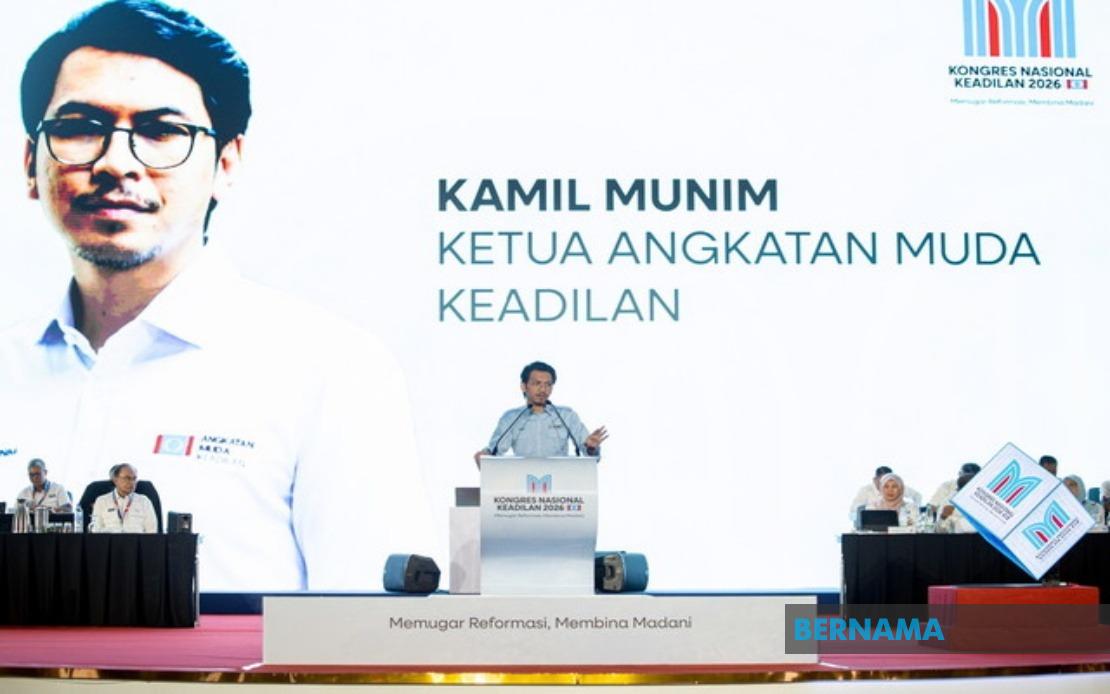
PKR Youth must fundamentally reimagine its political playbook if it hopes to secure backing from voters aged 45 and below—a demographic that now constitutes the largest cohort on Malaysia's electoral roll. This appeal came from AMK chief Muhammad Kamil Abdul Munim during his closing address at the PKR National Congress in Melaka on August 16, underscoring the urgency of the task as the party grapples with weaker-than-expected performances in recent state-level contests.
The recent elections in Johor and Negeri Sembilan have forced PKR into uncomfortable self-examination. Muhammad Kamil acknowledged that these results represent a critical juncture requiring the party to conduct a thorough evaluation of both its strengths and the tactical approaches it has been deploying. The electoral disappointments serve as a sobering reminder that established strategies, however effective in past cycles, may no longer resonate with contemporary voters.
Younger voters—those under 45—now dominate Malaysia's electoral composition, making them the demographic pivot upon which electoral outcomes increasingly turn. This generational shift carries profound implications for any political organization seeking to maintain relevance and secure electoral success. The challenge before PKR is particularly acute because this younger cohort has fundamentally different communication preferences, policy priorities, and expectations of political leadership compared to their predecessors.
Despite the MADANI Government receiving generally positive public assessments regarding its performance, the state election results revealed concerning gaps between perceived governmental effectiveness and actual voter sentiment on the ground. Muhammad Kamil stressed that the party cannot afford to rest on the laurels of federal-level accomplishments or assume that top-down communication of policy achievements automatically translates into electoral support at the grassroots level.
The AMK chief redirected grassroots organizational leaders away from administrative fixation toward a more sophisticated leadership approach. Rather than merely managing party structures, these leaders must develop a deeper, more empathetic understanding of community concerns. This represents a significant reorientation—from inward-focused organizational management to outward-facing, community-responsive leadership that genuinely engages with voter anxieties and aspirations.
Direct community engagement, particularly in dispersed rural settings and smaller population centers, emerged as a central strategic prescription. Muhammad Kamil emphasized that party representatives must venture beyond urban centers and established political strongholds to conduct face-to-face conversations with ordinary Malaysians. These interactions serve dual purposes: gathering granular intelligence about what genuinely troubles voters and simultaneously demonstrating that the party leadership takes those concerns seriously enough to listen personally.
The party's task ahead requires moving from diagnosis to solution-oriented action. Muhammad Kamil called upon party machinery to identify specific grievances and fears circulating within communities, then develop credible, implementable responses. This represents a fundamental shift from reactive politics to proactive problem-solving—an approach that demands PKR leaders move beyond defending governmental records to genuinely addressing the lived experiences of voters.
Historical perspective provided Muhammad Kamil with confidence in PKR's capacity for renewal. The party's trajectory has been punctuated by significant achievements: denying Barisan Nasional a two-thirds parliamentary majority in 2008 and helping form the Pakatan Harapan federal government in 2018. These moments of electoral surprise suggest that when PKR genuinely connects with voter sentiment and mobilizes effectively, it can achieve outcomes that defy conventional expectations.
The call to strategic refinement arrives at a moment when Malaysia's electoral calendar remains in flux, with the next general election drawing perceptibly closer. Muhammad Kamil framed preparation not merely as organizational logistics but as an existential challenge requiring comprehensive readiness across the entire party apparatus. Learning from previous electoral disappointments while building upon historical successes offers a template for moving forward.
The underlying message resonates beyond PKR's immediate organizational concerns. The emphasis on understanding younger voters' perspectives reflects a broader reality facing Malaysian politics: demographics have shifted, communication channels have multiplied, and voter expectations have evolved significantly. Parties that cling to outdated engagement methodologies risk finding themselves increasingly disconnected from the electoral base upon which they depend.
For Malaysian voters and political observers, Muhammad Kamil's candid assessment signals that PKR is at least acknowledging the scale of its challenge. Whether the party can translate this recognition into genuinely innovative strategies, rather than merely repackaging familiar approaches, will determine whether it successfully maintains its position within the federal political coalition during the approaching electoral cycle.

