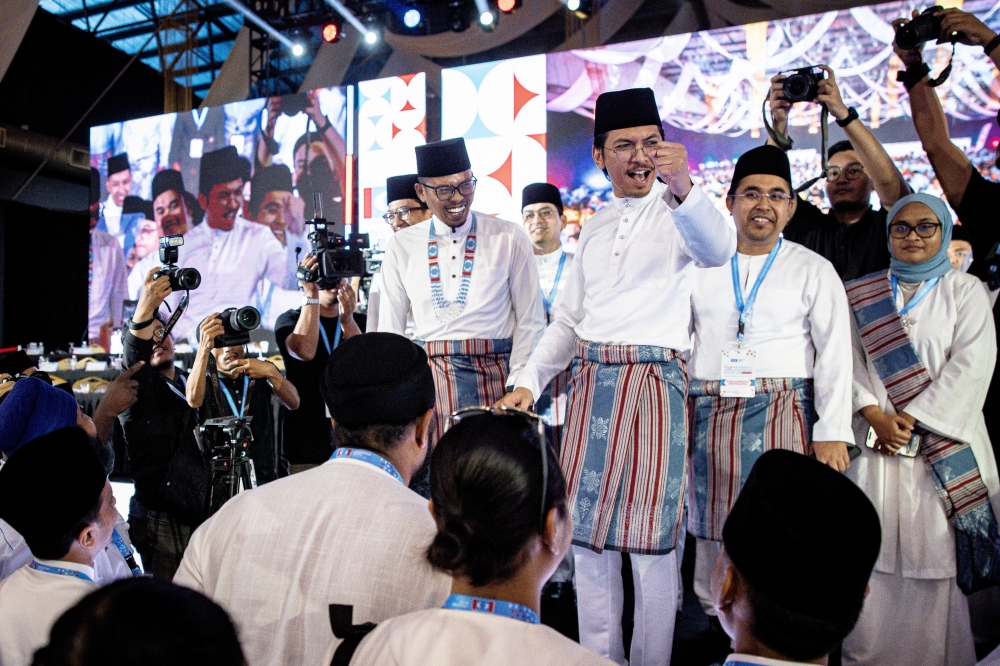
The youth wing of PKR has publicly endorsed Prime Minister Datuk Seri Anwar Ibrahim's initiative to dismantle the Universities and University Colleges Act, positioning the move as a landmark step towards democratising Malaysia's higher education landscape. The party organisation's backing adds significant momentum to a reform agenda that has gained traction among younger political constituencies and education advocates who view the legislation as an obstacle to student expression and institutional independence.
The Universities and University Colleges Act, commonly referred to as the UUCA, has long been a focal point of controversy among Malaysian academics and student bodies. The law imposes restrictions on student political activity, assembly, and speech within campus environments, provisions that critics argue stifle intellectual discourse and civic participation during formative years. By lending its voice to the repeal effort, PKR Youth positions itself alongside reform movements that have periodically resurfaced across Malaysia's tertiary education sector, particularly following periods of student activism or perceived institutional rigidity.
PKR Youth's explicit call for students to engage substantively in the repeal conversation reflects a broader strategic calculation within the coalition government to channel youthful political energy toward collaborative policy-making rather than adversarial street-level activism. The approach suggests recognition that student constituencies represent both a demographic voting bloc and a reservoir of intellectual capital capable of shaping long-term educational policy trajectories. By inviting student participation in the reform discourse, the party frames the UUCA repeal not as a top-down government initiative but as a student-centred movement that welcomes grassroots input.
The timing of this endorsement carries particular significance within Malaysia's contemporary political context. The Anwar-led administration has positioned itself as a reform government committed to addressing institutional constraints accumulated over preceding decades. The UUCA repeal aligns with this broader narrative of modernisation and liberalisation, appealing to urban, educated voters who view campus freedoms as integral to national development and social progress. For PKR Youth, backing the initiative consolidates the party's positioning as the progressive faction within the coalition.
Expanding student voice in the reform process addresses a practical consideration as well. Those most directly affected by UUCA provisions—undergraduates, postgraduate researchers, and campus-based scholars—possess intimate knowledge of how these restrictions operate in daily university life. Their testimonies regarding dormitory rules, student organisation regulations, and political discourse limitations provide evidentiary foundation for legislative reform. PKR Youth's invitation for student input thus serves both democratic and technocratic purposes, legitimising the reform through participatory channels while gathering substantive detail for legislative drafting.
The repeal proposal must navigate complex institutional and political terrain. Universities Malaysia, the collegial body representing public institutions, holds significant influence over implementation frameworks. Simultaneously, the Ministry of Higher Education's regulatory apparatus would require substantial restructuring to accommodate expanded student autonomy and academic freedom. PKR Youth's mobilisation of student constituencies could pressure institutional actors to embrace rather than obstruct legislative changes, potentially accelerating implementation timelines that might otherwise stretch across multiple budget cycles.
Private universities and international branch campuses operating within Malaysia present an additional consideration in the broader reform landscape. While the UUCA technically applies to public institutions, private institutions often adopt parallel restrictions to maintain regulatory compliance or institutional consistency. A successful repeal of the UUCA might create competitive pressure favouring private institutions with less restrictive policies, potentially reshaping Malaysia's higher education market dynamics. This dimension remains largely unexamined in public discourse surrounding the repeal initiative.
Regionally, Malaysia's embrace of expanded campus freedoms would distinguish the country from peers like Singapore, where institutional controls over student activism remain stringent, and positioning it more closely with Thailand and Indonesia, where university autonomy has expanded in recent years. This comparative institutional position carries implications for academic mobility, with researchers potentially viewing Malaysian universities as more intellectually open environments. The cumulative effect could strengthen Malaysia's higher education brand within Southeast Asia and globally.
Student perspectives on the proposed reforms remain heterogeneous, however. While activist-oriented organisations have long advocated for UUCA repeal, substantial segments of the student population have never organised politically or engaged with campus activism, viewing university primarily as a credentialing institution. PKR Youth's engagement strategy must account for this diversity of interests and concerns, acknowledging that expanded freedoms mean different things to different constituencies within the student body. Creating spaces for genuine deliberation rather than top-down advocacy will prove essential for building sustainable support.
The financial dimensions of higher education reform merit parallel consideration. Expanding student representation in university governance and enabling greater campus autonomy could facilitate innovation in pedagogy, curriculum design, and institutional responsiveness to labour market demands. Conversely, reduced administrative oversight might create vulnerabilities regarding institutional standards and accountability. The reform discourse would benefit from integrating perspectives on how expanded freedoms and autonomy interact with quality assurance frameworks and student welfare protections.
Implementing the UUCA repeal will require legislative drafting that addresses numerous technical questions: the scope of student organisations permitted, the mechanisms for student representation in governance bodies, the relationship between campus-based expression and external legal frameworks, and the transition arrangements for institutions accustomed to current regulatory environments. PKR Youth's encouragement of student participation in these technical discussions positions young people as collaborative partners rather than subjects of reform, a framing that could generate stronger long-term institutional buy-in for whatever legislative model eventually emerges.
The success of the UUCA repeal initiative ultimately depends on translating political commitment into institutional transformation. PKR Youth's endorsement provides valuable political cover and grassroots mobilisation capacity, but sustained implementation requires coordination across governmental, educational, and student constituencies. Whether the reform achieves its transformative potential for Malaysian higher education depends not merely on legislative amendment but on the cultural and institutional shifts that follow, and on whether universities and students utilise expanded freedoms to foster the intellectual independence and civic engagement that reformers envision.

