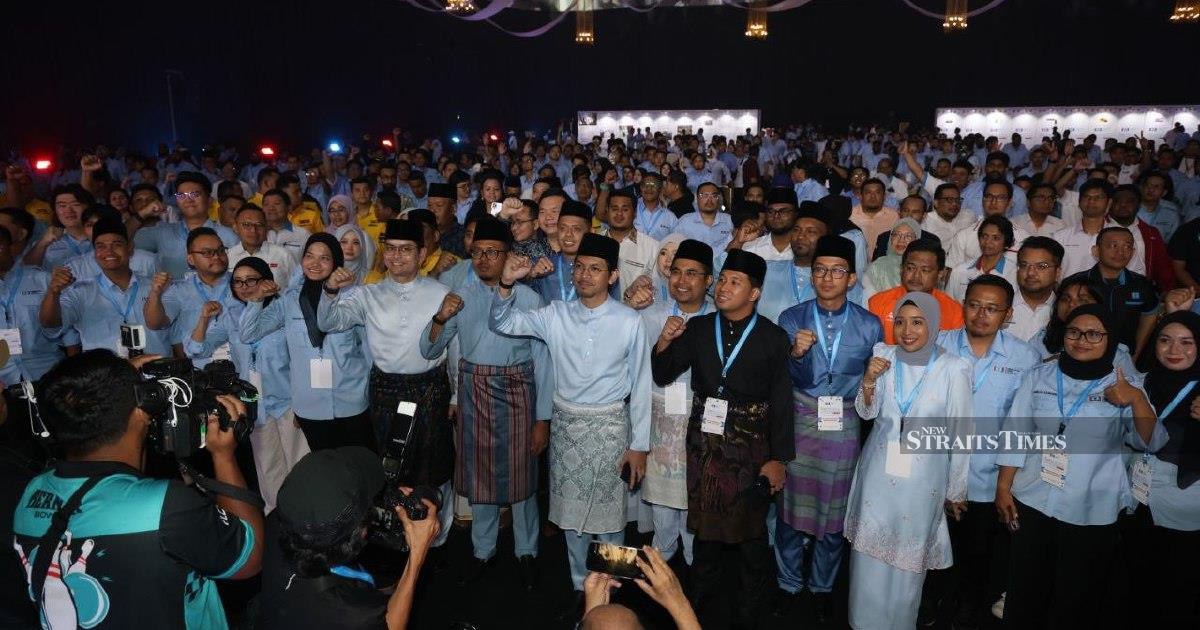
The coalition's poor showing in recent state elections reflects a credibility gap that must be closed through concrete action and accountability, argues Muhammad Kamil Abdul Munim, the youth wing chief of PKR. Speaking in Ayer Keroh, he rejected suggestions that voters had simply made a poor decision by turning away from Pakatan Harapan in the Johor and Negri Sembilan contests, instead positioning the electoral outcome as a legitimate signal of public dissatisfaction that the coalition cannot afford to ignore.
Muhammad Kamil's comments arrive during a critical moment for the coalition, which has struggled to maintain momentum since taking federal power in 2018 and subsequently losing office before returning to government in 2022. The setbacks in two strategically important states suggest that Pakatan Harapan's political foundations in key regions remain fragile, with voters evidently unconvinced by the coalition's ability to deliver on its promises. Rather than dismissing these results as anomalies or attributing them to external factors, the PKR Youth leader's intervention signals recognition within the party that introspection is required.
The broader context of declining support for Pakatan Harapan reflects deeper anxieties among Malaysian voters about economic management, cost of living pressures, and the perceived distance between political messaging and lived reality. Many Malaysians have grown increasingly sceptical of grand promises from opposition and government coalitions alike, having witnessed cycles of optimistic campaigns followed by implementation challenges. This scepticism is particularly acute in states where Pakatan Harapan once enjoyed strong electoral mandates but has struggled to translate administrative control into tangible improvements in governance or service delivery.
Muhammad Kamil's stance diverges from a pattern sometimes observed in Malaysian politics, where parties respond to electoral defeats by blaming external circumstances, alleging unfair campaign conditions, or suggesting that voters lack adequate political sophistication. By contrast, his argument centres on the coalition's responsibility to prove itself worthy of public trust through concrete performance. This approach implicitly acknowledges that elections function as feedback mechanisms, and that failure to heed such signals would compound existing credibility problems.
The economic dimension looms particularly large in understanding voter behaviour across these contests. Cost of living concerns have dominated household conversations across Malaysia for months, with inflation affecting prices for food, transportation, and housing. Voters evaluating political coalitions inevitably factor in whether their financial situations have improved, stagnated, or deteriorated under current governance arrangements. Pakatan Harapan faces the challenge of demonstrating that its policies have meaningfully addressed these pressures, or offering a credible pathway to doing so.
Rebuild efforts must extend beyond high-level messaging to encompass institutional accountability within the coalition itself. Voters need confidence that when they elect representatives pledged to specific reforms, those representatives will prioritise constituent interests over internecine party politics or internal factional disputes. Perceptions of internal fracture within Pakatan Harapan have periodically undermined public confidence in the coalition's ability to govern cohesively, particularly when disputes spill into public view or appear to prioritise partisan advantage over coalition stability.
The timing of Muhammad Kamil's intervention carries significance for the coalition's broader strategic direction. As Malaysia approaches future electoral cycles at both state and federal levels, the message that Pakatan Harapan must earn rather than assume voter support establishes more realistic expectations internally and prevents the coalition from sleepwalking into further disappointments. This intellectual honesty, however uncomfortable, may prove more valuable than defensive posturing that ignores legitimate public grievances.
State-level dynamics in Johor and Negri Sembilan reveal distinct local political ecosystems that national strategies cannot simply override through campaigning. Regional concerns, community relationships with state administrators, and perception of administrative competence vary considerably across Malaysia's states. Pakatan Harapan's capacity to rebuild influence therefore depends partly on addressing state-specific issues rather than imposing uniform national strategies that fail to account for local variation and complexity.
The coalitions challenge mirrors broader patterns visible across Southeast Asia, where voters have grown more pragmatic and conditional in their support for political entities. Electoral loyalty that previous generations might have extended based on ideological alignment now depends increasingly on demonstrable delivery. Malaysian voters, having experienced multiple coalition governments and witnessed the consequences of political change, increasingly evaluate alternatives based on expected performance rather than partisan affiliation alone.
Moving forward, Pakatan Harapan's path to recovering lost ground requires sustained commitment to institutional reform, transparent governance, and visible progress on economic issues affecting ordinary Malaysians. The coalition must demonstrate that it takes voter feedback seriously rather than treating electoral setbacks as temporary inconveniences that will automatically reverse through accumulated goodwill. Muhammad Kamil's intervention suggests at least segments within PKR recognise this fundamental reality and are prepared to champion the harder work of rebuilding trust through action rather than rhetoric.

