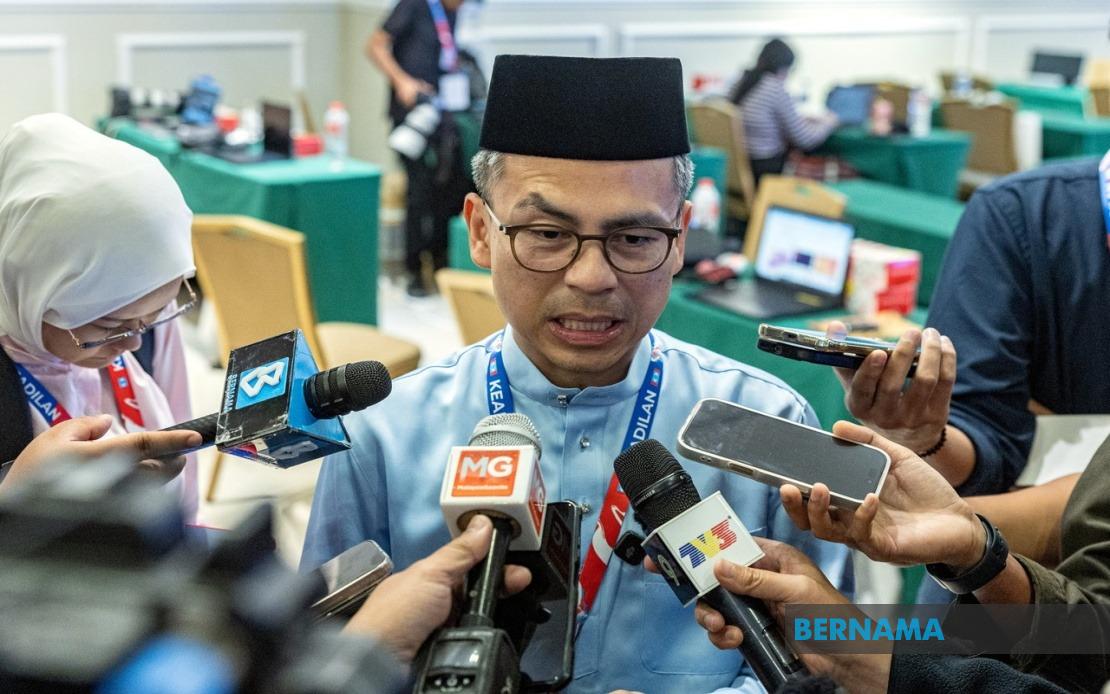
The Parti Keadilan Rakyat has committed to a comprehensive overhaul of its communication machinery, responding to growing concerns that despite significant government initiatives and economic accomplishments, these gains are failing to resonate with ordinary Malaysians. The pledge emerged during the PKR National Congress 2026 held at the Melaka International Trade and Exhibition Centre in Ayer Keroh, where party delegates raised multiple proposals aimed at strengthening how the coalition conveys its policy narrative to citizens.
Communications Minister Datuk Seri Fahmi Fadzil, who also serves as PKR's Information Chief, articulated the core challenge facing the government: a persistent gulf between what officials regard as genuine achievements and what households perceive as tangible improvements in their living standards. This recognition reflects a fundamental communications problem that has plagued the Pakatan Harapan coalition since returning to power—the inability to bridge macro-level economic data with micro-level household experiences that voters ultimately care about. Fahmi's candid acknowledgment of this gap suggests the party recognises it cannot simply rest on policy announcements but must fundamentally reshape how it engages with communities.
The proposals emerging from the congress indicate growing frustration among PKR grassroots members that party machinery has been insufficiently mobilised to disseminate government messages. These frontline activists, who interact directly with constituents, have evidently conveyed that existing communication channels are inadequate or poorly coordinated. Fahmi suggested that while informal mechanisms for information sharing have existed previously, a more structured institutional approach is needed to ensure parliamentary-level developments and policy decisions flow efficiently downward to district and village party branches, which can then interpret and communicate these messages in locally relevant ways.
The timing of this communication overhaul matters considerably. Malaysia's political landscape remains highly competitive, with opposition parties aggressively challenging the government's economic management narrative. If PKR and its coalition partners cannot effectively explain how their policies improve ordinary lives—through better wages, lower cost of living, improved healthcare access, or educational opportunities—opposition messaging will dominate public discourse. The party's willingness to address this weakness during a major congress suggests internal polling or feedback has flagged deteriorating public perception as an urgent threat.
Fahmi's remarks also hint at structural changes within PKR's own leadership hierarchy to facilitate better information flow. The Central Leadership Council's receptiveness to delegate proposals indicates the party leadership recognises that top-down communication strategies alone have proven insufficient. By making internal reorganisation a priority, PKR appears to be acknowledging that transformation must begin within the party apparatus itself before it can expect to reshape public understanding of government achievements.
The disconnect between macroeconomic performance and household sentiment represents one of Malaysia's most pressing political challenges. Economists may point to favourable foreign direct investment figures, growing tech sector employment, or fiscal discipline, yet many Malaysians struggle with stagnating wages, rising food prices, and housing affordability. This gap is not unique to Malaysia—developed democracies face similar challenges—but it poses particular risks in the Southeast Asian context where political alternatives remain readily available and coalition governments are inherently fragile.
Fahmi's position as both Communications Minister and party Information Chief places him at the intersection of government and party messaging. This dual role means he carries responsibility for both official government communications and party-political advocacy, a distinction that can blur in practice. His commitment to strengthening information dissemination thus carries weight beyond mere party housekeeping; it reflects serious intent to reshape how the entire administration communicates with citizens. Whether implementation will match ambition remains uncertain, however, as Malaysian bureaucracies historically move slowly on communication reform.
The broader context includes Pakatan Harapan's ongoing coalition management challenges. The coalition comprises parties with sometimes divergent priorities and constituencies, making unified messaging difficult. PKR's initiative to formalize information dissemination channels may represent an effort to ensure the coalition speaks with greater consistency, reducing the mixed signals that confuse public understanding of government policy direction. If successful, such coordination could strengthen coalition cohesion during inevitable internal disputes.
Regional observers should note that this communication challenge reflects wider trends across Southeast Asia, where governments struggle to connect policy achievements with public perception in an era of rapid information flows and social media fragmentation. Malaysia's experience may offer lessons for other regional democracies grappling with similar legitimacy questions. The PKR congress discussions suggest that technical policy competence alone no longer suffices; modern governance requires sophisticated, continuous engagement with diverse public audiences through multiple channels.
Looking forward, the specifics of PKR's reformed communication strategy will emerge during tomorrow's closing session when Fahmi presents detailed proposals. The real test, however, will come in implementation—whether the party can maintain discipline in message delivery, coordinate effectively across hierarchical levels, and ultimately help translate government achievements into public understanding and support. For a ruling coalition seeking to maintain electoral credibility ahead of the next general election, this communication overhaul represents not a luxury but an operational necessity.

