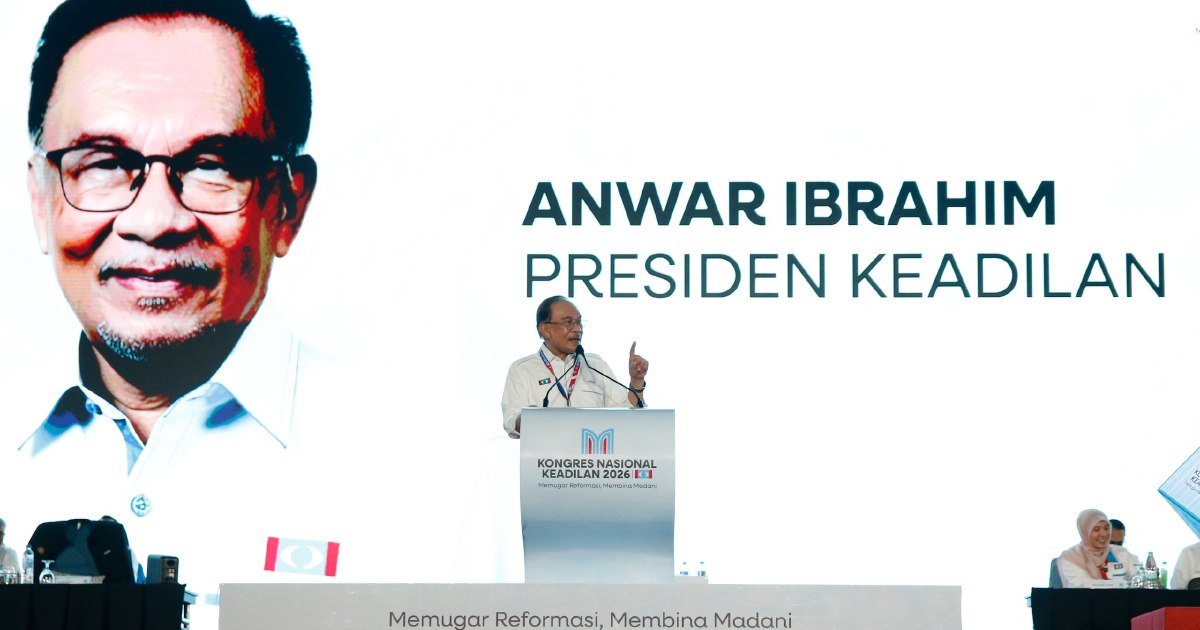
PKR President Anwar Ibrahim has moved to clarify the party's position within Malaysia's governing coalition, stressing that his party will maintain its alignment with Barisan Nasional and Umno while upholding its obligations to Pakatan Harapan allies. The statement comes at a critical juncture for Malaysian politics, where the delicate balance between different political factions within the federal administration requires careful navigation and transparent communication.
The multiethnic composition of Malaysia's current cabinet reflects the outcome of the 2022 general election, which produced a parliament fragmented across multiple power bases. No single bloc commanded an outright majority, necessitating unprecedented cooperation between traditionally competing coalitions. This arrangement has created both opportunities for broader-based governance and challenges rooted in divergent ideological positions. PKR's positioning between two major groupings—Pakatan Harapan, which includes DAP and Amanah, and Barisan Nasional, anchored by Umno—has become increasingly significant for governmental stability.
Anwar's clarification addresses growing speculation within political circles about the sustainability of the current arrangement. Questions have arisen regarding whether PKR could eventually transition toward a predominantly Barisan Nasional-Umno framework, a prospect that would have profound implications for Malaysian politics. Such a shift would represent a fundamental reconfiguration of the political landscape and would alter the trajectory of democratic reform initiatives that formed part of Pakatan Harapan's original platform. The party leader's remarks seek to anchor PKR's strategic direction while acknowledging the practical necessities of the present political environment.
The fusion of these two coalitions into a functional government required extensive negotiations and compromise on policy priorities and ministerial appointments. Umno, which had faced the prospect of electoral oblivion following a devastating performance in 2022, has been rehabilitated through inclusion in the governing structure. This restoration of Umno's political fortunes represents a significant shift from the tumultuous years immediately following the 1MDB scandal and the 2018 general election defeat. The incorporation of Barisan Nasional components into the administration has allowed for broader representation of Malaysia's diverse electorate while simultaneously complicating the pursuit of certain reform agendas.
For PKR specifically, maintaining relationships with both groupings serves several strategic purposes. The party benefits from the administrative resources and stability that Barisan Nasional's organizational machinery provides, while simultaneously preserving its credentials as a reformist force through its Pakatan Harapan membership. This dual positioning has enabled PKR to serve as a bridging force in Malaysian politics, potentially moderating the more contentious aspects of Umno-Pakatan relations and facilitating compromises on contentious legislative and administrative matters.
The Malaysian electorate increasingly expects political parties to demonstrate pragmatism and a capacity for cooperation across traditional dividing lines. The general population has demonstrated fatigue with perpetual antagonism and constitutional brinkmanship. PKR's emphasis on fulfilling obligations to both coalitions reflects an understanding that voters have punished parties perceived as obstructionist or unwilling to engage in good-faith partnership. The party's balancing act, while potentially open to criticism from ideological purists on either side, enjoys considerable public acceptance among voters prioritizing effective governance.
However, sustaining this equilibrium requires careful attention to symbolism and substance. Umno members and supporters have historically maintained skeptical attitudes toward PKR, viewing it as ideologically distant and insufficiently sensitive to Bumiputera and Islamic considerations. Conversely, DAP and certain segments of Amanah remain apprehensive about excessive accommodation of Umno-associated policies regarding religious governance, media ownership, and resource allocation. Anwar's continued emphasis on fidelity to all partners reflects recognition that any perception of favoritism toward either coalition could precipitate governmental instability.
The global economic environment adds urgency to maintaining coalition stability. Malaysia's position as a significant regional economy with substantial exposure to fluctuating commodity prices, geopolitical tensions, and the global trade disruptions demands consistent policymaking. Fractious coalition politics could impede the government's capacity to implement coherent economic strategies or respond flexibly to external shocks. International investors have explicitly valued governmental stability as a prerequisite for sustained investment, making PKR's commitment to coalition management materially consequential for national economic performance.
Looking forward, the trajectory of PKR's positioning will significantly influence Malaysian political development. Should the present arrangement prove enduring, it could establish a precedent for future coalition management, potentially moving Malaysian politics toward a more centrist, consensus-oriented model. Conversely, should the coalition unravel, the subsequent realignment could be dramatically destabilizing, potentially necessitating early elections and another protracted period of political uncertainty. Anwar's assertions regarding PKR's dual loyalty therefore carry implications extending well beyond the immediate interests of his party, touching upon the broader question of whether Malaysian democracy can accommodate functional multiparty coalitions.
The party leader's remarks also position PKR as an indispensable political actor in any future government, regardless of election outcomes. By demonstrating capacity to work constructively with all major political forces, PKR enhances its relevance and negotiating power. This strategic positioning reflects Anwar's political experience and understanding that in Malaysia's fragmented electoral landscape, flexibility and relationship-building often determine which parties exercise disproportionate influence. PKR's assertion of sustained loyalty to both coalitions represents not merely a statement of current intention, but an implicit claim to centrality within Malaysia's ongoing political recalibration.

