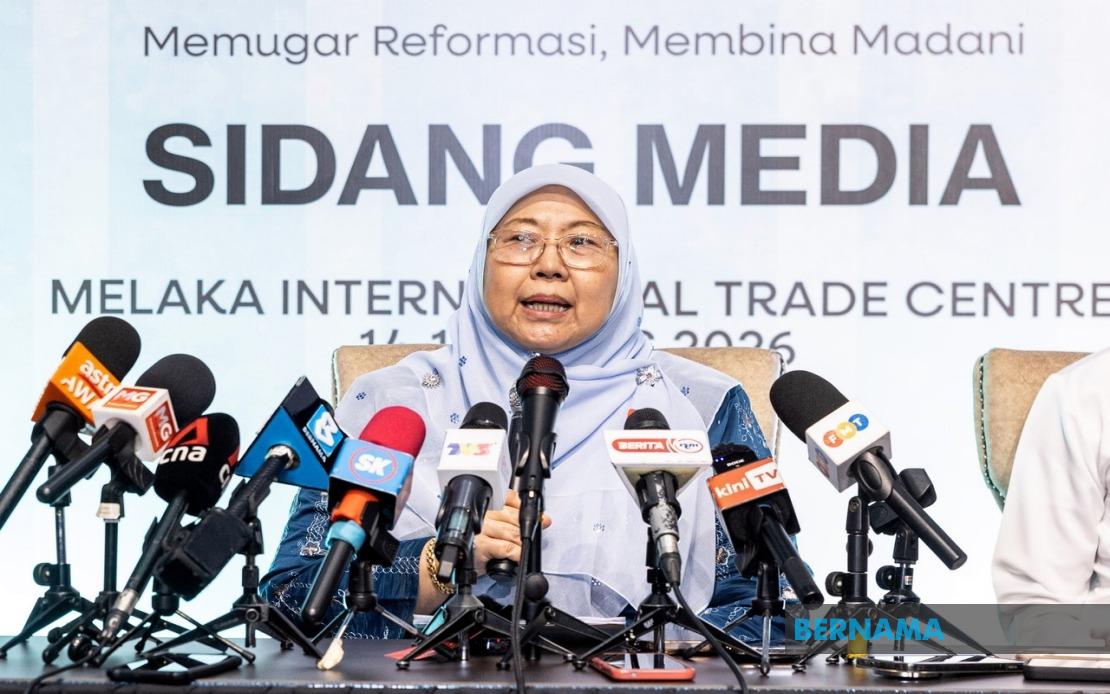
Parti Keadilan Rakyat has confirmed that deputy president Nurul Izzah Anwar will take a leave of absence to focus on her educational aspirations, though the party has deliberately avoided imposing any specific deadline for her eventual return to active party responsibilities. Secretary-general Senator Datuk Dr Fuziah Salleh made the announcement on the sidelines of PKR's 2026 National Congress at the Melaka International Trade Centre, emphasising the party's flexibility in accommodating the move.
The timing of Nurul Izzah's departure reflects a measured transition, with the PKR leadership keen to ensure minimal disruption to party operations during the congress proceedings. Fuziah outlined that the deputy president would remain actively engaged throughout the three-day congress event itself, performing several high-profile functions including the official opening of the Angkatan Muda Keadilan and Wanita PKR sessions, participation in debate sessions, and delivery of closing remarks. This staged approach allows her to fulfill her current responsibilities while preparing for her academic pursuits.
The open-ended nature of the leave arrangement carries significant implications for PKR's internal governance structure. By refraining from establishing a fixed return date, the party signals confidence in its institutional capacity to operate effectively during what could potentially be an extended period without formal deputy leadership. This approach also respects Nurul Izzah's personal agency in determining when she feels prepared to resume her political responsibilities, recognising that academic commitments often lack predictable timelines.
Fuziah's reassurance that PKR would welcome Nurul Izzah back whenever she is ready underscores the party's commitment to retaining her talent within the organisation. This stance reflects broader recognition within PKR that education and professional development enhance the calibre of party leadership. For Malaysian political observers, the move demonstrates how established parties are increasingly accommodating modern career trajectories that blend academic achievement with political engagement.
The announcement comes at a juncture when PKR is focused on charting its institutional direction. Fuziah indicated that party president Anwar Ibrahim's policy speech would address fundamental matters including the party's strategic vision, operational direction, and the institutional reform agenda that has been central to PKR's recent evolution. These deliberations suggest the party is undergoing substantive internal recalibration.
Within the 2026 congress framework, Fuziah emphasised that rank-and-file delegates retain considerable autonomy in determining which motions receive priority debate. This democratic approach allows grassroots members to raise concerns about party strengthening, financial matters, and organisational efficiency. The inclusivity of the congress format provides opportunities for constructive internal discussion about PKR's structural development.
For the broader Malaysian political landscape, Nurul Izzah's educational leave highlights an ongoing evolution in how political parties balance member development with operational continuity. As Malaysia's political culture matures, such arrangements—where leaders pursue further qualifications without abandoning party affiliation—become increasingly normalised. This flexibility potentially attracts professionals and academics who might otherwise view full-time political commitment as incompatible with personal advancement.
The move also reflects changing generational attitudes within PKR toward work-life balance and continuous learning. Rather than viewing political positions as all-consuming obligations, the party is acknowledging that contemporary leaders may pursue multiple roles simultaneously. This modernised approach could influence how other Malaysian political organisations structure their leadership cadres going forward.
Nurul Izzah's decision to pursue further studies also carries symbolic weight within PKR's narrative about the party's commitment to intellectual rigour and evidence-based policymaking. Her absence from daily party operations during this educational phase may paradoxically strengthen PKR's public positioning as an organisation that values expertise and informed leadership. The party can leverage this narrative to emphasise its commitment to recruiting and developing educated, forward-thinking personnel.
The congress itself represents a critical juncture for PKR to consolidate its organisational reform initiatives and establish clear parameters for the party's medium-term strategy. With Nurul Izzah's formal role temporarily relinquished, other party leaders will have heightened opportunities to demonstrate their capabilities in managing party affairs. This leadership visibility during the congress could reshape internal hierarchies and influence succession planning considerations.
From a regional perspective, the way PKR handles this transition may set precedents for how other Southeast Asian political parties accommodate members' aspirations for advanced education and professional development. Malaysian political culture has traditionally expected politicians to prioritise party duties above personal advancement, but PKR's flexible approach suggests this paradigm is gradually shifting. This evolution reflects broader societal changes regarding career expectations and work-life integration.
The absence of a formal return date also positions Nurul Izzah's leave as genuinely flexible rather than performative. This distinction matters for perceptions of party governance authenticity, particularly among younger PKR members who increasingly value organisational integrity. By resisting the temptation to set arbitrary timelines, PKR demonstrates trust in its deputy president's commitment to balancing personal and political responsibilities.

