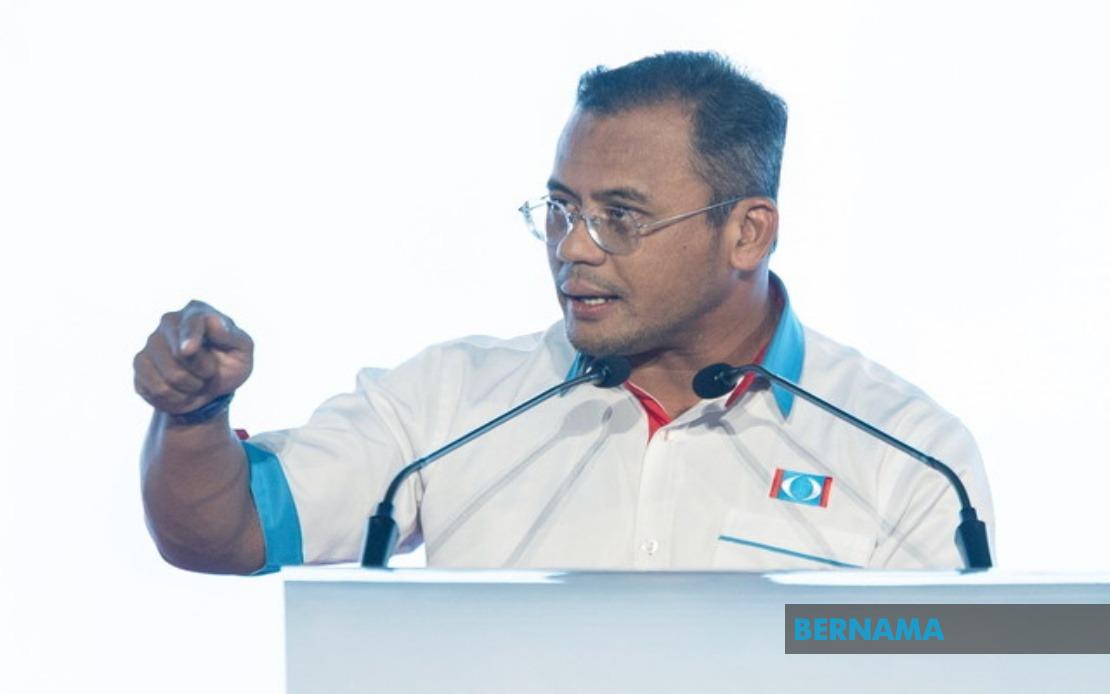
At its National Congress in Melaka this week, PKR's top leadership delivered a united message: the party must remain the bulwark against identity politics while maintaining its principled stance on constitutional matters that define Malaysia's social contract. The gathering underscored a deliberate positioning by PKR at a moment when racial and religious appeals have become increasingly prevalent in Malaysian political discourse, even as the party seeks to broaden its electoral coalition across ethnic and religious lines.
Amirudin Shari, PKR vice president and Selangor Menteri Besar, articulated the party's foundational approach during his closing address on the congress's second day at Melaka International Trade Centre. He emphasised that defending fair treatment across all communities does not require abandoning respect for Islam's position or Malay-Bumiputera provisions enshrined in the Federal Constitution. This framing attempts to resolve a tension that has long troubled Malaysia's reform-oriented parties: how to champion pluralism without appearing to challenge the constitutional settlement that underpins the nation's founding compact. Amirudin's formulation suggests that inclusive governance and constitutional respect are not incompatible—a message that carries particular weight given PKR's role within the broader Pakatan Harapan coalition and its influence on national discourse.
The party's broader reform agenda, according to Amirudin, traces its lineage to Anwar Ibrahim's 1998 reform movement, which he credited with mainstreaming several progressive causes: strengthening democratic institutions, protecting fundamental rights, ensuring equitable economic opportunities, and establishing administrative integrity. By anchoring current party positions within this historical narrative, PKR seeks to present itself as custodian of a longstanding vision rather than as a reactive political force. This historical framing becomes significant in a Malaysian context where political legitimacy is often contested and where narratives about which party represents genuine reform versus opportunism significantly influence voter behaviour, particularly among younger and urban constituencies.
R. Ramanan, also a PKR vice president and currently Minister of Human Resources, went further in condemning what he characterised as deliberate weaponisation of racial grievances by competing political forces. He called such tactics a narrow pursuit of electoral advantage that fundamentally threatens national cohesion and stability. Ramanan's intervention is noteworthy because it positions PKR explicitly against the identity-based mobilisation strategies that have demonstrated considerable electoral efficacy in recent Malaysian political contests, particularly among Malay-Muslim voters in certain regions. By having a senior minister articulate this stance, the party signals that rejecting divisive racial appeals is not merely rhetorical positioning but a core operational principle.
Ramanan's secondary argument addressed internal party discipline and unity, warning that leadership conflicts trickling down the organisational hierarchy create vulnerabilities that benefit political opponents. His emphasis on subordinating personal ambitions to collective party strength acknowledges a persistent challenge within PKR's structure—the party has historically struggled with factional tensions and competing power bases that occasionally become public. By calling for cohesion framed as familial obligation, Ramanan appealed to both institutional loyalty and ethnic-cultural values around kinship and collective responsibility, suggesting that party unity itself becomes a form of political action against external competitors.
Chang Lih Kang, the third vice president to address the congress, introduced empirical evidence into the debate about racial politics and electoral support. He pointed to the Chennah state election result in Negeri Sembilan, where DAP secretary-general Anthony Loke reportedly gained increased support from Malay voters despite facing what Chang characterised as identity-politics propaganda campaigns. This example carries particular significance within Malaysian political discourse because it directly contradicts a widely accepted assumption that non-Malay candidates, particularly from DAP, cannot secure substantial Malay electoral support. If substantiated, such a shift would suggest that voters in certain constituencies are choosing competent representation and service delivery over racial or religious identity signalling, potentially indicating evolving voter priorities.
The emphasis on electoral success across ethnic lines reflects PKR's strategic positioning as a multiethnic party capable of winning support from diverse communities. This approach distinguishes PKR from several competitors that have pursued more narrowly targeted identity-based strategies. However, the party operates within constraints: it must maintain credibility among its Malay-Muslim support base while simultaneously appealing to non-Malay communities and non-Muslim constituencies. The congress speeches suggest PKR leadership believes this balancing act remains viable—that inclusive governance and constitutional respect can be presented as mutually reinforcing rather than contradictory.
The timing of these statements carries significance within Malaysia's evolving political landscape. With state elections recently concluded in some states and the possibility of general elections within the next two years, PKR's reaffirmation of its inclusive approach serves multiple functions. It consolidates internal party messaging ahead of potential electoral contests, signals to coalition partners within Pakatan Harapan the party's commitment to pluralistic politics, and attempts to frame PKR as the responsible alternative to what party leaders present as reckless identity-based competitors.
However, PKR's inclusive approach faces genuine challenges that the congress speeches do not fully address. In electoral contests where rival parties have successfully mobilised voters through racial and religious appeals, parties emphasising cross-ethnic cooperation and constitutional pluralism sometimes struggle to match the emotional resonance and clarity of more identity-focused messaging. Furthermore, sustaining internal party unity around inclusive principles requires ongoing persuasion of grassroots members who themselves operate within communities where racial and religious identity remains salient to political decision-making. The gap between leadership rhetoric and ground-level implementation often determines whether such strategic positioning translates into electoral gains or becomes perceived as elite positioning disconnected from voter concerns.
The congress also implicitly acknowledged that Malaysia's political environment has shifted since PKR's founding. The proliferation of parties and political actors willing to deploy divisive racial appeals—and their demonstrated electoral success in specific constituencies and regions—means that the case for inclusive politics must be made not merely on principled grounds but on practical effectiveness. The Chennah example represents an attempt to provide such practical evidence, though single electoral results rarely settle broader political arguments about voter behaviour.
Looking forward, PKR's commitment to inclusive politics will be tested most directly through electoral performance and through the party's conduct within government. Statements at party congresses establish rhetorical positions, but voters assess parties through governance outcomes, policy implementation, and whether stated principles translate into visible benefits across diverse communities. For PKR, this means that defending fair politics against divisive racial appeals is inseparable from demonstrating that inclusive governance actually delivers better outcomes for Malaysians than more narrowly focused alternatives—a proposition that party leaders clearly believe is defensible but that requires consistent evidence over time.

